What to Wear on a High-Sensory Day: A Practical Overstimulation Guide
Some days the world arrives louder than usual. The coffee maker is too loud. The overhead light feels wrong. And the shirt you put on, the same one you wore Tuesday without thinking about it, is suddenly present in a way it wasn't before. You notice the tag, the waistband, the way the sleeve feels against your arm. This is a high-sensory day: a day when your nervous system is running with less filter, and everything that normally stays in the background moves to the front.
On a high-sensory day, the goal of getting dressed is not to look good (though that's a nice bonus if it happens). The goal is to choose clothes that stop producing sensory signals, so your nervous system can focus on everything else it's already managing. Here is exactly what that looks like, piece by piece.
What Makes a Day "High-Sensory"
A high-sensory day is not a medical condition. It's a description of a state: your sensory threshold is lower than usual. Signals your brain normally filters out start reaching conscious awareness. The feeling of fabric against skin. The pressure of a waistband. The weight of a sleeve.
This can happen for many reasons: a night of poor sleep, a stressful week, hormonal fluctuations, an upcoming event you're anxious about, or simply cumulative daily load without enough recovery. The specific cause matters less than the recognition: today, your nervous system is processing more input than usual, and adding unnecessary sensory load from clothing is the last thing it needs.
The approach here is not about eliminating all sensory input. Living requires sensation. It's about choosing which sensations you want to be aware of, and reducing the ones you don't. For the broader framework behind this, the nervous system dressing guide explains why sensory thresholds vary and how to build a wardrobe around this reality.
The Five Rules of High-Sensory Day Dressing
1. Nothing at the Neck
The neck and collarbone area is one of the most sensorily sensitive zones on the body. It's also where many garments concentrate the most potential irritants: tags, seams, collars, zippers at the throat, and fabric that rubs against the jawline.
On a high-sensory day, the rule is absolute: nothing at the neck. Choose: - Scoop necks or wide crew necks that sit well below the collarbone - No tags (remove them or choose tagless garments) - No collars, no hood strings, no zippers at the throat - Soft, flat seams at the shoulder line
A ribbed tank top with a scoop neck eliminates almost all neckline sensory input: no collar, no tag, no seam at the throat. It's the single easiest piece to reach for on a high-sensory day.
2. Nothing That Adjusts
On a normal day, pulling up a waistband or resettling a strap takes half a second and costs nothing. On a high-sensory day, every adjustment is another sensory event. Another thing your nervous system has to process and then return from.
The test: put on the garment, walk around for thirty seconds, and notice whether you had to adjust anything. If you did, it's not right for today.
Pieces that pass the adjustment test: - Matching sets where top and bottom stay in place without tugging - Wide-leg or straight-leg pants with waistbands that don't roll or shift - Tops with enough length to stay tucked (if tucking) or short enough to not need tucking
The wide-leg lounge pants set passes this test reliably: the waistband stays put, the top doesn't ride up, and the set requires zero decisions about coordination.
3. Smooth, Predictable Fabric
High-sensory days are not the day for textured or novelty fabrics. That bouclé cardigan you love for its tactile interest? Today it will register as uneven, unpredictable input that your brain keeps checking on. Save it for a regulated day.
What works: - Smooth, consistent-surface fabrics with a matte finish - Knits that feel soft and consistent against the skin across all areas of the garment - Fabric with a bit of weight (180–250 GSM) that stays in contact with skin rather than fluttering or shifting
If you want to know exactly which textures and weights help (and which don't), fabrics that calm your nervous system gets specific.
4. The "Known" Outfit
Do not experiment on high-sensory days. This is the day for clothes you have worn before and know feel comfortable. Familiarity itself is regulating. It removes the uncertainty of how a new garment will feel at hour three, hour six, or when your energy drops later in the day.
A "known outfit" is not the same as a uniform. It's simply an outfit you've already tested across a full day. You know that the waistband doesn't dig in after lunch. You know the fabric still feels okay at 4pm. You know the neckline doesn't shift when you sit down.
Building a rotation of one or two known outfits specifically for high-sensory days is one of the most practical things you can do for your nervous system. Dressing for your nervous system applies this same approach to anxiety specifically. The principles carry over.
5. Reduce the Decision Before Getting Dressed
The problem with a closet full of options on a high-sensory day is that picking itself is sensory work. Each option requires evaluation. Does this feel right today? And evaluation requires your nervous system to imagine the sensory experience of each garment before you even touch it.
The solution is structural, not willpower-based: - Pre-select a high-sensory day outfit and keep it in a visible, reachable spot (draped over a chair, on a separate hook) - Or build a small mental "safe list": three outfits you know work, and reach for those without looking at the rest of the closet - Or have a matching set that functions as your default. One decision, no coordination, done.
Why does reducing decisions matter for your nervous system? How clothes affect mood digs into the research on choice overload and clothing.
A High-Sensory Day Outfit Formula
If you want one formula that works for most high-sensory days, here it is:
Top: Soft scoop-neck or wide-crew top in a smooth, matte fabric. No tags. No collar. No zippers. A ribbed tank top in a neutral accomplishes this with one piece.
Bottom: Wide-leg or straight-leg pants with a soft, wide waistband that stays in place without cinching. The high-waist stretch leggings also work if you prefer fitted bottoms. The key is a waistband that distributes pressure rather than concentrating it.
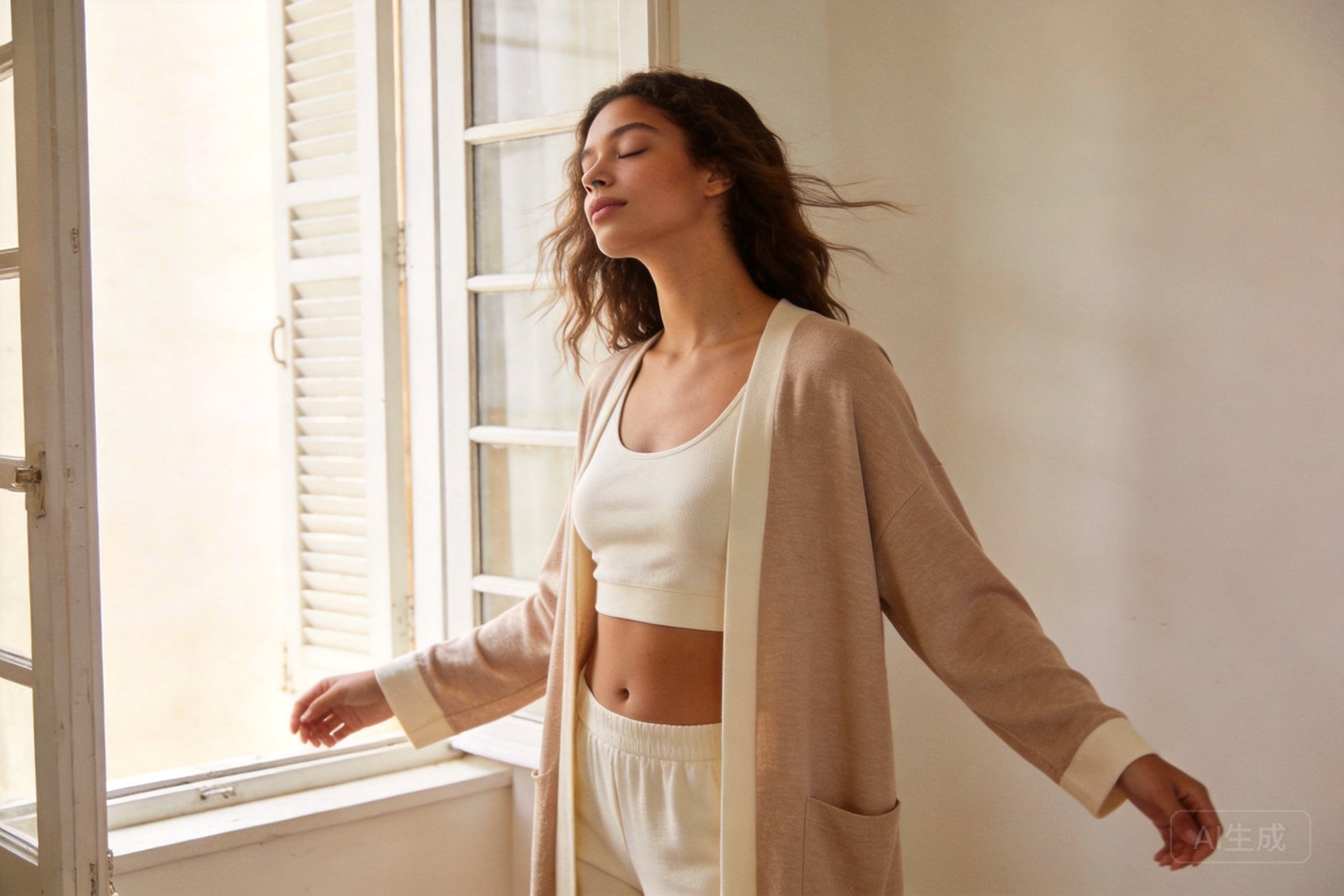
Layer (optional): A soft, boxy layer that goes on and off easily. No zippers to manage, no tight armholes. A simple cardigan or open-front layer.
The total: one decision, three pieces (or fewer), zero expected adjustment, fabric that doesn't register throughout the day.
FAQ
What's the difference between a high-sensory day and sensory overload?
A high-sensory day describes a state of lower sensory threshold. You're more sensitive than usual, but still functional. Sensory overload is the point where the cumulative sensory input exceeds your capacity to process it, and you may need to remove yourself from the environment. The clothing guidelines here are designed to prevent sensory overload by reducing one category of controllable input (clothing sensation). If you are already in sensory overload, the priority is removing uncomfortable clothing and finding a quiet space, not optimizing your outfit.
What if I need to go to work on a high-sensory day?
The same principles apply, but you may need to adapt for workplace appropriateness. A soft, smooth-finished blouse in a neutral color (with the tag removed) paired with wide-leg trousers or a soft midi skirt works for most office contexts. The key differences from the home formula: slightly more structured silhouette on top, but the same fabric and fit principles below the desk. A familiar outfit you've worn to work before is always better than a new one.
Can I train myself to tolerate more sensory input from clothing?
Some people find that gradual exposure to different textures expands their sensory comfort range over time, similar to how sensory integration therapy works. But there is no evidence that pushing through discomfort makes clothing more tolerable, and good evidence that it increases the stress response. The better approach: honor your current threshold, build a reliable "safe wardrobe" for hard days, and don't use days when you're already at capacity as training opportunities.
Why do certain colors or patterns also feel overwhelming on high-sensory days?
Visual input is sensory input. Bright colors, high-contrast patterns, and busy prints all produce visual stimulation that adds to the total sensory load. On a high-sensory day, many people naturally reach for solid, muted, or earth-toned pieces because the visual processing cost is lower. This isn't about aesthetics. It's about reducing the total sensory load across all channels, not just tactile ones. Scent is another channel you can choose intentionally: a familiar, calming aroma can help anchor your nervous system when sensory sensitivity is high, just as a soft, familiar outfit does.
Should I stay in pajamas on a high-sensory day?
It depends. For some people, staying in pajamas confirms the feeling of being unable to cope, which amplifies the negative state. Changing into comfortable but intentional clothes (the kind that say "I'm having a gentle day" rather than "I gave up") can help shift the internal signal. The key distinction: change into something that's comfortable but chosen, not just whatever you happen to be wearing. The act of deliberately selecting a known comfortable outfit is itself regulating.
The same anchoring logic applies to your scent environment. On high-sensory days, a consistent, low-stimulation candle scent works the way calming clothing does: it gives your nervous system one clean signal to orient toward. Candles for anxiety and high-sensory days explains which scent profiles help and how to use them without adding more sensory load.
Understanding your nervous system states (regulated, activated, overstimulated) changes how you approach getting dressed. The nervous system dressing guide is the starting point for building a wardrobe around this. For specific calm outfit combinations, outfits that make you feel calm has you covered. And since visual input is sensory input too, soft colors, quiet textures explains which colors and fabric surfaces soothe rather than add load.
When you're building a wardrobe for these days rather than a single outfit, sensory-friendly clothing for women goes deeper on tagless seams, flat waistbands, and the fabric details that keep clothes from adding to the noise.