What Is a Sound Bath? What to Expect Your First Session
You booked it because a friend wouldn't stop talking about it, or because it showed up on your feed three times in one week. Now it's Thursday, the session is tomorrow, and you're not entirely sure what you signed up for.
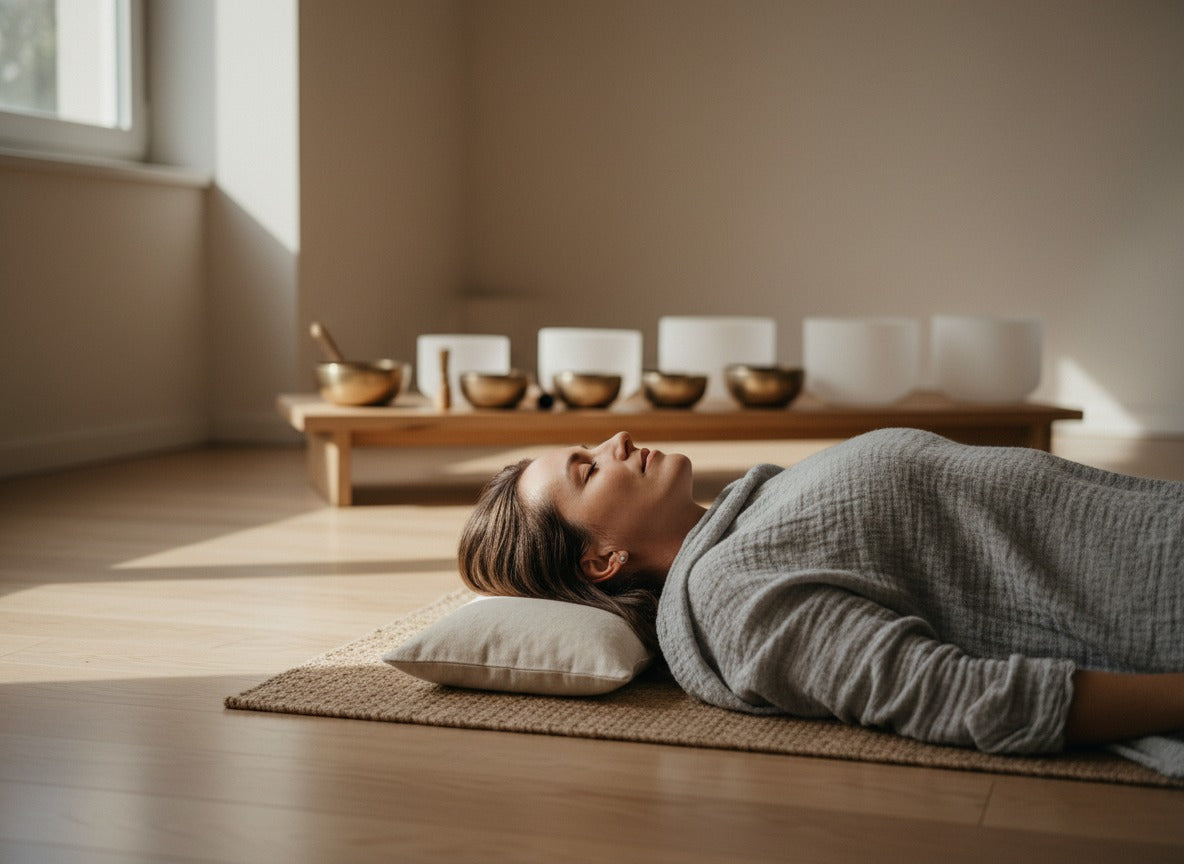
A sound bath is a guided session where you lie down on a mat, close your eyes, and listen while someone plays singing bowls, gongs, chimes, and tuning forks around the room. There's no water. Nothing is required of you. You don't chant, stretch, hold a pose, or try to clear your mind. Most sessions run about an hour, you stay fully dressed, and the practical part of your job is to lie there.
That's the short answer. The longer one is worth reading before you go, because knowing what happens changes how the hour feels.
What Is a Sound Bath, Exactly?
The "bath" is a metaphor. You're immersed in sound the way you'd be immersed in water, with vibration reaching you from every direction in the room at once.
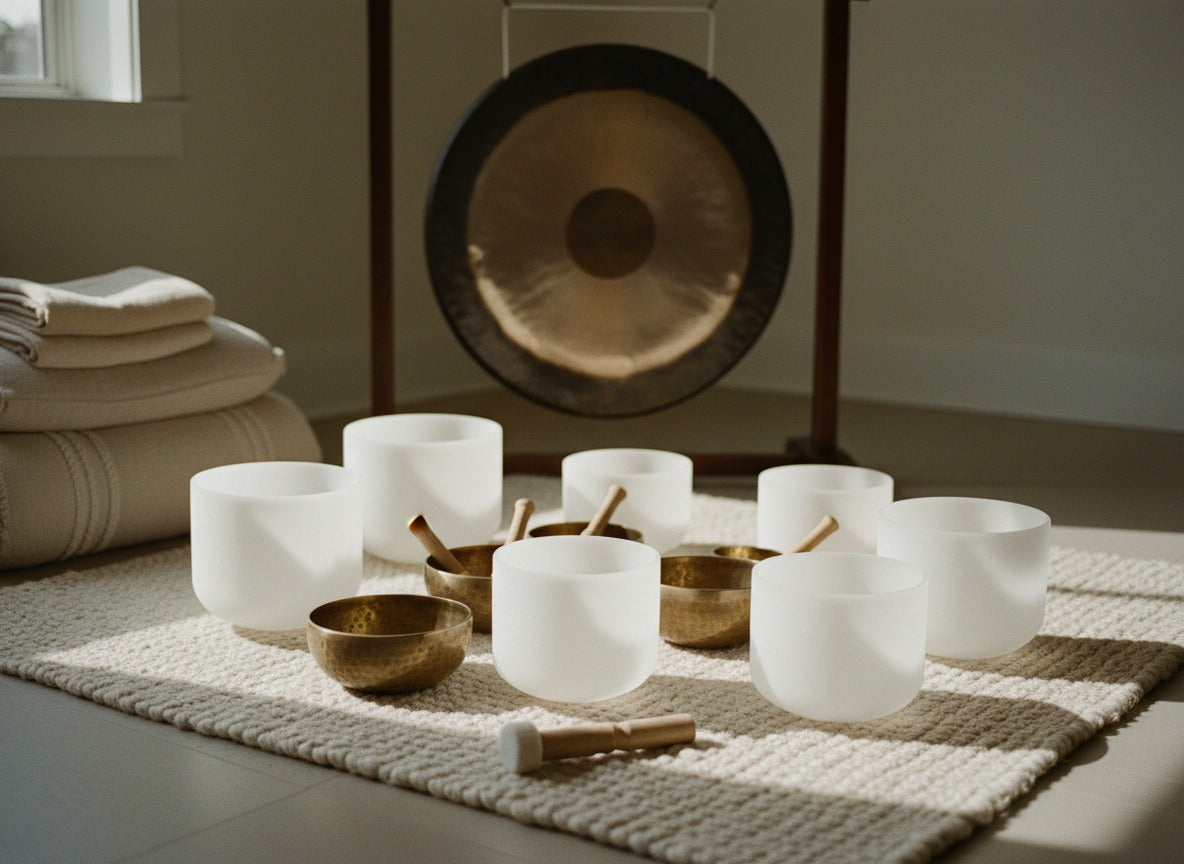
A facilitator plays some combination of metal or crystal singing bowls, gongs, chimes, bells, tuning forks, and sometimes voice or a didgeridoo. The tones are long and overlapping. There's no melody to follow and no beat to track, which is part of why the mind eventually gives up trying.
Using sound this way isn't new. Tibetan and Buddhist traditions have used bowls and chanting for centuries, and one root of the modern format is nada yoga, a yogic practice built entirely around deep listening. What's new is the studio version: 20 people on mats in a dim room in Brooklyn or Austin, paying by the session.
You'll see the same thing called sound bath meditation, a sound healing session, or a sound bath class. They describe the same experience. A gong bath is a sound bath where the gong leads, which usually means louder, more physical waves and fewer delicate tones. Some people find gongs the most powerful version. Others find them too much for a first time.
If you've taken a yoga class, the closest reference point is savasana at the end, stretched out to fill the whole hour.
| Practice | What you do | Typical length | What it asks of you |
|---|---|---|---|
| Sound bath | Lie still and listen | 45–90 min | Nothing |
| Gong bath | Lie still, gong-led | 45–60 min | Tolerance for volume |
| Guided meditation | Follow spoken instruction | 10–45 min | Sustained attention |
| Yoga nidra | Lie still, follow a body-scan script | 20–45 min | Following along |
| Restorative yoga | Hold supported shapes | 60–75 min | Some physical setup |
What Happens in a Sound Bath Session
Every facilitator runs it differently, but the shape is fairly consistent.
- Shoes come off at the door. You claim a spot on the floor, usually with your head pointed toward the instruments, and build a nest out of whatever's available: mat, bolster, blanket, eye pillow.
- There's a short opening. A few slow breaths, sometimes a grounding exercise, sometimes an invitation to set an intention. Plenty of facilitators skip the talking and start in silence.
- The sound begins quietly. One bowl, then another. It builds gradually instead of arriving at full volume.
- The middle stretches out. Instruments layer and overlap, and some facilitators walk the room so the sound travels around you. This is where your sense of time stops being reliable.
- It fades. Volume and intensity come down deliberately, then a few minutes of full silence.
- You come back slowly. A cue to breathe, wiggle your fingers, roll to one side, sit up whenever you're ready. Nobody rushes this part.
Sessions typically run around 60 minutes. The full range is roughly 20 to 90, and if you're new, a 20 to 30 minute session is a reasonable place to start. Group sound baths in the US generally run somewhere between $15 and $65, with private sessions costing more.
What a Sound Bath Actually Feels Like
The first ten minutes are usually the least pleasant part. Your nose itches. One leg wants to move. You notice the floor is harder than you expected and wonder whether you're doing this right. Most people settle somewhere in that first stretch, and then the hour goes somewhere else.
Physically, the strongest sensation is vibration you can feel rather than only hear. People describe a hum in the chest, the hands, occasionally the whole body. Gongs land differently from bowls. They feel less like music and more like weather.
Then there's the part that rarely makes it into the studio description: emotion can surface, and it can surface without warning. Crying during a sound bath is common enough that most facilitators build in tissues and don't comment on it. Some people feel a wave of grief, or a memory they weren't looking for. A smaller number feel worse before they feel better, particularly if they walked in already anxious. Tension leaving the body can register as tension for a while.
None of that means the session went wrong. It's the same category of response people report from meditation or breathwork. You're allowed to open your eyes, shift position, sit up, or leave.
Afterward, reactions split. Some people feel clear and quietly alert. Others feel wrung out and unusually sleepy for the rest of the evening. Falling asleep during the session is fine, common, and not something to apologize for.
Sound Bath Benefits: What the Research Actually Shows
The honest version: the research is early, mostly small, and often observational. That doesn't make it useless. It makes it worth reading carefully.
The most cited study comes from Tamara Goldsby and colleagues at UC San Diego, published in 2017 in the Journal of Evidence-Based Complementary and Alternative Medicine. Sixty-two adults, mean age 49.7, completed a Tibetan singing bowl sound meditation. Compared with before the session, participants reported significantly less tension, anger, fatigue, and depressed mood, all at P < .001.
The detail that matters most if tomorrow is your first time: participants who had never done this kind of meditation before showed a greater reduction in tension than experienced participants. Being a beginner appears to work in your favor here, which is rare.
As for how it works, researchers are still assembling the mechanism. Three explanations get the most attention. Slow, sustained tones seem to nudge the body toward its rest-and-digest mode, which slows the heart rate and lets muscle tension drop. Sound may also shift brain activity from busy beta patterns toward the slower alpha and theta ranges, the ones associated with drowsy, meditative states. And a handful of small studies have linked sessions to lower cortisol and better heart rate variability, a measure of how well your body recovers from stress.
What nobody has established yet is which frequencies matter, what volume is optimal, or how long the effects last. Reported benefits cluster around relaxation, mood, sleep, and a general sense of having reset. A sound bath is not a treatment for a medical or mental health condition, and one session behaves like one good night's sleep: genuinely useful today, not a permanent fix.
There are a few people who should check with a doctor first. If you have seizures triggered by sound, a psychiatric condition such as schizophrenia, or past trauma connected to loud noise, it's worth a conversation before you book. Gongs and drums can sound like water crashing or like something breaking.
What to Bring to a Sound Bath
Most studios provide mats, bolsters, and blankets. The things worth bringing yourself:
- Water, before and after.
- Your own eye mask or eye pillow. The studio version tends to be thin, and blocking that last bit of ambient light makes a real difference.
- An extra layer or blanket. Your body temperature drops once you stop moving, and studio blankets are usually thinner than you'd like by minute forty.
- Warm socks. Floors are cold, and this is the item people regret skipping.
- A small pillow or folded towel to slide under your knees. An hour flat on your back holds your lower spine in an arch it isn't used to. Propping the knees fixes it.
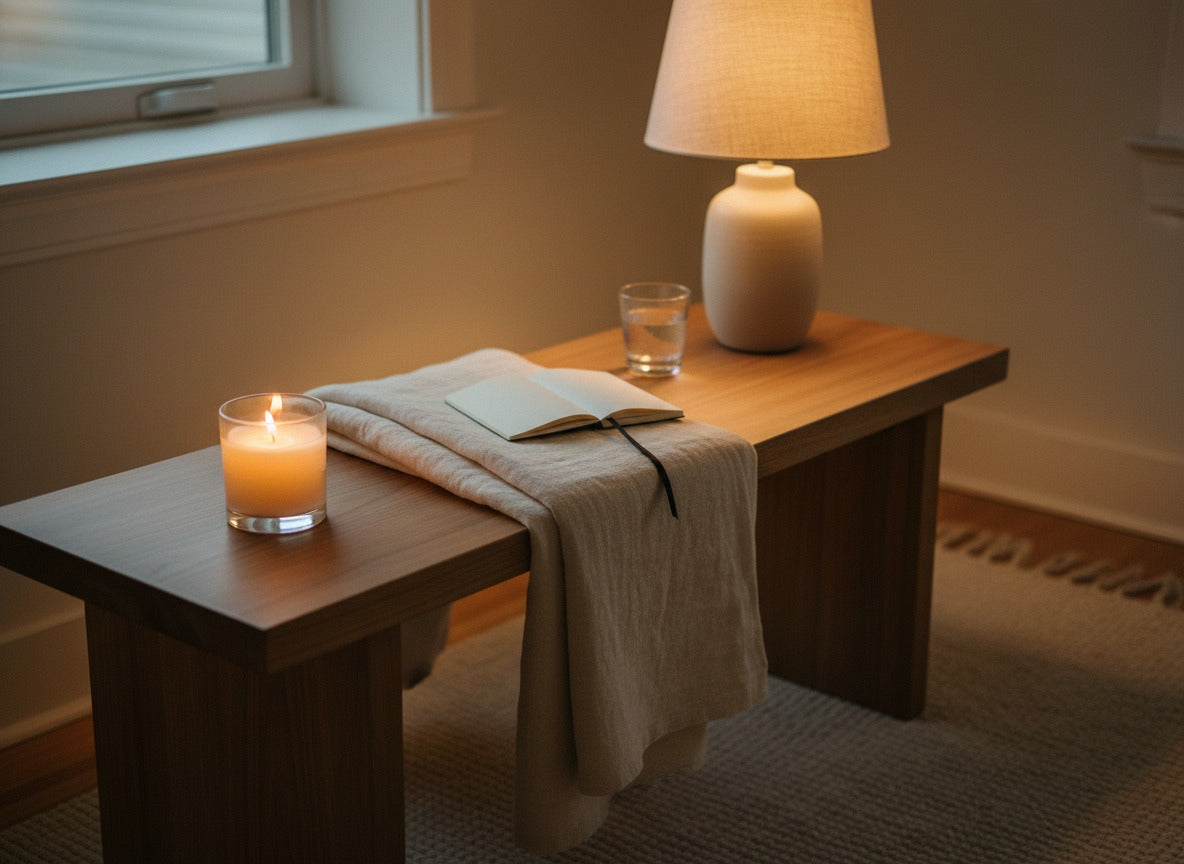
- A notebook, if you're the type who comes out with something to write down before it evaporates.
Leave the heavy perfume and scented lotion at home, since you're sharing air in a closed room for an hour. Turn the phone off, not just to silent. And arrive ten to fifteen minutes early, which does more for the experience than any object on this list.
Clothing deserves its own thinking when you're lying still for an hour, since waistbands and underwire behave differently horizontally than they do upright. What to wear to a sound bath covers the fabric, fit, and layering details.
How to Choose a Facilitator
There's no licensing body for sound healing, so quality varies more than it does for yoga or massage. Reasonable things to look for: real experience and reviews, a calm room, instruments played with restraint, and training that covers trauma sensitivity alongside technique.
Elisa Sobo, an anthropologist at San Diego State University who has studied sound bath participants, points to one specific red flag: a facilitator who talks at length about their own trauma. It reads as empathy and functions as the opposite, because it hands you someone else's story to carry while you're at your most open.
If you're sound sensitive, email ahead and ask how loud the gongs get. Good facilitators answer that question happily.
After the Session
The hour after is worth protecting. Whatever state you're in when you sit up is real, and it dissolves quickly if you walk straight into a bright kitchen, a phone screen, and a decision about dinner.
The simplest way to hold onto it is to keep the lighting low and the evening empty when you get home. Scent helps here because it works fast and asks nothing of you: coming back to a soft coconut-apricot soy candle already waiting on the counter keeps the room in the same key the studio was in, without you having to do anything to make it happen.
If you'd rather have the whole evening already decided, a small set made for the wind-down hour gives you a repeatable version of it.
Scent and sound run on different pathways to reach a similar place, which is why they layer well. Pairing scent with sound in your own space covers the timing and the scent choices, and how candles and meditation work together goes deeper on the sensory side if you're building a regular practice.
Sound Bath FAQ
Do you get wet during a sound bath?
No. This is the most common first-timer question and the answer is genuinely no water, no tub, no swimsuit. You lie on a mat on the floor, fully dressed, usually under a blanket. The word "bath" describes being surrounded by sound the way water surrounds you in a tub. Some venues do combine the two, with sound sessions held near pools or in hot spring settings, but a standard studio sound bath is a dry room with mats on the floor.
What is the difference between a sound bath and a sound bath class?
Nothing meaningful. Studios use "class" because that's what their booking software calls a scheduled group session. You'll also see it listed as sound bath meditation, sound healing, or a sound journey. What actually varies between listings is the instruments and the length. A gong-led session feels physically different from one built on crystal bowls, and a 30-minute session tacked onto a yoga class is a different experience from a standalone 90-minute one. Read the description for those two details. The title tells you almost nothing.
How long is a sound bath session?
Around 60 minutes is standard. The realistic range is 20 to 90 minutes. Shorter sessions often appear at the end of a yoga class or as an intro offer, and longer ones tend to be standalone events or retreats. If it's your first, a shorter session is easier on the body. Lying flat and still for 90 minutes is more demanding than it sounds, especially if your lower back is already unhappy. You can always work up.
Is it normal to fall asleep or cry during a sound bath?
Both are normal and neither means you did it wrong. Sleep is a reasonable response when your nervous system finally gets permission to stand down, and most facilitators treat it as a good sign. Crying is also common. Sound baths sit in the same family as meditation and breathwork, where slowing down enough tends to surface whatever was queued up underneath. If a strong emotion arrives, you can stay with it, open your eyes, or step out. All three are fine.
Are sound baths good for you?
For most people, yes, in the same sense a long walk or a nap is good for you. Studies so far report reduced tension, better mood, less fatigue, and improved sleep after sessions, though the research is small and early. The realistic expectation is an hour of deep rest with an afterglow that lasts the evening, not a cure for anything. Check with your doctor first if you have sound-triggered seizures, a psychiatric condition, or trauma connected to loud sound.
What are gong bath benefits compared to singing bowls?
A gong bath uses the gong as the primary instrument, which produces louder, wider, more physically felt waves. People who prefer gongs describe the effect as more immersive and harder to think through, so the mind quiets faster. The trade-off is intensity. Gongs can feel overwhelming if you're sound sensitive or anxious, and they're less forgiving than a room full of crystal bowls. If you're unsure, start with a bowl-led session and try a gong bath once you know how your body responds.
Before You Go
Bring socks. Arrive early. Expect the first ten minutes to be fidgety and the rest to be strange in a good way. Don't schedule anything demanding afterward.
If the session leaves you wanting a version of this at home, the setup is simpler than it looks. Building a meditation corner at home walks through the space itself, a zafu or zabuton solves the floor-sitting problem for anything you do upright, and what to wear while meditating applies to still practice generally.
Glow softly. Live freely.