
What to Wear to a Sound Bath (And What to Skip)
A sound bath is one of those experiences where you lie on a mat in a dim room while instruments — singing bowls, gongs, crystal bowls, tuning forks — fill the space with waves of vibration. You don't move. You don't do anything, really. You just receive it.
What you wear matters more than you'd expect, and not for the reasons that usually come to mind.
When you're sitting up and moving around, a slightly-too-stiff waistband or a rough fabric texture is barely noticeable. When you're lying completely still on a mat for 60 to 90 minutes, focused on nothing but sensation, those small irritants become surprisingly loud. The short version of what to wear to a sound bath: soft, loose, layered, and free of metal.
Here's the longer version, with the actual reasoning behind each choice.
What a Sound Bath Is Actually Like
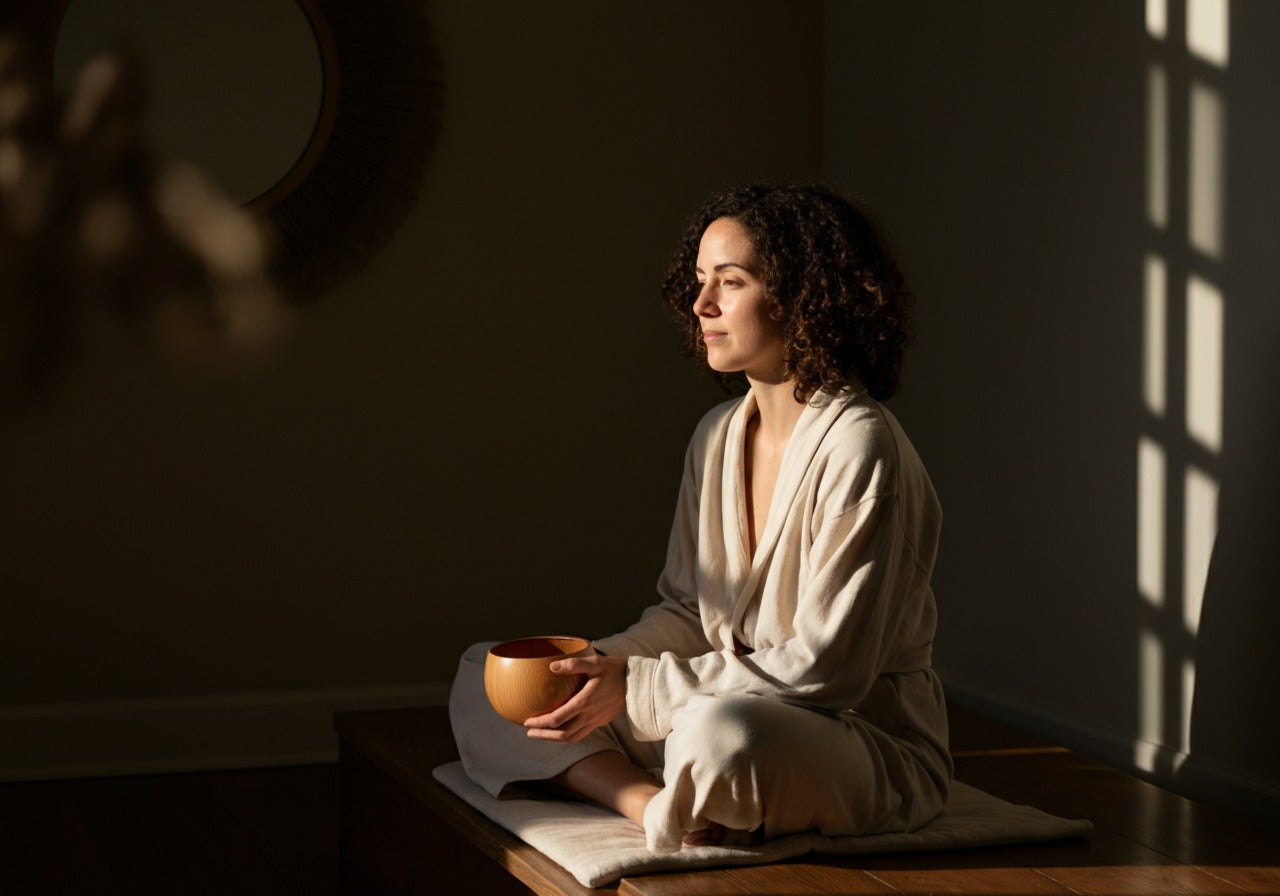
First, it helps to understand what you're physically doing during a sound bath, because that's what drives all the clothing decisions.
You arrive, find a spot on the floor, lie down on your mat, and stay there. Most sessions are 45 to 90 minutes. The facilitator plays the instruments — often a mix of Tibetan singing bowls, crystal bowls, and gongs — and the sound moves through the room in waves. You can feel it in your chest, your hands, sometimes your whole body. People describe it as a deep hum underneath the skin.
The room is usually dim or fully dark. You'll often be offered a blanket and an eye pillow. The temperature in many sound bath venues is cooler than you might expect — partly by design (cooler air helps with the trance-like state), and partly because studios aren't always climate-controlled. Your body temperature also drops naturally when you stop moving.
By the end, some people feel like they've slept for hours. Others feel quietly alert. Either way, you've been lying still long enough that what you wore mattered.
What to Wear

1. Wide-leg or flowy pants over fitted leggings
When you're lying flat, a tight waistband — even one that's comfortable when you're standing — can dig into your lower abdomen. You'll notice it more than you'd think. Wide-leg pants or loose trousers with a soft, flat waistband are genuinely more comfortable for floor work. The Gloravi Yoga Set with Wide-Leg Pants ($96) is a good example of this done right — the wide-leg silhouette moves freely when you're settling in, and the soft fabric doesn't create friction against the mat. It's also a complete outfit, so one less decision before you go.
If you prefer leggings, choose a high-rise pair with a wide, flat waistband and no seams at the inner thigh — the Gloravi High-Waist Leggings ($44.25) fit that description, with a wide band that stays flat when you're lying down.
2. A long-sleeve top or fitted layer on top
Your arms are usually extended by your sides during a sound bath. A fitted long sleeve keeps you warm without bulk, and doesn't shift around or bunch up. A loose tank is fine if the room is warm, but you'll likely want to add a layer.
3. A warm outer layer
This is the one most people forget, and then regret. Studios vary a lot — some are warm, some are genuinely cold. You'll receive a blanket, but it's not always thick enough. Bring something you can pull on if needed. A soft sweatshirt or hoodie that you can drape over yourself without creating a lot of noise is ideal. The Gloravi Cropped Zip-Up Jacket ($46) is an easy option here — soft-stretch and light enough to pull on over everything the moment the room cools, with no stiff structure to press against you when you settle back down.
4. Warm socks
Feet get cold on the floor. Bring soft socks — thick ones if you run cold. Many people remove their shoes at the door, and bare feet on a hard floor for 90 minutes is uncomfortable.
What Not to Wear
Underwire bras When you're lying flat, underwire sits differently against your ribs than it does when you're upright. A pressure point that you barely feel while walking becomes a persistent distraction when you're trying to sink into stillness. A soft bralette or a pullover sports bra is much more comfortable.
Metal jewelry This is more specific to sound baths than to other wellness activities: metal accessories can actually resonate subtly with the sound bowl frequencies. More practically, metal earrings, necklaces, or bangles can feel physically uncomfortable when you're lying flat for an extended period, and they can make small sounds when you shift position. Remove them or leave them at home.
Stiff denim or structured waistbands Anything with a button, zipper, or rigid structure at the waist. You'll feel every bit of it.
Noisy fabrics Nylon that swishes when you move, anything crinkly or stiff. The silence in a sound bath is part of the experience — you don't want to be the one rustling every time you adjust.
Strongly scented products Not exactly clothing, but worth mentioning: perfume, heavily scented lotion, or hair products can be distracting in a shared space and may bother others. Go light.
What to Bring
- Yoga mat — many studios provide them, but your own is more comfortable
- An extra blanket — thicker than whatever the studio offers
- Warm socks — non-negotiable if the floor is tile or wood
- Eye mask or eye pillow — helps you drop into the experience without ambient light pulling you out
- Water — drink before the session; sound vibration travels better through a hydrated body
- Nothing else — leave your phone in the car or on silent
Worth planning for: the hour after. Most people leave a sound bath slower than they arrived, and walking straight into overhead lights and a phone screen tends to undo that within minutes. Lighting a warm coconut-apricot scent when you get home keeps the room closer to the one you just left.
FAQ
Do I need special clothes for a sound bath?
No — but comfortable, soft clothing makes a real difference. The requirement is that nothing digs, constricts, or distracts when you're lying still. Loose pants, a soft top, warm socks, and a layer to add if needed covers it. If you already have clothes you wear to a still practice like yoga, those will work fine.
Can I wear leggings to a sound bath?
Yes, with one note: waistbands. A high-rise legging with a wide, soft band is comfortable lying flat. A mid-rise with a narrower waistband can become uncomfortable over a long session. If your leggings usually roll or dig when you're seated or supine, this probably isn't the right outing for them.
Is it cold at a sound bath?
Often, yes. The room temperature varies by studio, and your body naturally cools when you stop moving. Most studios provide blankets, but bringing your own is a good idea — something soft and large enough to actually cover you. Warm socks and a sweatshirt you can pull on or off make a bigger difference than most people expect.
What about shoes?
You'll remove them at the door or before you get on your mat. Some people go barefoot; most people prefer socks. Soft, warm socks are the right call — especially on tile or wood floors. Skip anything with grip patches if you want to move quietly.
Does what I wear affect the experience?
In a meaningful way, yes — but not in the way people usually think. It's not about aesthetics. It's about removing friction. When you're not adjusting your waistband, pulling at a strap, or aware of a cold draft on your arms, there's nothing to focus on except the sound. The experience goes deeper when the physical layer is taken care of. This is the same logic behind dressing with intention in other areas of your life — what you wear shapes how present you can be.
How is a sound bath different from a yoga class for clothing?
In yoga, you're moving — so fitted clothes that stay put during transitions matter most. In a sound bath, you're lying still — so the priority shifts to softness and no pressure points. Restorative yoga and sound baths share similar clothing principles: loose, soft, warm layers, nothing structured. If you're building a wardrobe for still and slow practices, the same pieces tend to work for both. For the specific clothing logic for seated and still practices like meditation, what to wear while meditating covers that ground in more detail.
Sound baths, restorative yoga, meditation — different experiences, same underlying approach to clothing. Soft, loose, warm, nothing to manage. That's what lets you actually be there.
If you're creating a home practice rather than attending a studio, scent adds a dimension that sound alone doesn't. Sound Bath and Scent: Creating Your Perfect Ritual Space covers how to layer the two for a complete sensory experience.
Clothing is only half the unknown if this is your first session. What a sound bath actually is and what to expect walks through the full hour, from the first bowl to how you might feel walking out.
If the nearest studio is a drive away or the schedule never works, you can run the session yourself. How to do a sound bath at home covers the sound source, the room setup, and how long to lie there. The clothing logic above applies the same way, minus the part where you have to leave the house.
And if what you really want from a sound bath is the ten quiet minutes in the middle, you can have those at home, with your own name in them. A Meditation Written for You is a guided meditation we write around what's on your mind, record over singing bowls or soft rain, and send to your inbox within a day.