Sound Bath and Scent: Creating Your Perfect Ritual Space — Gloravi
A sound bath does something specific to the brain that most other practices don't.
Researchers who study contemplative states describe two broad networks that alternate in dominance: the default mode network, which handles narrative, self-referential thought ("the story of me, right now"), and the direct experience network, which processes immediate sensation without commentary. Most waking life is dominated by the first. Deep experiences of music, movement, and certain meditation practices temporarily shift dominance toward the second.
Sound baths — sustained, immersive sound from singing bowls, gongs, or crystal bowls — are unusually effective at this shift. The frequencies used create a sensory environment so different from ordinary experience that the narrative network has trouble maintaining its grip. You stop planning, evaluating, and narrating. You receive.
Scent can support this shift, but it works differently than the sound. Sound produces the shift; scent stabilizes it, deepens the passage into it, and helps your nervous system stay there longer rather than cycling back to commentary.
Why Scent Works Differently Than Sound
Sound baths work from the outside in: vibration moves through the air, enters your body through your auditory system, and the frequencies themselves interact with your brainwave activity. The effect is partly physical — you feel the sound in your chest, your hands, sometimes your whole body — and partly neurological.
Scent works from the inside out: molecules enter your nasal cavity, bind to receptors, and the signal goes directly to the amygdala and hippocampus without thalamic processing. The emotional shift from a familiar, calming scent can precede any conscious recognition of what you're smelling.
Together, they create a layered environment. The sound handles the main shift in neural dominance; the scent adds a second, independent signal to the same emotional-memory system. Two pathways pointing toward the same state instead of one.
There's also a conditioning dimension. If you use the same scent every time you attend a sound bath or do a sound-based practice at home, your nervous system begins to associate that scent with the experience. Over time, the scent alone can begin to activate some of the same physiological readiness — not the full experience, but the preparatory shift toward openness and receptivity.
When to Light the Candle
The timing here is specific, and it's different from general candle ritual timing.
Light the candle twenty to thirty minutes before your sound bath session begins. The goal is to let the scent settle fully into the room before you start, so it's present as an ambient quality of the space rather than something you notice arriving.
A freshly lit candle produces the sharp, thin combustion note of initial burn — not the full, rounded scent profile the wax delivers once the surface has fully melted. You want the second stage, not the first. Twenty to thirty minutes is usually enough for a small-to-medium jar candle in a standard room.
Extinguish the candle before the session begins, or immediately once it starts. The reasons are practical: an open flame can be a visual distraction when you're trying to settle attention, and burning wax produces subtle combustion compounds that you don't want as additional sensory input during a practice specifically designed to reduce load. You also don't want an unattended candle if you lose track of time in a deep state.
The scent remains in the room after you extinguish the candle — the molecules are already in the air and will persist for 30 to 45 minutes. You'll have the olfactory signal throughout the session without the ongoing combustion.
Which Scents to Choose
For a sound bath, the scent qualities that matter most are depth, stillness, and the absence of sharpness.
Citrus and bright green notes are alerting — useful in the morning, counterproductive during a practice aimed at moving away from the executive-function state. Lavender is the commonly recommended option, and it's well-supported: linalool (lavender's primary compound) has demonstrated anxiolytic effects in research, and it's associated with reduced cortisol. The caveat is that lavender reads differently to different people depending on their associations with it. If it feels clinical, medical, or slightly antiseptic to you, it works against the practice.
What to look for instead of a specific scent: something that your nervous system reads as safe, settled, and non-demanding. For most people, this means warm, woody, or softly earthy notes — cedarwood, sandalwood, vetiver, light amber. These register as slow. They don't pull your attention; they create space.
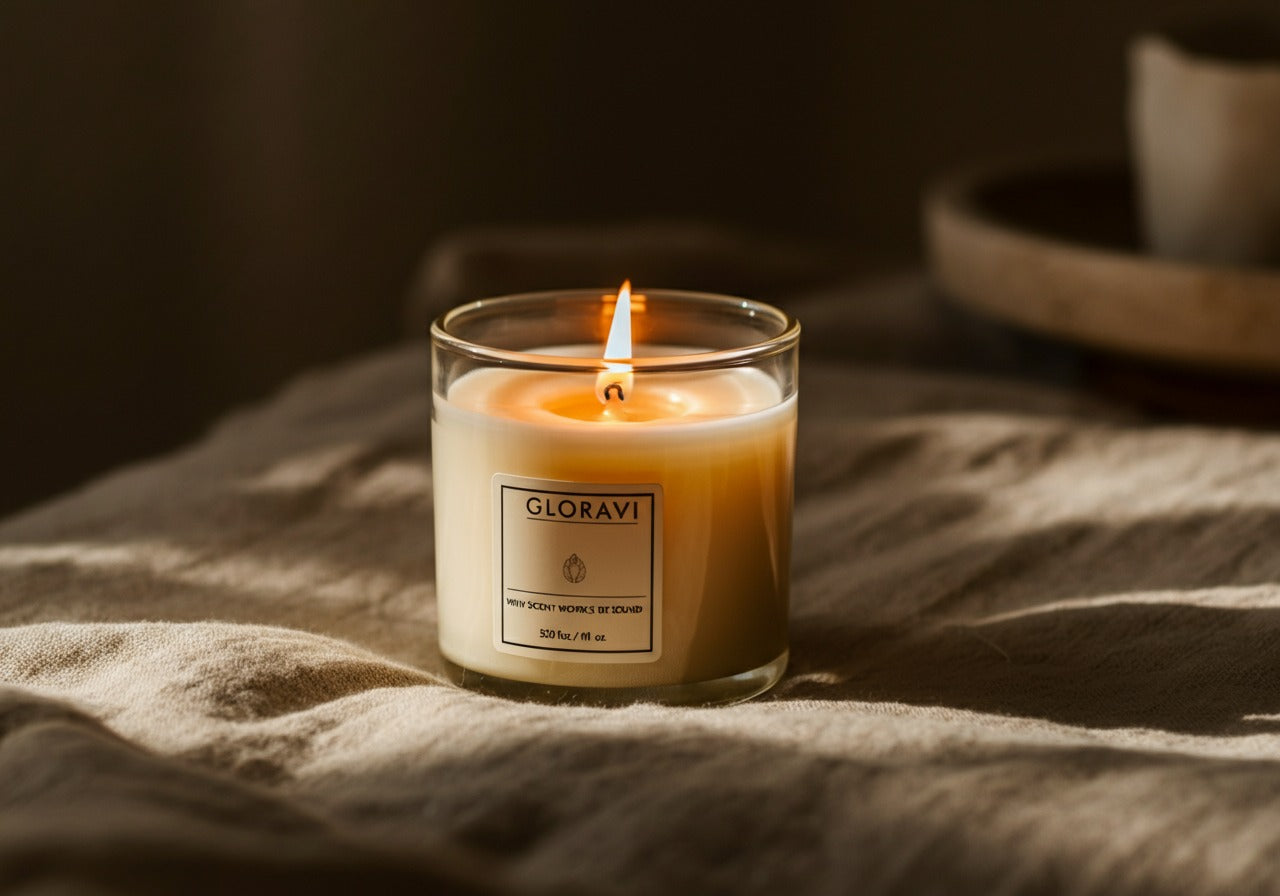
The Warmth candle works well before sound baths that are oriented toward emotional release or opening — the warm, rounded scent profile supports the shift toward receptivity. For practices oriented toward clearing or energetic reset, a cleaner, more neutral scent may be preferable.
At Home vs. In a Studio
Studio sound baths have their environment set for you: dim or dark room, often cooler temperature, soft surfaces, usually no scent (most studios avoid fragrance to accommodate sensitive participants). You're working with the environmental cues the studio has established.
At home, you're building the environment yourself, and scent becomes more central. The setup that works:
Dim the lights significantly. The visual transition from ordinary room lighting to low, warm light is itself a state-change signal — it tells your visual system it's time to receive rather than process.
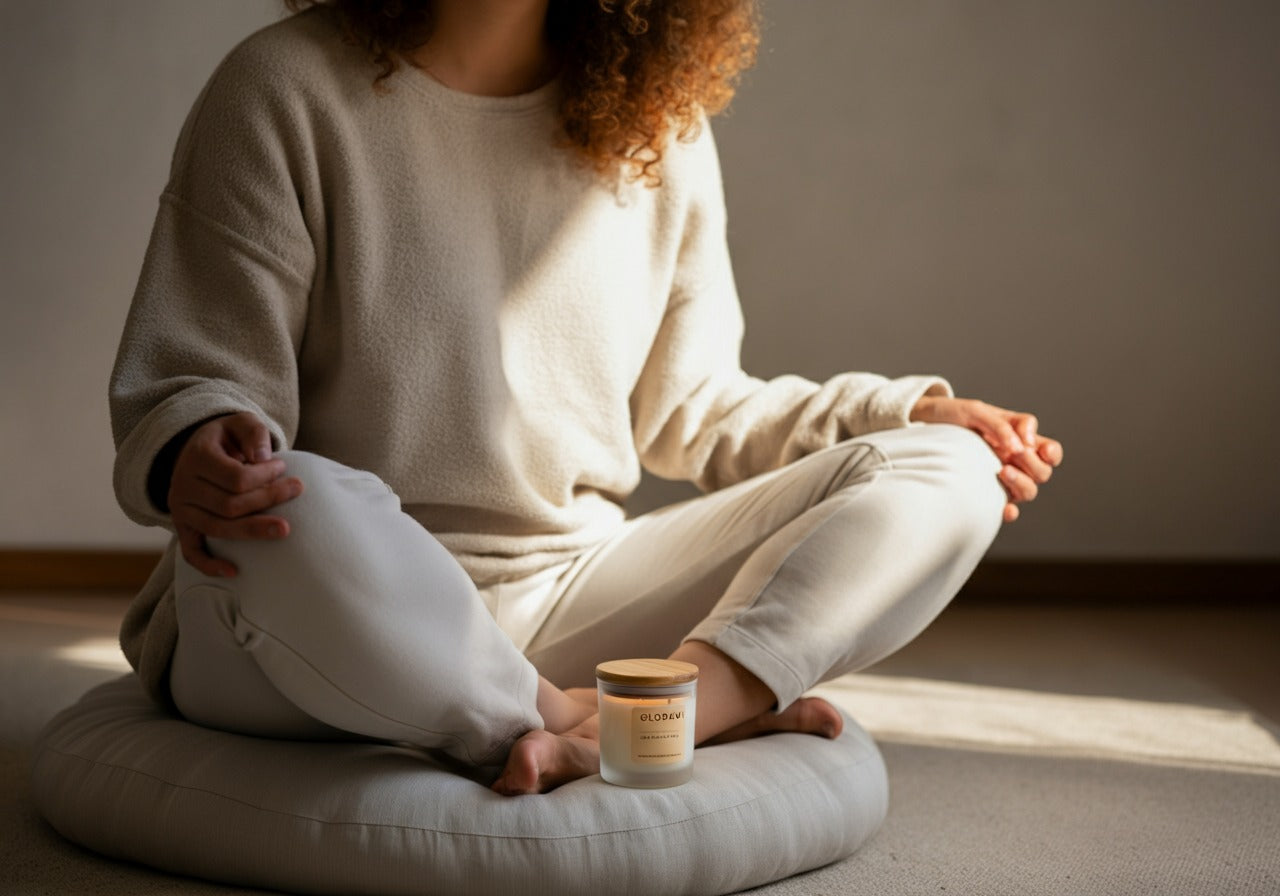
Choose a soft surface on the floor — a yoga mat, folded blankets, a meditation cushion. You'll be lying or sitting for an extended period; physical comfort matters. What to wear to a sound bath covers the clothing side of this, since what you're in contact with during the session affects how deeply you can settle.
Light the candle 20 to 30 minutes before. Adjust the room temperature toward the cooler side if possible — cooler environments support relaxed wakefulness rather than sleep.
Then extinguish the candle, set your timer, and lie down.
The Room Afterward
One underrated aspect of scent in ritual spaces: the close.
When your sound bath ends, the scent is still in the room. That ongoing presence as you return to ordinary waking — stretching, sitting up slowly, re-entering your body — provides a gentle continuity. You're not being jarred back by silence and normal light. The scent is still there, still signaling the same state, giving you a few minutes to bridge the transition rather than land hard.
This is one reason the candle-before approach (light early, extinguish before the session) works better than burning throughout: by the time the session ends, the room has the scent without the ongoing combustion, and the quality of the air is cleaner for the sensitive state you're likely in.
The broader ritual framework — how this sound bath preparation fits within a day of intentional sensory anchoring — is in building your Soft Glow Ritual.
FAQ
Can I burn the candle during the session?
In most cases, no — and not for safety reasons primarily. A candle burning during a sound bath introduces ongoing combustion compounds into the air and provides a visual element that can compete with the sound. The goal is to create conditions where your sensory system can be fully occupied by the sound. A scent that's already in the room, from a candle you've extinguished, provides the olfactory signal without the ongoing stimulus.
Do I need a special "meditation" or "ritual" candle?
Any clean-burning candle with a warm, non-sharp scent profile will work. The "ritual candle" category is largely marketing. What matters is clean combustion (plant wax, cotton wick, phthalate-free fragrance) so that the only input to your nervous system is the intended scent, and consistent use so that the conditioning has something to build on.
What about incense instead of a candle?
Incense works through the same olfactory pathway and can be used the same way — light it before the session, let it burn out or extinguish it before you start. The practical differences: incense smoke is more visible and can be heavier in small rooms, and the scent is typically more prominent and faster to diffuse than a candle. Some people find incense smoke irritating to the throat or sinuses in enclosed spaces. A candle is usually better for home sessions where ventilation is limited.
I'm very scent-sensitive. Should I skip this?
Scent-sensitive individuals should err toward lighter, more neutral options or skip scent entirely. The visual and behavioral elements of the preparation ritual — dimming lights, clearing the floor space, lying down deliberately — are themselves meaningful cues and will provide state-change benefit without the olfactory component. The conditioning mechanism still works with the other sensory cues.
Does it matter what sound source I use at home?
The practice works with recordings — YouTube sound bath sessions, dedicated apps, purchased tracks from practitioners. What matters for the neurological effect is the duration (usually 30 minutes minimum) and the quality of the recording (spatial audio tends to work better than compressed mono). A good set of over-ear headphones or a room speaker that can move some air will serve you better than earbuds.
The sound does the main work. The scent holds the door open.
Building the home version is easier once you have felt the studio version. If you have not been to a session yet, what a sound bath is and what happens during one covers the format, the instruments, and what the research does and does not support.
For everything that happens around the candle in a home session, how to do a sound bath at home walks through choosing a sound source, setting the floor up, and coming out of it when there is no practitioner to bring you back.