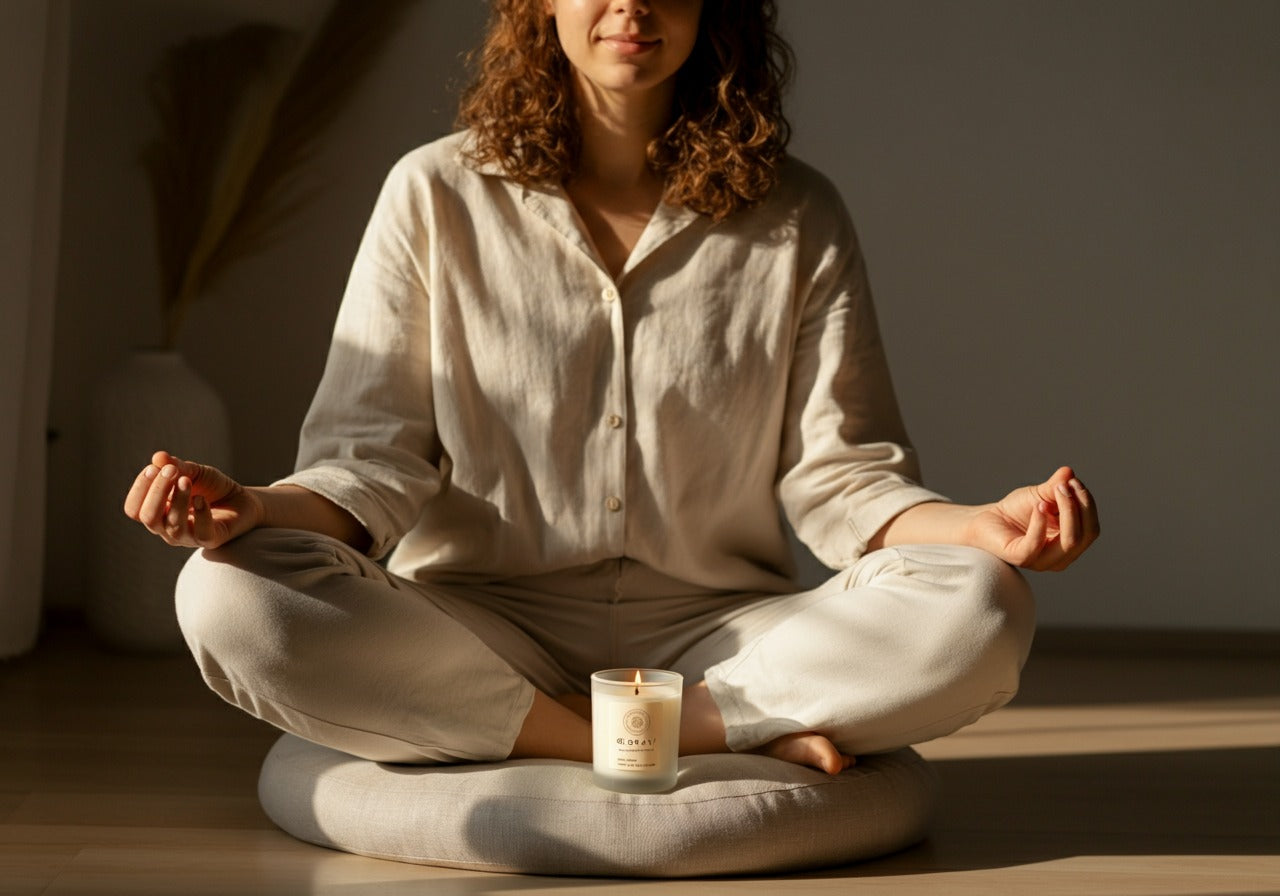
Candles and Meditation: A Sensory Ritual Guide — Gloravi
Most meditation advice focuses on what to do with your mind: follow the breath, return when you wander, be patient with yourself. The sensory environment — what your body is sitting in — gets mentioned briefly if at all.
This is a gap worth closing.
Your brain doesn't just respond to what you consciously attend to. It processes your full sensory environment continuously, and that environment either helps your nervous system settle or makes it work harder to settle. Temperature, texture, light quality, sound, and scent all shape how long it takes to drop from a busy mental state into something quieter.
Of these, scent is the fastest. Not because it's more powerful — but because the olfactory pathway goes directly to the brain regions that manage emotional state, bypassing the thalamic processing that slows down other sensory inputs. Which means the right scent, in the right context, can begin shifting your state before you've taken your first intentional breath.
What Happens When You Use the Same Candle Every Time
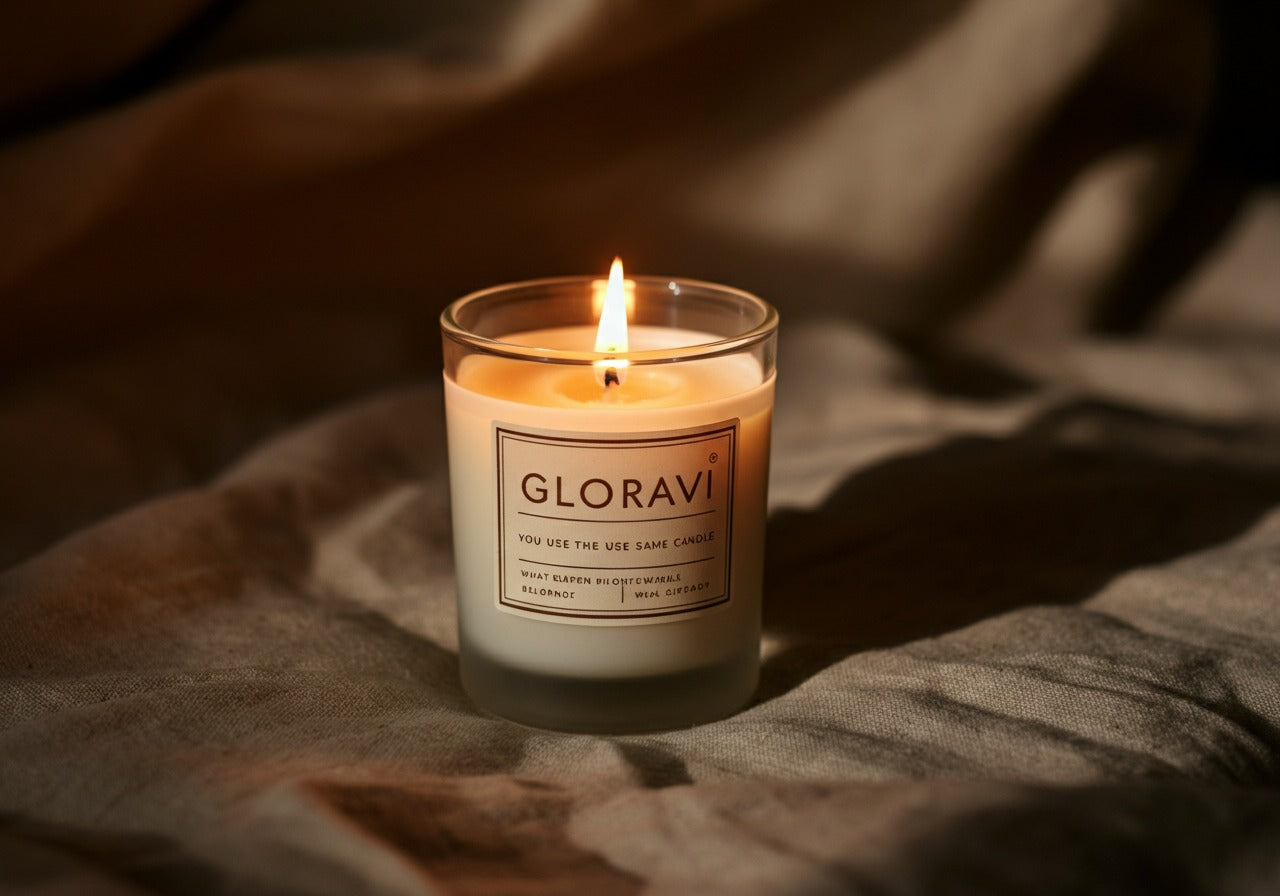
Olfactory conditioning is straightforward: when you pair a specific scent with a specific activity repeatedly, your brain begins to associate them. The scent becomes a cue for the state.
The first few times you sit with a candle during meditation, you're mostly just sitting with a candle. But over eight to fourteen sessions, something shifts. You light the candle, and the settling begins before you've started the timer. Your breath slows. The mental chatter quiets slightly. The transition into the practice happens faster.
This isn't mysticism — it's the same mechanism behind why athletes have pre-game rituals, why the smell of a library makes some people feel studious, why certain songs immediately transport you to a specific period of life. Context-dependent memory. Your brain encodes what you were doing alongside what you were sensing.
The implication for meditation: consistency matters more than the specific scent. Using a different candle every session is like meditating in a different location each time — possible, but slower. The same scent in the same place builds the association faster.
Which Candle for Which Kind of Practice
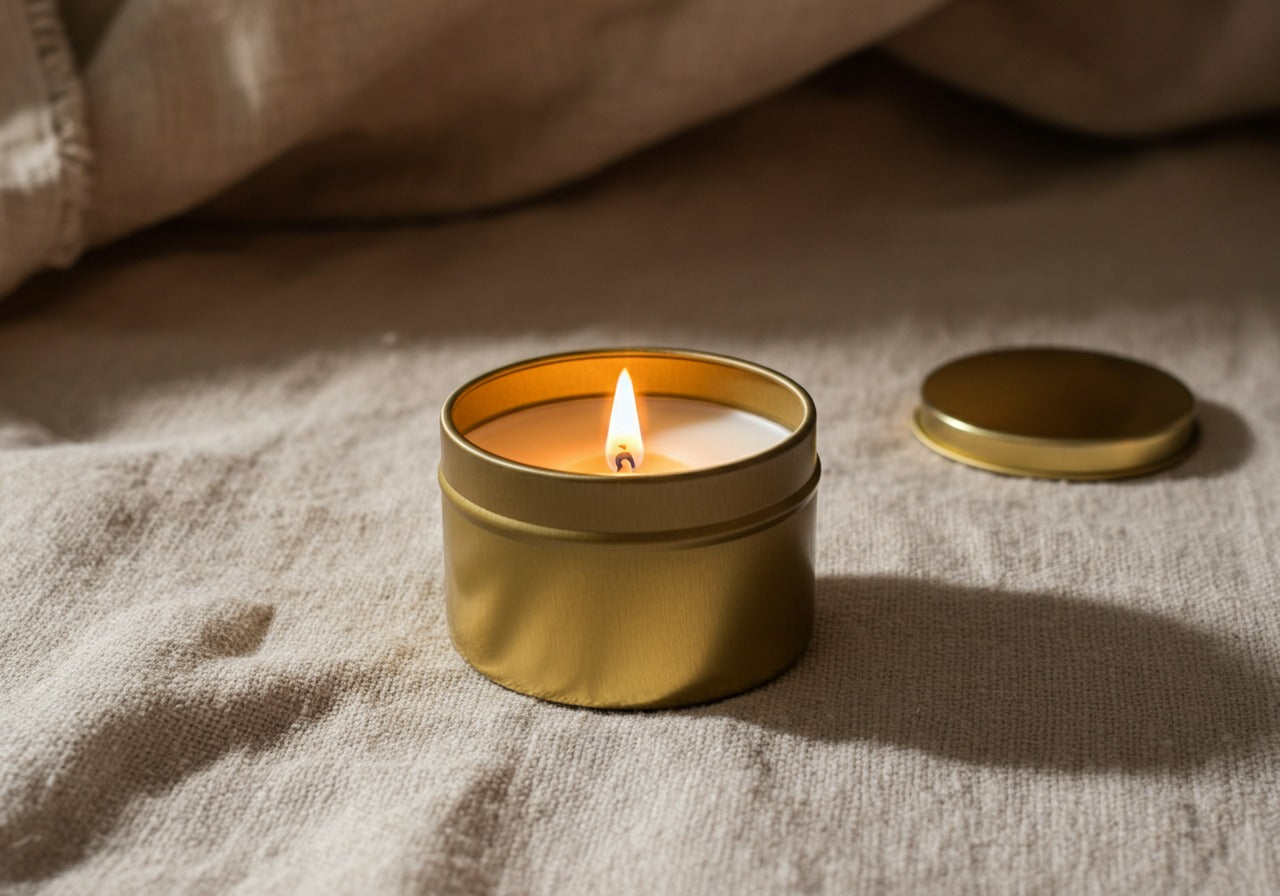
Two states are worth distinguishing here: sessions where you're trying to settle a busy mind, and sessions where you're working toward focused attention.
When your mind is scattered and you need to slow down, a cool, quiet scent profile works best. Cedar, light eucalyptus, clean white florals — these register as still rather than stimulating. They don't add to the sensory load; they create a kind of neutral backdrop. The Stillness emotional state from the Gloravi emotional framework maps to this: cool, airy, not demanding anything from you.
When you're working with a focused meditation practice — body scans, visualization, mantra — a slightly warmer, more present scent helps maintain alert attention without tipping into distraction. Think of it as sensory temperature: neither too stimulating nor too sleepy.
Whatever you choose, the most important variable is that you use the same candle for the same type of session, every time. The conditioning works through repetition, not selection.
If you're still deciding, it helps to pick one and then stop picking. A clean, cool scent you keep just for practice gives the conditioning something steady to attach to, and it takes one small choice off the table on the mornings you'd rather not make any.
When to Light It
Light the candle before you sit, not after. Give it five to ten minutes to build fragrance in the room before your session begins.
There's a practical and a neurological reason for this. Practically, a candle that's just been lit is still producing the thin, sharp combustion note of the very first burn rather than the full settled scent. Neurologically, the scent reaching your olfactory system during the first minutes of lighting is a slightly different chemical profile than what it produces once the wax pool has formed. The full, rounded version of the fragrance is what you want building the association.
The lighting moment itself — trimming the wick, striking the match, watching the flame catch — can become part of the ritual. Many experienced meditators describe the setup sequence as already beginning the shift: the deliberate attention required to prepare the candle is itself a form of transitioning away from whatever came before.
If you sit for 20 minutes, light the candle 5 to 10 minutes before, and let it burn for the full session. Extinguish it after — don't leave it burning while you move on to other things. Over time, the act of extinguishing it can signal the end of the practice window, helping your brain file the session as complete rather than interrupted.
Flame Gazing as a Practice
There's a traditional meditation technique called trataka — sustained gazing at a single point of light, often a candle flame. It's used in several contemplative traditions as a way to anchor attention and train concentration.
Practically, a soft candle flame at eye level is an unusually effective focus object. It moves slightly, which keeps your visual system engaged enough not to wander. It's warm-toned, which is less activating than blue or white light. And it's genuinely beautiful in a way that doesn't demand complex visual processing — a flame is simple enough to rest on.
If you practice this: position the candle at roughly eye level when seated, about an arm's length away. The flame should be small enough that looking at it doesn't cause eye strain. Soft, indirect light in the rest of the room makes the contrast work — the flame stands out without you having to squint toward it.
Flame gazing and scent together combine two different sensory channels working toward the same state. The visual anchor holds attention; the scent starts the nervous system shift. It's a different practice than eyes-closed breath meditation, but not a more complicated one.
The Meditation Corner Connection
The same logic that makes a dedicated meditation corner more effective applies to the candle within it. A specific spot, used repeatedly for the same purpose, becomes a context cue that begins shifting your state when you walk into it. The candle is the olfactory equivalent of that corner: a sensory signal attached to a specific practice.
How to build a meditation corner covers the environmental setup in detail — spot selection, seating, visual environment. The candle belongs in that setup as a sensory anchor, not just an aesthetic choice.
If you're using both a dedicated corner and a consistent candle, the conditioning compounds. You walk into the corner, smell the candle, and your nervous system has two simultaneous signals pointing toward the same state. The transition becomes faster. Over time, entering the corner alone — before you've lit the candle — can begin to initiate the shift.
FAQ
Can I use any scent for meditation, or are some better?
Any consistent scent will build conditioning with use. That said, lighter scents — those without heavy sweetness or high projection — tend to settle into the background more easily, which is what you want in a meditation environment. A scent that demands attention isn't serving the practice. If you find yourself noticing the candle smell throughout the session, try a lower-scent-load option or a smaller candle.
What if I find scent distracting during meditation?
Some people are more olfactory-sensitive than others, and strong fragrances during contemplative practice can become a foreground element rather than a background one. If that's your experience, two options: use an unscented candle for the flame-gazing component and the visual anchor, or reduce the burn time before the session so the room has a lighter fragrance presence. The conditioning works best when the scent is present but not demanding.
Should I use the same candle I use during the day?
For conditioning purposes, yes — if you want the candle to become specifically associated with meditation, use a different scent than your morning work candle. Scent associations are specific enough that the same fragrance will link to whichever context you use it in most consistently. A dedicated meditation candle, even if it's just a smaller size of something you already own, builds a cleaner association than sharing with other contexts.
Does the candle need to be in the room during the whole session?
If it's burning, yes. If you're using it primarily for the conditioning ritual (light it, do the setup sequence, begin the session), extinguishing it a few minutes into the session won't dramatically break the conditioning — the association is formed around the ritual of lighting, not necessarily the ongoing burn. That said, a candle burning through the session provides continuous olfactory input rather than a one-time cue, which generally produces stronger conditioning over time.
My practice is inconsistent. Will conditioning still build?
Slower, but yes. The association requires repetition, not perfect frequency. A daily practice builds conditioning faster than a twice-weekly one, but both build it. What breaks conditioning is using the scent in very different contexts between sessions — if your meditation candle is also your "working at the kitchen table" candle, the association diffuses across states. Dedicate that scent to the practice, and use it there.
The other half of the ritual is what fills the quiet once the candle is lit. If silence is the part that never quite settles, one option is a ten-minute meditation written around your own evening — you answer seven small questions about what’s on your mind, an AI writes and narrates the practice, and it’s in your inbox by morning for $9. Pair it with the Evening Ritual candle set and the flame, the scent, and the voice all land in the same ten minutes of your night.
Meditation is one room in a larger house. Once a scent starts cueing your practice, it's natural to want the same gentle signals woven through the rest of your day. When you're ready to widen it, building your soft glow ritual shows how to grow a single candle moment into an evening you actually look forward to.
The candle doesn't make you meditate. It makes starting easier.