
The Comfort-First Wardrobe: Dressing for Real Life
A comfort-first wardrobe is built around one principle: the clothes you reach for without thinking should also be the ones that make you look and feel like yourself. That means soft fabrics that don't require adjustment, silhouettes that work across multiple scenarios, and a small enough selection that getting dressed takes one decision instead of twelve. This guide covers the framework — what a real comfort-first wardrobe contains, how to build outfits for the four scenarios that make up most women's daily lives, and what to look for in the pieces that carry the most weight.
What "comfort-first" actually means
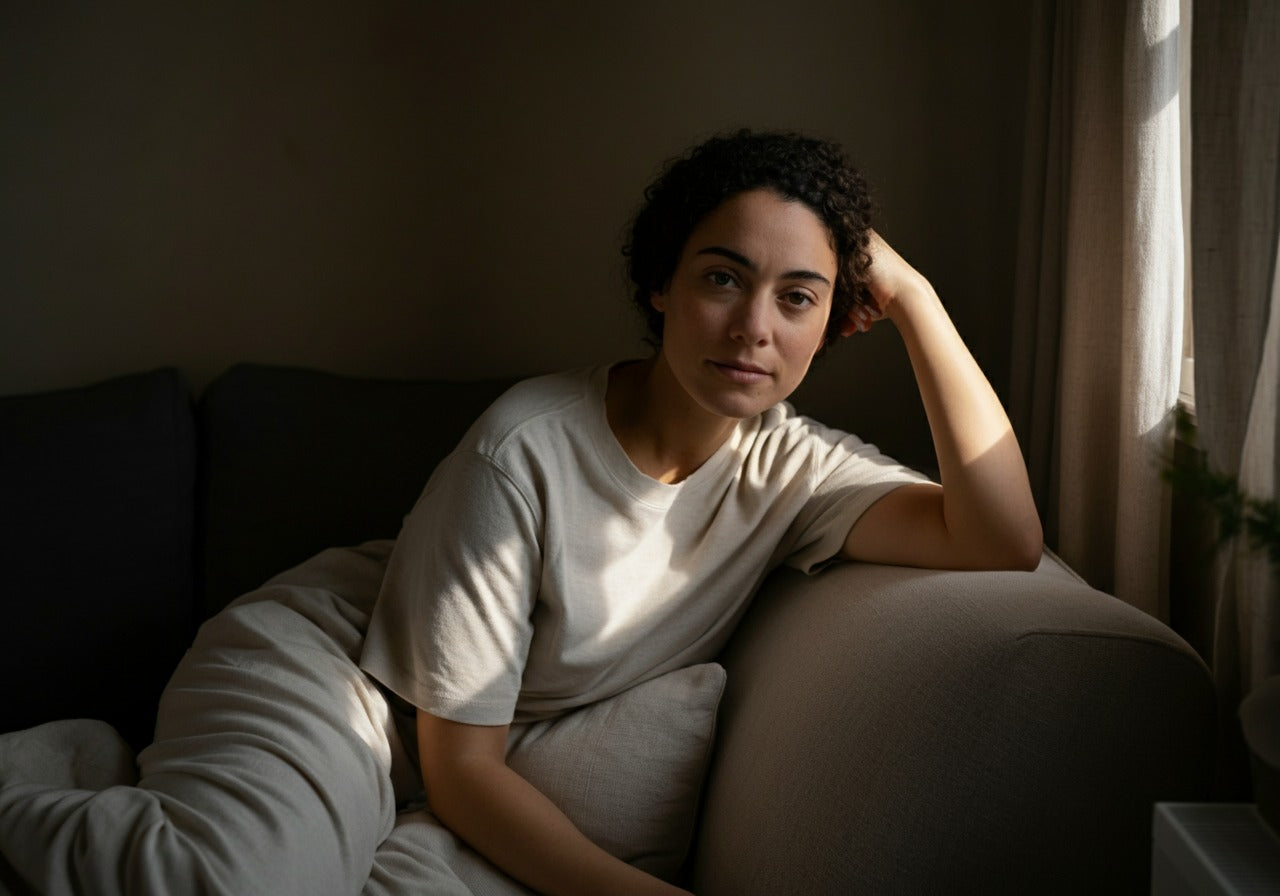
Comfort-first dressing is not the same as casual dressing. Casual describes a dress code. Comfort-first describes an approach to building a wardrobe — one where the starting point is how a garment feels throughout a full day of wearing it, and style follows from there.
The distinction matters because most "comfortable outfit" content is actually just casual outfit content: jeans, oversized tees, sneakers. Those pieces can be comfortable, but comfort-first dressing goes further. It asks: does this fabric feel good against my skin after eight hours? Does this waistband sit comfortably whether I'm sitting, walking, or curled on the sofa? Does this silhouette allow me to move freely without managing it?
For most women in their late twenties through forties, the daily wardrobe needs to cover four main scenarios — working from home, running errands, low-key socialising, and genuinely restful days at home. A well-built comfort-first wardrobe handles all four without requiring separate categories for each. And on the days when comfort becomes something more deliberate — when what you wear is specifically about how you want to feel — dressing for how you want to feel covers the emotional and psychological dimension in depth.
The 4-scenario wardrobe framework

The most useful way to audit a wardrobe for real-life comfort is to think in scenarios, not occasions. Occasions change. Scenarios — the actual situations your days contain — stay fairly consistent.
Scenario 1: Working from home
The WFH outfit has specific requirements most outfit content ignores: it needs to work on camera from the waist up, feel non-restrictive for a full day of sitting, and hold up if you step outside for a walk or errand.
The most reliable WFH formula: a soft, ribbed or knit top in a solid colour that reads well on screen, paired with high-waist leggings or relaxed trousers below. The top is the camera piece — it should feel intentional without requiring ironing or tucking. The bottom is entirely about physical comfort.
A ribbed tank in a muted solid shade works for both the camera layer and as a base under a zip-up when you're off-camera. Eight colour options means you can find the shade closest to what you already wear.
Scenario 2: Running errands
Errands require the most from a comfort-first outfit because they involve movement, temperature changes, and the possibility of running into someone you know. The ideal errands outfit looks considered rather than thrown-on, functions across temperature variation, and involves no management — no hem to hold, no bag strap slipping, no waistband to readjust.
The formula: high-waist leggings in a neutral tone as the foundation — they move with you, stay put, and work in both warm and cool environments — with a relaxed top that's long enough to feel covered in all positions. Add a cropped zip jacket for temperature variation. Slip-on shoes. Done.
For the specific outfit formulas that handle movement, temperature, and the surprise encounter, outfit ideas for running errands breaks down four approaches that actually work.
Scenario 3: Low-key social occasions
Coffee with a friend, a casual lunch, a slow afternoon in a neighbourhood you like — these are the outfits where "comfortable" and "I want to feel like myself" need to coexist. This is where a matching lounge set or soft two-piece earns its place.
A monochrome soft set — same fabric, same colour family, top and bottom — reads as an actual outfit rather than separates. The key is the fabric: a set in modal or smooth cotton-jersey reads elevated; one in a rough or heavily logoed fabric reads like loungewear regardless of the silhouette. Same shape, entirely different impression.
The additional element that bridges comfort and "I tried" is usually one single considered piece — a bag, simple earrings, clean shoes. Not an overhauled outfit. Just one thing that anchors it.
Scenario 4: Genuinely restful days at home
Rest days have their own outfit logic worth taking seriously. The clothes you wear when you have no obligations shape how your body and mind settle into rest. Tight clothes, scratchy fabrics, or anything with a defined waistband keep the body in a mild state of alert — the opposite of what rest requires.
For genuinely restful days: the softest fabric you own, the most generous fit you feel comfortable in, and no waistband with hardware. If you're investing in one category of comfort-first clothing, this is where fabric quality matters most. For the specific research behind why your home outfit affects more than just physical comfort — and the outfits that genuinely work — cozy outfits at home that don't look like you've given up covers it in detail.
The 5 pieces that do the most work
A comfort-first wardrobe doesn't need to be large. Five well-chosen pieces, each capable of working in multiple scenarios, cover most of daily life.
1. High-waist leggings in a neutral solid The single highest-utility piece. Works for WFH, errands, gentle movement, and rest days depending on what's paired with it. A neutral — warm stone, deep navy, soft black — maximises the number of tops it works with.
2. A ribbed long-sleeve or tank in a muted tone Ribbed fabric reads as dressed even when the silhouette is simple, which is why it works on camera and in social contexts that other comfortable basics don't. Choose a colour you already wear frequently.
3. Wide-leg or flared pants in a soft fabric The lower-half alternative for scenarios that call for something slightly more put-together. Modal, a draping synthetic, or a soft cotton blend rather than structured denim. Elastic or soft waistband only.
4. A zip-up or soft drape layer The temperature regulation piece. Works over any of the above. Choose one that sits in the same colour family as your most-worn basics so layering never creates a mismatch.
5. A matching soft set The social outfit that requires zero decisions. Buy it in a colour you'd wear individually so the pieces also function separately.
What to look for in fabric
The quality of a comfort-first wardrobe comes down almost entirely to fabric.
| Fabric | Best for | Key quality |
|---|---|---|
| Modal | Tops, sets, soft pants | Silky smooth hand feel, excellent breathability, holds shape |
| Bamboo viscose | Warm-weather pieces, sensitive skin | Cooler against skin, drapes well, temperature-regulating |
| Cotton-jersey | Layering pieces, rest-day basics | Familiar, soft, breathes well — quality varies by weight |
| Nylon-spandex | Leggings only | Structural hold without compression, best for active-adjacent wear |
What to avoid: anything with more than 20% polyester in the top layer, heavily structured knits that hold their shape rather than moving with the body, and any waistband with internal boning or thick elastic that sits directly on the skin.
Building the wardrobe without starting over
- Audit by scenario. Go through your current wardrobe and assign each piece to the four scenarios above. Note where you have gaps — usually in the "errands outfit that looks considered" or "soft social set" categories.
- Identify your most-reached-for pieces. These are your comfort anchors. Build around them rather than replacing them.
- Fill specific gaps, not general ones. "I need more comfortable clothes" leads to indiscriminate buying. "I have nothing for temperature variation during errands" leads to buying one layering piece that solves the problem.
- Prioritise fabric over style in comfort-first pieces. A soft modal top in a plain colour will outlast and outperform a more interesting polyester top every time.
Frequently asked questions
Can a comfort-first wardrobe look stylish?
Yes, and the two aren't in conflict when the starting point is fabric quality and fit rather than trend. A well-fitting ribbed set in a considered colour looks more intentional than a trend-forward outfit in a fabric that fits poorly. Comfort-first dressing often looks quieter than trend-driven dressing — which is a feature, not a limitation.
How many pieces do I actually need?
For daily life across four scenarios, eight to twelve pieces of genuine comfort-first clothing covers most situations. That's two to three options per scenario, with overlap between them. More than that and the decision-making doesn't simplify — it just moves into a larger wardrobe.
What's the difference between a comfort-first wardrobe and a capsule wardrobe?
A capsule wardrobe minimises quantity and maximises versatility, regardless of comfort criteria. A comfort-first wardrobe prioritises physical ease and fabric quality. The two approaches overlap significantly — both favour neutral colours, versatile pieces, and quality over quantity — but comfort-first places more emphasis on how garments feel to wear than on how they look.
Is comfort-first dressing the same as athleisure?
No. Athleisure is a style category that uses activewear fabrics and silhouettes in non-athletic contexts. Comfort-first is a philosophy that can apply to many style categories — including athleisure, but also soft tailoring, lounge dressing, and casual dressing. Comfort-first asks: does this feel good to wear? Athleisure asks: does this look like activewear?
For days when you want the outfit to be completely effortless, comfortable matching sets are the lowest-friction option in any wardrobe.
Getting dressed every day should be the easiest part of your day, not the part that depletes decision-making energy before anything else has started. The comfort-first wardrobe makes that possible — not by having fewer options, but by having better ones. For the specific version of this for women in their 30s, where body and lifestyle changes make the comfort-first logic particularly relevant, comfortable outfits for women in their 30s addresses what actually changes and what to do about it.
If you spend part of your day working from home, comfortable work-from-home outfits for women explores how to feel dressed without sacrificing the ease of being home.
For a guide to loungewear that works across more of your day — from WFH to coffee runs to travel — without changing clothes between contexts, the intentional loungewear guide covers the fabric, silhouette, and color principles that make it work.
And when the goal is looking pulled together without trying, here's why some loungewear looks put together and some just reads as pajamas — it usually comes down to fit and fabric, not price.
Keeping a wardrobe this simple gets easier when you slow down before you buy. Five questions to ask before every purchase is a quick filter for what actually earns a place.