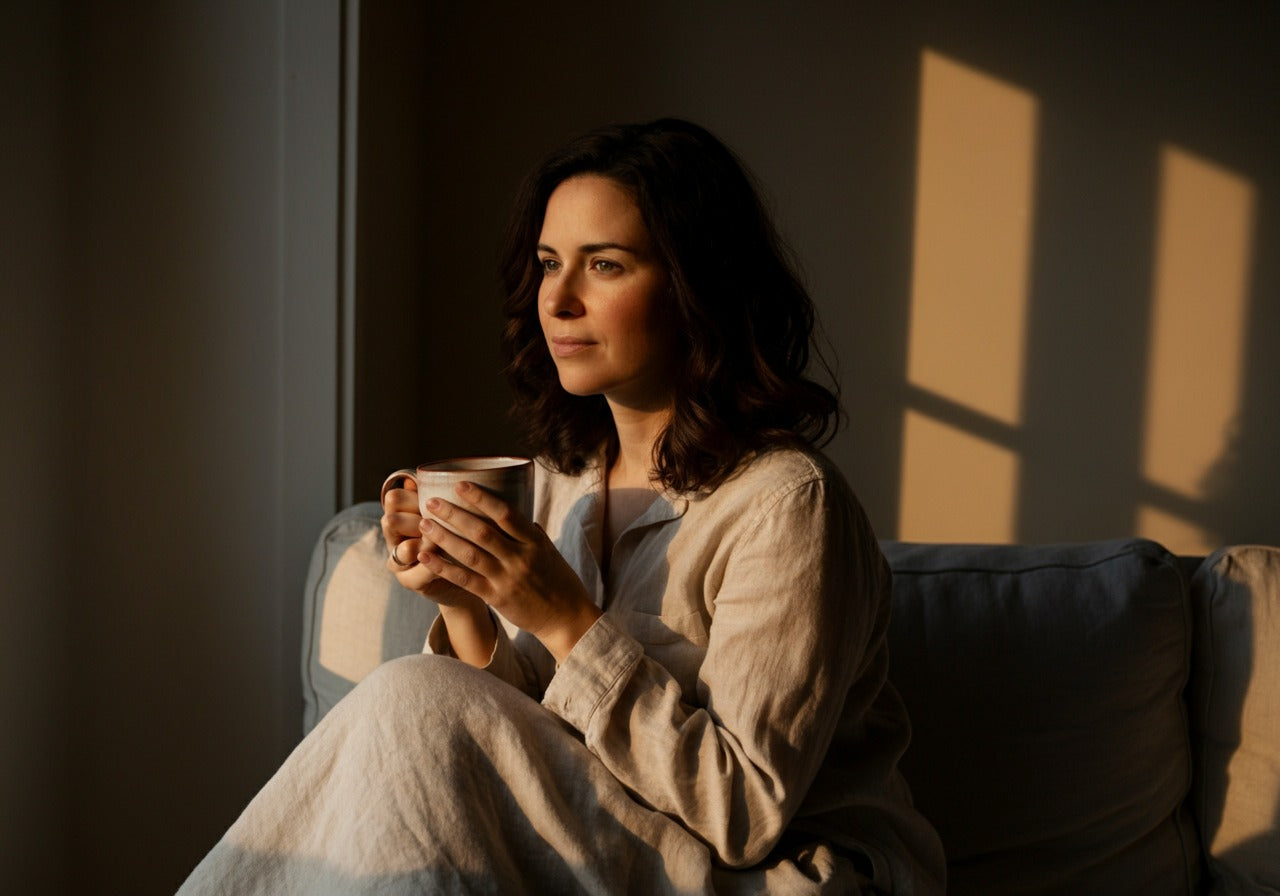
Dressing for How You Want to Feel: A Guide to Comfort and Intentional Style
The first real decision of your day isn't what to eat or which task to tackle first. It happens the moment you open your closet — a quiet, internal scan that most of us do without naming it. You're not picking an outfit. You're reaching for the way you want the next few hours to feel.
Psychologists call it enclothed cognition — the documented link between what you wear, how you think, and how you carry yourself. But you don't need the research to know it's real. You've felt the shift every time you changed out of something that was bothering you all day and finally breathed. The question isn't whether your clothes affect your mood. The question is whether you're paying enough attention to use the connection intentionally.
Your clothes are sending your brain a signal
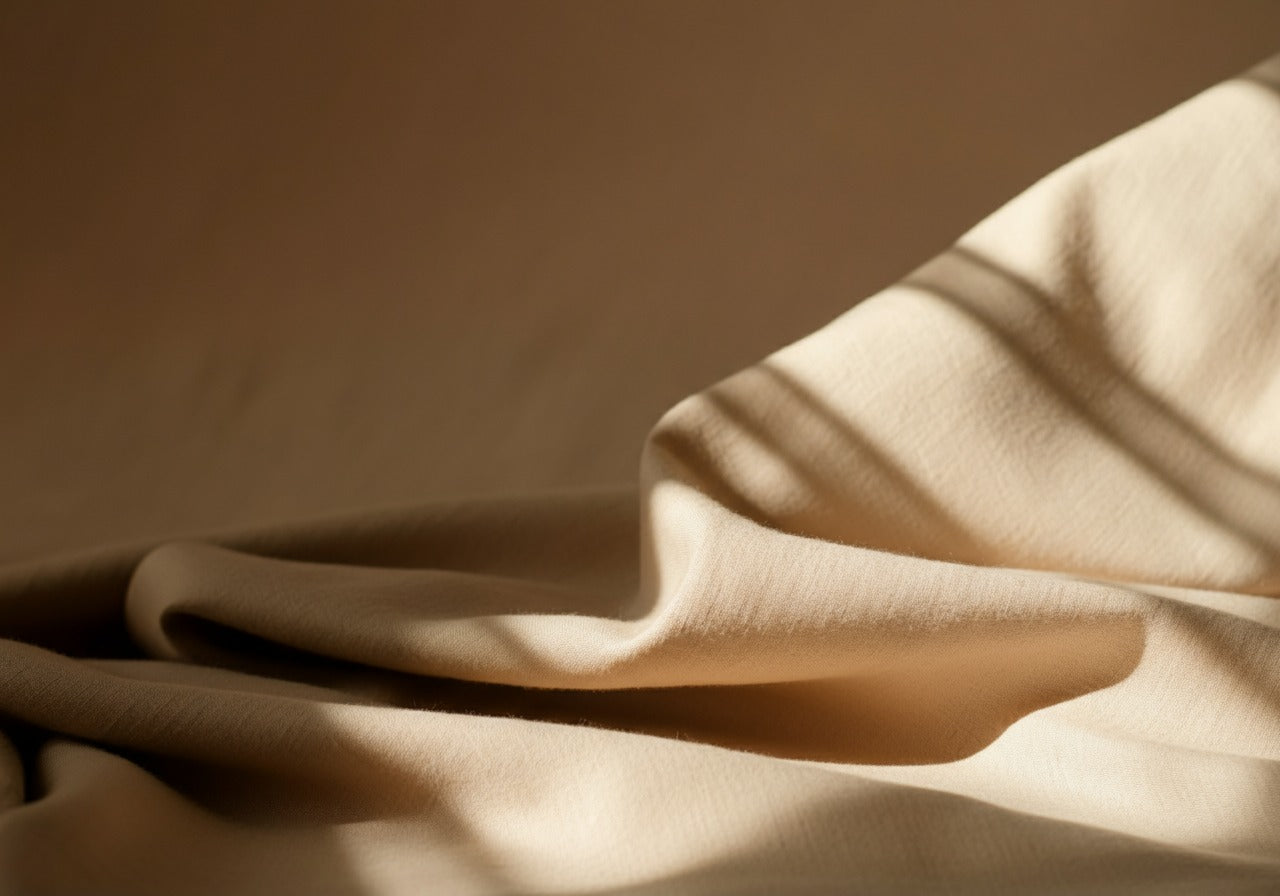
Before the morning coffee kicks in, your nervous system is already reading your outfit like a note. Fabric that pulls or scratches creates a low-level irritation that compounds across hours — mildly annoying at 9am, genuinely wearing by 3pm. A waistband that digs means part of your attention is always there, adjusting, aware of it. These aren't dramatic things. They're just small costs that add up.
On the other side: fabric that moves with you all day — soft, smooth against the skin, not demanding anything — removes that cost entirely. There's nothing to manage. Your body gets to relax into the day instead of bracing against it.
The clothes we associate with ease — a matching set we've worn on a slow Sunday, a hoodie from a good trip — also carry that emotional memory. Reaching for them on a harder morning is less about comfort dressing as a concept and more about giving yourself a head start. It works because the association is real, not because you've talked yourself into it.
Color and why saturation matters more than the color itself

The standard advice is "wear bright colors to boost your mood." The fuller picture is more useful: it's not the color, it's the saturation. High-saturation colors — think neon yellow, electric blue — are visually activating. They make the brain work a little harder. On days when you already feel scattered or overstimulated, that's the last thing you need.
Muted, low-saturation tones — dusty sage, warm oat, soft terracotta — have a different quality. They're still colors, but they don't demand anything from you. There's a reason that a dusty mauve set feels like exhaling while a bright red one feels like bracing. Same color family, completely different effect.
Monochrome outfits follow the same logic. Wearing a single tone head to toe isn't boring — it's visually quieter. Your eye doesn't have to work to reconcile competing colors, which sounds small, but across a full day it genuinely shifts something.
Silhouette and the body experience of fabric
How a piece of clothing hangs and moves on your body shapes how you move through the day. Wide-leg pants — the kind that shift with you rather than gripping — feel different walking to the kitchen at 8am and running an errand at noon. There's room for the day to change shape. Wide-leg lounge pants styled beyond the couch is a good place to start if you want to see how this silhouette actually moves across different daily contexts.
Matching sets do something specific that separates pieces often don't: they make the decision in advance. You pull out one thing, and you're dressed. On an ordinary day that's a small convenience. On a hard morning — the kind where every micro-decision costs something — it matters more than it sounds. The outfit is already there, already resolved. Comfortable matching sets for lounging and living has a full breakdown of how to make this work at home and outside of it.
Fabrics that are mostly nylon, polyester, and spandex — which is the honest reality of most comfortable activewear and loungewear — can feel very different depending on how they're knit and finished. A ribbed texture feels grounding and a little substantial. A smooth, flat weave feels lighter and less present. Neither is better. One might be right for the kind of day ahead.
What the morning outfit ritual is actually doing
Changing into specific home clothes at the end of a work day sounds like a small habit. What it's actually doing is marking a transition — telling your nervous system that one mode is over and another has begun. The transition is physical, so the shift registers differently than just deciding to stop thinking about work.
The same logic runs in reverse in the morning. Putting on real clothes (even soft, comfortable ones) instead of staying in sleep clothes moves you toward the day rather than hovering at its edge. This isn't about performing productivity. It's about giving yourself a clear on-ramp.
The specific clothes matter less than the intentionality: choosing what you're putting on based on how you want the next few hours to feel, not just reaching for whatever's there. On days when you want to feel capable and settled, a ribbed tank top and high-waist leggings in a neutral does that. On days when you want to feel soft and unhurried, a loose matching set in a muted tone does that. Neither is the right answer in the abstract — it depends on the day.
On hard days, reduce the decisions
The hardest kind of dressing is when getting dressed at all is a real effort. On those days, comfort dressing shifts from a nice idea to an actual tool.
The principle is: fewer decisions, more sensory gentleness. A complete set you already know you like removes the construction problem. You don't have to assemble anything. You reach for one thing, and it's done. Fabrics that feel actively pleasant against the skin — smooth, soft, not scratching or pulling — provide a small but consistent input that works against the physical weight of a low-energy day.
On these days, don't choose anything that requires management. No waistband that needs adjusting, no strap that slips, nothing that asks for attention. The outfit should be a complete absence of friction. Cozy outfits at home that don't look like you've given up has specific options that sit exactly in this space — intentional enough to feel cared-for, simple enough to ask nothing of you.
The honest version of this
Dressing for how you want to feel isn't a formula and it doesn't fix everything. A difficult day in a perfect outfit is still a difficult day. But there's a real and cumulative difference between moving through your hours in clothing that's working against you — quietly irritating, requiring small adjustments, making you feel vaguely off — and clothing that's just there, comfortable and resolved, not adding to the weight.
Most of us have already figured out which pieces in our closets do the first thing and which do the second. The practice is just paying enough attention to reach for the right ones on the mornings when it counts.
A mindful morning practice often starts with what you reach for first — the full guide to a mindful morning routine connects the dressing piece to the rest of how you start your day. The evening version of this — deliberately changing into something that signals rest — is one of the most effective parts of an evening wind-down routine.
The same principles apply to everyday remote work — comfortable WFH outfits that support focus looks at this through the lens of a typical at-home workday, including the research on why what you wear changes how well you think.