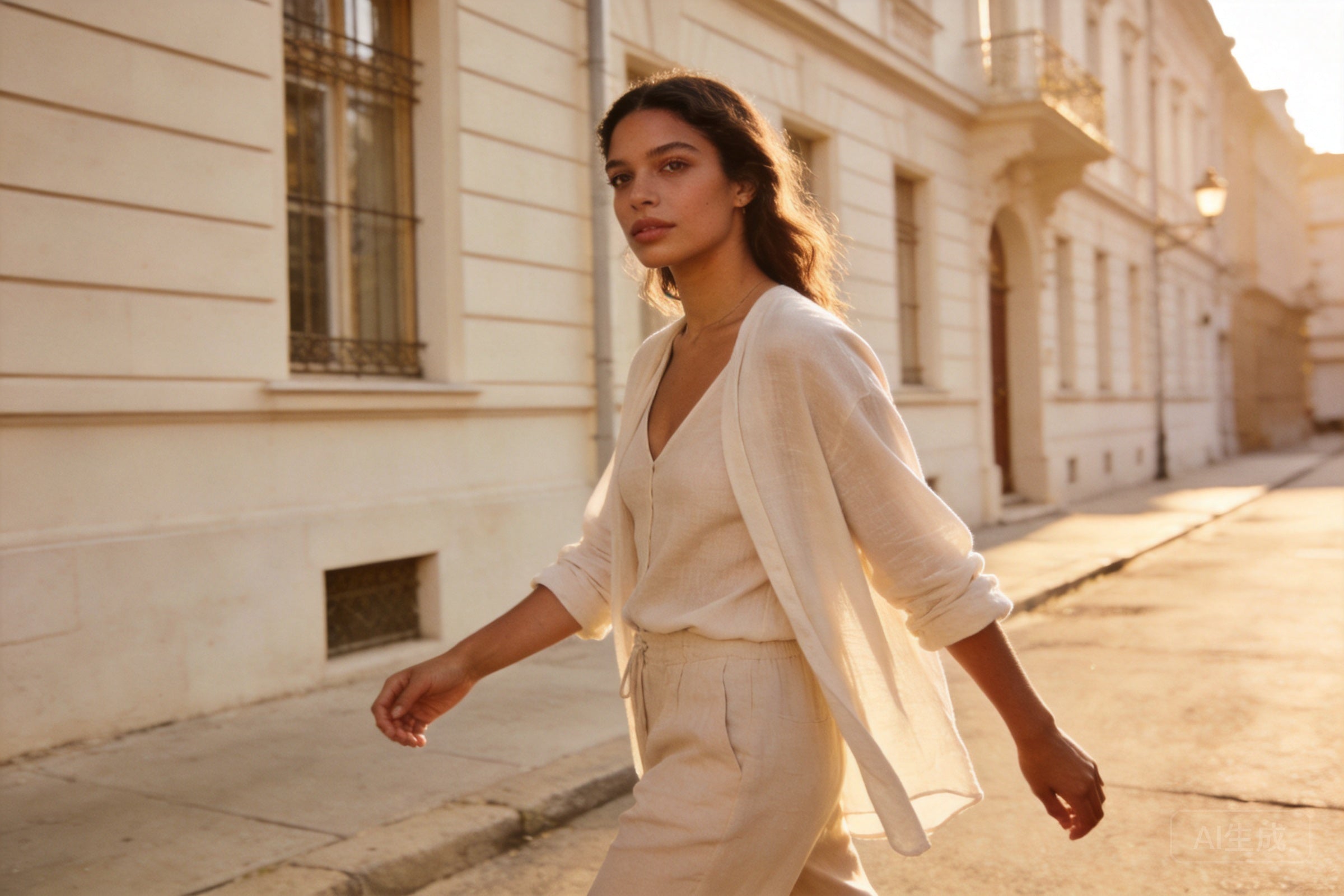
Comfortable Work from Home Outfits for Women That Help You Focus
You sit down to work in yesterday's oversized t-shirt and realize, two hours later, that you've been in a low-level fog. Not tired, not distracted — just slightly off. The work is happening, but you're not quite in it.
The outfit might have something to do with that.
Research into what psychologists call "enclothed cognition" — first documented by Adam and Galinsky in a 2012 study — shows that what you wear changes how you think, not just how you look. The effect isn't about looking put-together. It's about the signal your clothes send your brain before you've typed a single word. Comfortable work from home outfits for women, when chosen well, thread a specific needle: soft enough that you're not fighting your clothes all day, structured enough that your brain registers this is work time.
This isn't a product roundup. It's a guide to understanding what actually works — and why.
Why Your WFH Outfit Affects More Than Your Mood
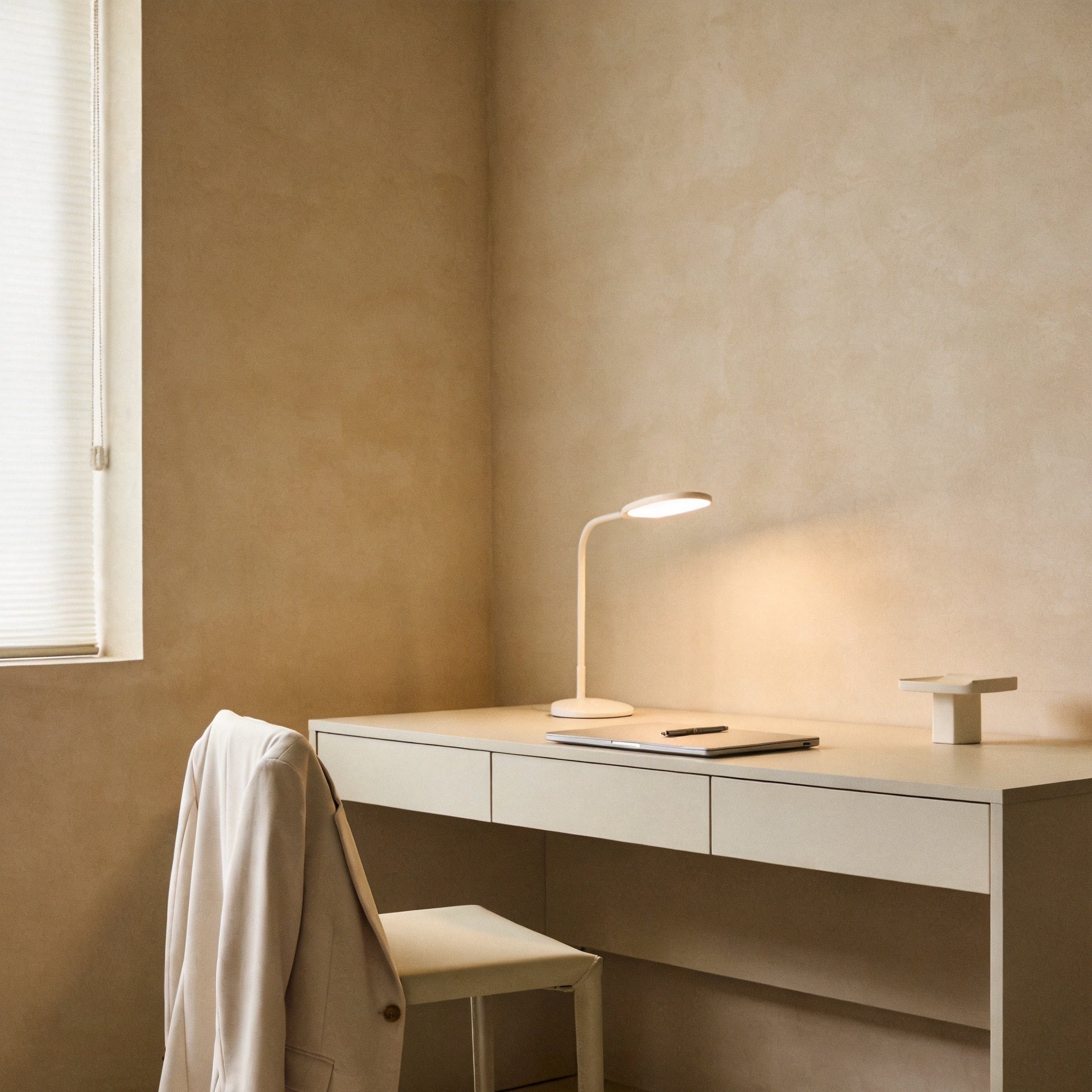
The friction people feel when working from home isn't usually about motivation. It's about mental boundary-setting. The physical signals that used to separate work and rest — the commute, the office, the shoes — are gone. What's left are the signals you create yourself.
Clothing is one of the most reliable ones.
A 2012 study asked participants to wear a doctor's coat while completing attention tasks. Those wearing the coat made significantly fewer errors than those who wore the same coat but were told it was a painter's coat. Same fabric, different result — because the meaning they assigned to it changed how they paid attention.
You don't need a blazer to replicate this. You need an outfit that reads as "I'm working" to your own nervous system. For most women working from home, that means something that:
- Feels genuinely comfortable (no waistbands that distract you every 20 minutes)
- Has enough visual coherence that it doesn't read as "about to nap"
- Can survive a sudden video call without requiring a wardrobe change
The irony is that pajamas fail all three criteria — not because they're too casual, but because they're actively associated with rest. Wearing them while trying to focus creates a small, constant cognitive friction.
The Comfort vs. Scattered Problem
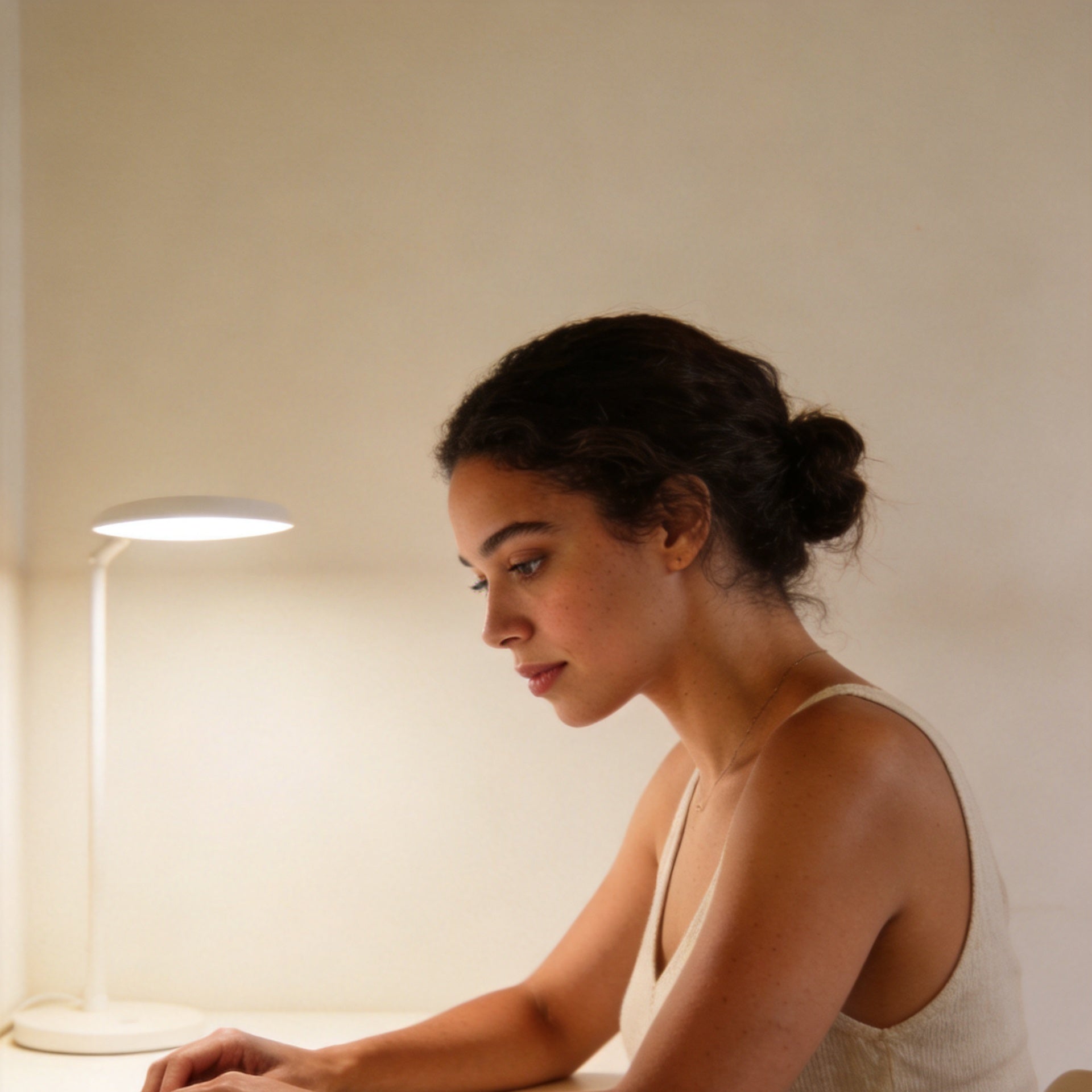
There's a version of "comfortable" that pulls focus rather than protecting it.
An oversized hoodie that bunches up. A waistband that digs in when you sit. Fabric that pills after one wash and now feels slightly wrong. These aren't small annoyances — they're low-frequency distractions that add up across a six-hour workday.
The outfits that actually work for WFH have a specific quality: they disappear. You stop thinking about them within ten minutes of putting them on. The fabric doesn't demand your attention. The fit doesn't require adjusting.
Ribbed knits do this well. The structure of a ribbed fabric holds its shape across hours of movement — reaching, shifting in your chair, standing to stretch. A ribbed tank in a neutral shade layered under something light stays comfortable from morning through late afternoon without losing its shape or requiring a rethink at 2pm.
Matching sets remove a decision. When top and bottom are already coordinated, you've eliminated a small daily decision before your workday starts. That might sound minor, but decision fatigue is real — studies on self-regulation suggest that willpower depletes with use, and spending mental energy on outfit coordination is energy not available for actual work. A ribbed two-piece in a soft, muted tone solves this before the day begins.
How a WFH Day Actually Unfolds (and What to Wear for Each Part)
Most WFH outfit advice treats the day as a single block. It isn't. The needs shift.
Morning: The First 90 Minutes
The first part of the workday is typically the highest cognitive load — when most people do their deep work, answer complex emails, or handle calls that require full attention. This is also when you're most likely to still be in whatever you slept in.
Getting dressed before you sit down to work matters more in the morning than at any other time. It doesn't have to be elaborate. A tank, a soft pair of wide-leg pants, something on top you could answer the door in — that's enough to shift the mental register.
The goal isn't polish. It's the physical act of transitioning.
Midday: Video Calls and the "Camera On" Panic
If you've been on a video call where you suddenly realize your top looks worse on camera than it does in real life, you know this specific stress. Ribbed or textured fabrics photograph well — they have visual dimension that reads clearly on screen without requiring pattern or accessories.
A wide-leg lounge pants set with a cropped tee works here because the top half reads clean on camera while the bottom gives you full comfort for the hours you're not on screen.
Solid colors in mid-tones (dusty rose, warm stone, heathered sage) translate better on video than bright whites or very dark blacks, which can blow out or flatten under standard home lighting.
Afternoon: The Low-Energy Hours
Between 1pm and 3pm, most people hit a natural energy dip — this is biological, not a focus failure. The circadian rhythm dips slightly in the early afternoon, and energy levels typically follow.
This is when an uncomfortable outfit becomes most disruptive. A waistband that felt fine at 9am becomes actively annoying by 2pm. Fabric that was acceptable in the morning starts to feel scratchy or too warm.
The outfit choices that hold up through the afternoon are the ones with genuine stretch, fabric weight appropriate for your home temperature, and nothing that requires maintenance (no straps slipping, no hems that catch on chairs).
What Fabric Actually Does for Your Focus
This is where most WFH outfit guides stop short. They say "choose soft fabrics" without explaining what soft means in practice.
Fabric affects attention in two ways: through tactile comfort (what it feels like against your skin) and through thermoregulation (whether it keeps you at a temperature where you can focus).
Research on thermal comfort and cognitive performance shows that the ideal working temperature for most people falls between 70–77°F (21–25°C). But even within a properly temperature-controlled room, the fabric you wear affects your perceived temperature significantly.
Four-way stretch fabrics (typically nylon-spandex blends) move with you without creating friction points. They're the reason athletic-adjacent clothing has become so dominant in WFH wardrobes — not because people are exercising, but because the fabric engineering that makes movement comfortable also makes sitting comfortable.
Ribbed knits add mild compression that many people find settling, without restricting circulation. The structure means they don't lose shape throughout the day, which matters when you're shifting positions every hour.
Avoid: Heavy cotton that wrinkles when you sit. Fabrics that don't breathe. Anything that needs ironing to look intentional.
For a broader breakdown of how different fabric types interact with body temperature and skin sensitivity, the Gloravi fabric guide goes through this in detail.
The Actual WFH Outfit Formula
After considering the research and the practical demands of an at-home workday, the formula that holds up is:
-
A base layer that doesn't require adjusting — ribbed tank, fitted crop top, or soft short-sleeve tee. Something that sits close enough to stay in place but has enough stretch to be forgotten.
-
Bottoms with a comfortable waistband and actual structure — wide-leg lounge pants, flared yoga pants, or ribbed sets. The key is that they look like a choice, not an absence of choice.
-
A light top layer for temperature shifts and calls — a zip-up jacket, a cardigan, or a soft burnout sweatshirt. This is the item that makes a 9am outfit still feel appropriate at 4pm when the temperature in your apartment has changed.
-
Nothing that requires maintenance during the day — no straps that slip, no hems that catch, no fabric that pills by noon.
This isn't a capsule wardrobe system. It's a way of thinking about the function each piece needs to perform across a full workday.
FAQ
Does what I wear while working from home actually matter?
Yes, with specifics. Research on enclothed cognition (Adam & Galinsky, 2012) shows that clothing affects cognitive performance by shaping the associations we bring to a task. For WFH specifically, the clothes you wear while working help establish a mental boundary between "work mode" and "rest mode" — a boundary that disappears without the physical cues of commuting and office life. The effect isn't about looking professional; it's about what the clothing signals to your own brain.
What's the difference between loungewear and WFH-appropriate clothing?
Functionally, very little. The difference is mostly about intention. Loungewear chosen with a workday in mind — something that has visual coherence, moves well in a seated position, and can survive a sudden video call — works perfectly for WFH. The issue arises when the clothing is purely rest-associated (active sleepwear, heavily oversized pieces that visually read as disengaged). A ribbed matching set, wide-leg lounge pants with a structured tank — these are technically loungewear but function differently because they have clear shape and intention.
What should I wear for video calls when working from home?
Mid-tone solids in ribbed or textured fabrics photograph well under most home lighting. Avoid very bright white (can blow out) and pure black (can flatten). A cropped top or fitted tank paired with something light on top gives you flexibility — you look put together from the shoulders up, and your bottom half stays comfortable for the hours you're off camera. Having one reliable video call top you can grab quickly eliminates a recurring decision.
How many WFH outfits do I actually need?
Fewer than you think. If you're working from home most days, 3–4 reliable outfit rotations is enough. The goal is removing the morning decision, not building an extensive wardrobe. A few tanks in different neutrals, two or three pairs of wide-leg or flared lounge pants, and one or two matching sets covers most combinations. The piece you'll reach for most is probably a ribbed tank — they layer, they work alone, and they read well on camera.
What fabrics hold up best for all-day WFH wear?
Four-way stretch blends (nylon-spandex) maintain their shape across a full day of sitting, shifting, and occasional movement better than most natural fabrics. Ribbed knits add structure and mild compression that many people find focusing. Heavy cotton and fabrics that wrinkle or pill quickly become visual and tactile distractions by midday. For people with higher skin sensitivity, the weight and texture of fabric matters more — see the full guide on sensory-friendly clothing for specifics.
Can I just wear the same outfit every day to work from home?
This is actually what a lot of high-performers do — and there's a name for it. A "decision uniform" is a consistent outfit (or rotation of near-identical outfits) that removes a recurring cognitive decision. The cognitive load research around this is solid: every choice you make depletes a small amount of the mental resource available for other decisions. Wearing roughly the same thing every day isn't a lack of style. It's a system. For more on this thinking, why having a uniform helps your brain covers the research behind it.
Finding the Balance
The best WFH outfits aren't the ones that make you look like you're in an office. They're the ones you stop thinking about ten minutes into your workday — soft enough to be genuinely comfortable, coherent enough to signal to yourself that you're working.
That's a narrower target than "comfortable" and a much lower bar than "polished."
For more on building an everyday wardrobe around this same principle, the comfort-first wardrobe guide covers the broader framework. If you find yourself defaulting to the same pieces day after day, that's probably the system working — not a sign that you need more options.
Glow softly. Live freely.