What to Wear to Yoga Class (Without Overthinking It)
What to Wear to Yoga Class (Without Overthinking It)
You know that moment right before your first yoga class — standing in front of your closet, wondering if your leggings are too casual, if you need a special top, if everyone else is going to show up in perfectly coordinated sets while you're still figuring out what counts as "yoga clothes." That moment is real, and it happens to almost everyone. Here's the thing: it doesn't need to be complicated. What you wear to yoga class comes down to a few simple things — and none of them are about looking the part.
The basics: what actually matters for yoga
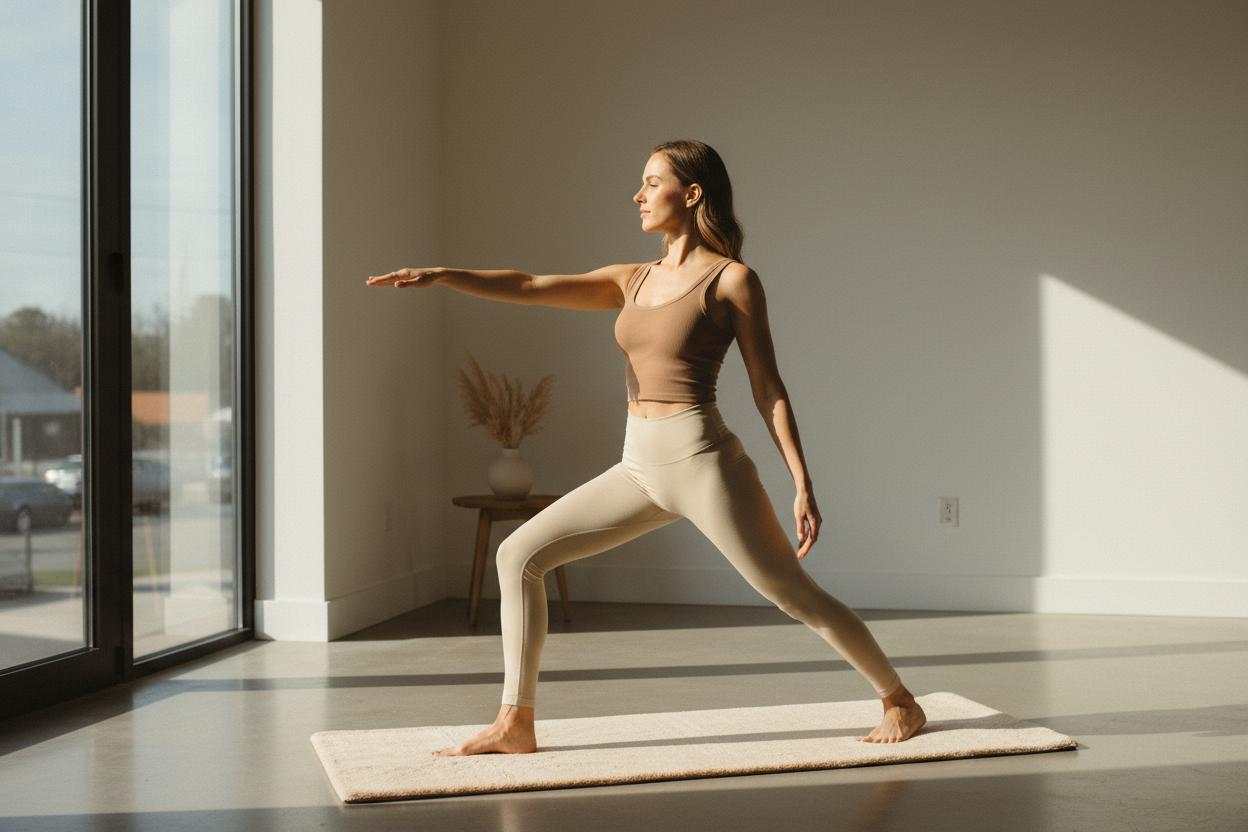
Yoga involves a lot of positions your regular clothes weren't designed for — forward folds, lunges, seated twists, lying flat on your back with your arms stretched wide. What this means practically is that comfort and range of motion matter more than anything else.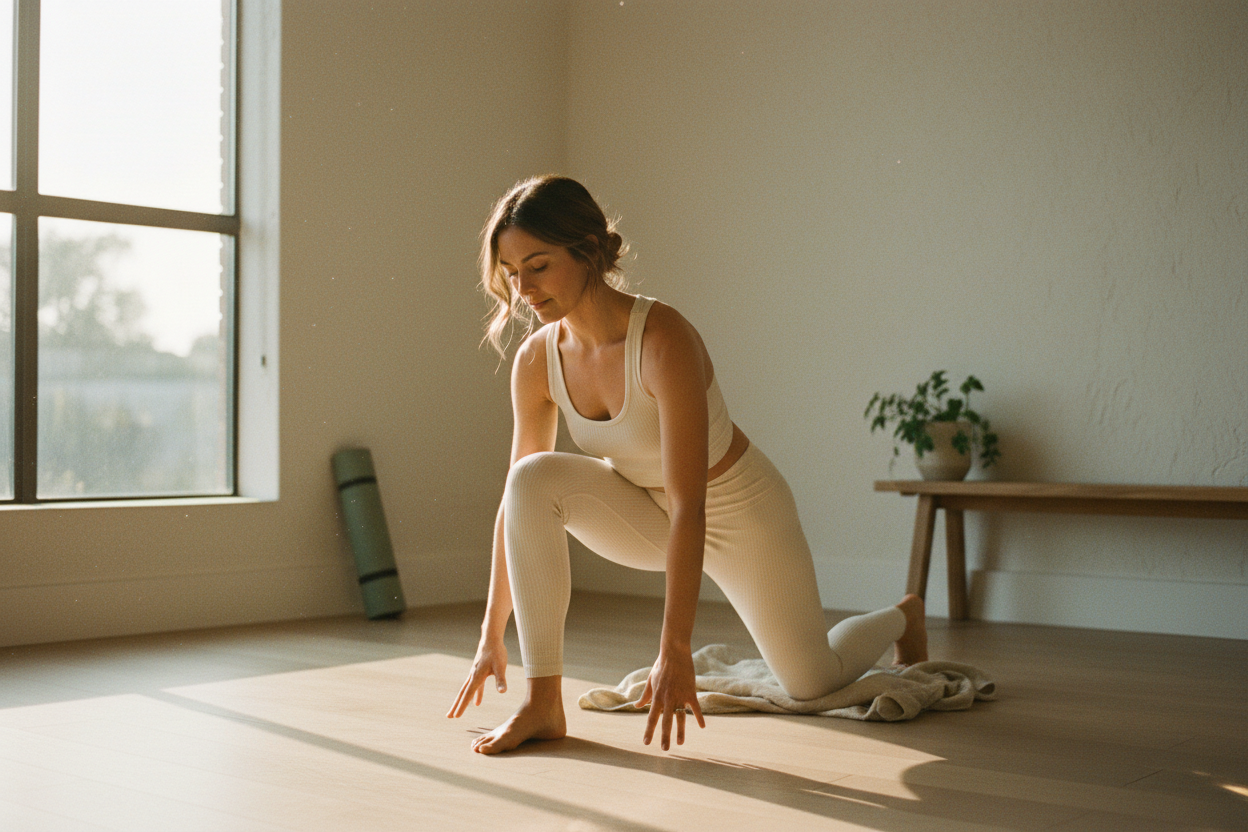
A few things worth paying attention to before you leave the house:
Non-rolling waistbands. A waistband that rolls down every time you forward fold is genuinely distracting — you'll spend half the class tugging it back up instead of actually being in the practice. Look for something with a wide, flat waistband that stays in place.
Fabric that moves with you all day. The best yoga clothes don't fight back. When you reach forward, the fabric reaches with you. When you fold, it folds. You don't want to feel like you're wrestling your clothes into a pose.
Coverage in all directions. This one especially matters for anything with a deeper neckline or looser fit — do a quick downward dog test before class. If something shifts further than you want it to when you're upside down, that's worth knowing ahead of time.
Nothing that digs. Seams at the hip, tight ankle hems, underwire — anything that's fine standing up can become surprisingly uncomfortable once you're lying on a mat for an extended period. Soft and smooth is better than structured.
What to wear on top
For yoga, fitted or semi-fitted tops work better than very loose ones. A flowy t-shirt will end up around your face during a forward fold, which is funny once and annoying every time after that.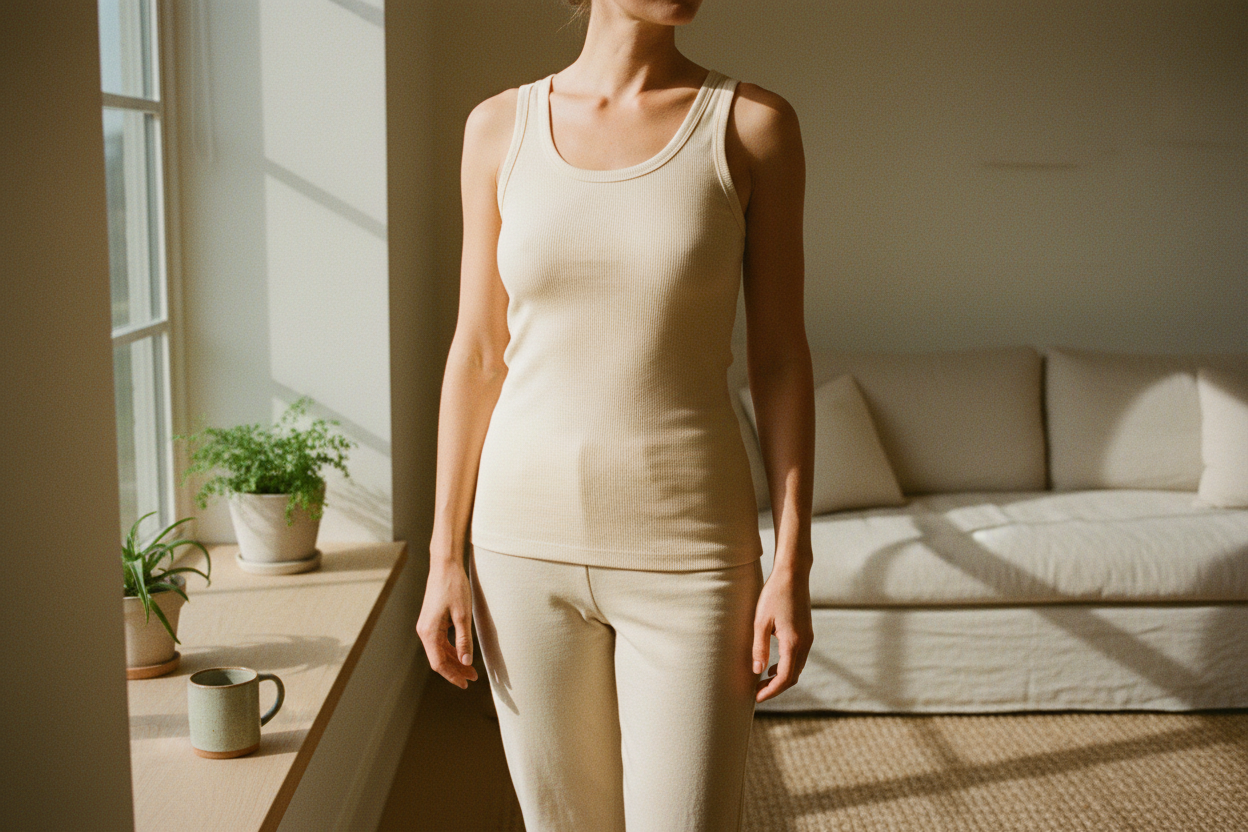
Tank tops are the most popular choice — they keep your arms free, stay put in most positions, and work for every style of yoga. A fitted ribbed tank is particularly good because the fabric has enough give to move with you but enough structure to stay in place. Something like the Gloravi Ribbed Tank Top — with its soft ribbed texture and clean silhouette — works well both on the mat and on the way home from class.
Fitted long sleeves are worth having in your rotation, especially for cooler studios or slower practices. A gentle yoga or yin class often runs cooler than you'd expect — the body generates less heat when you're holding passive poses — so having sleeves available to add is smarter than hoping the studio is warm.
Hoodies and zip-ups are great for the walk in and the walk out. Most people peel them off before class starts, but for gentle or restorative yoga, you might actually keep them on the whole time. Whatever you wear underneath, make sure the outer layer is easy to move in if you decide to keep it.
Sports bras work well for yoga — you want something supportive enough to feel secure in an inversion but not so compressed that you can't breathe deeply. Medium support is usually the right call for most yoga styles.
What to wear on the bottom
This is where style of yoga actually matters a little.
For flow yoga, vinyasa, or any active class: fitted leggings are the classic choice, and there's a reason for that — they stay put, you can see your alignment, and there's no extra fabric to get in the way during standing poses or transitions. The key is finding a pair that doesn't restrict movement at the hip or knee. Fabric with a little stretch in all four directions is the difference between leggings that feel like a second skin and ones that feel like they're fighting you.
For yin yoga, restorative, or a slower-paced class: this is where wide-leg pants actually shine. In slow yoga, you're mostly on the floor — seated poses, reclined poses, long holds. You don't need compression. What feels better is something loose and soft that doesn't constrict when you're lying in a passive stretch for five minutes. Wide-leg flared yoga pants are a natural fit here — the flared hem moves freely, the waistband doesn't dig during floor work, and they feel more like being wrapped in something soft than wearing performance gear. If you're building out a wardrobe for slower practices, they're worth having. For more on this, see our guide to what to wear for restorative and yin yoga.
For yoga beginners: start with whatever you already own that's comfortable and not too loose. You don't need to buy anything new for your first few classes. Once you know what style of yoga you enjoy and what bothers you during practice, you can fill in gaps from there. That said, if you're starting from scratch, leggings with a high waistband and a fitted tank cover most scenarios.
Matching sets — the effortless choice
There's a practical case for matching sets that doesn't get talked about enough: they remove one small decision from your morning. When the top and bottom already go together, you're not standing in your closet wondering if these leggings work with that tank. You grab one thing and it's done.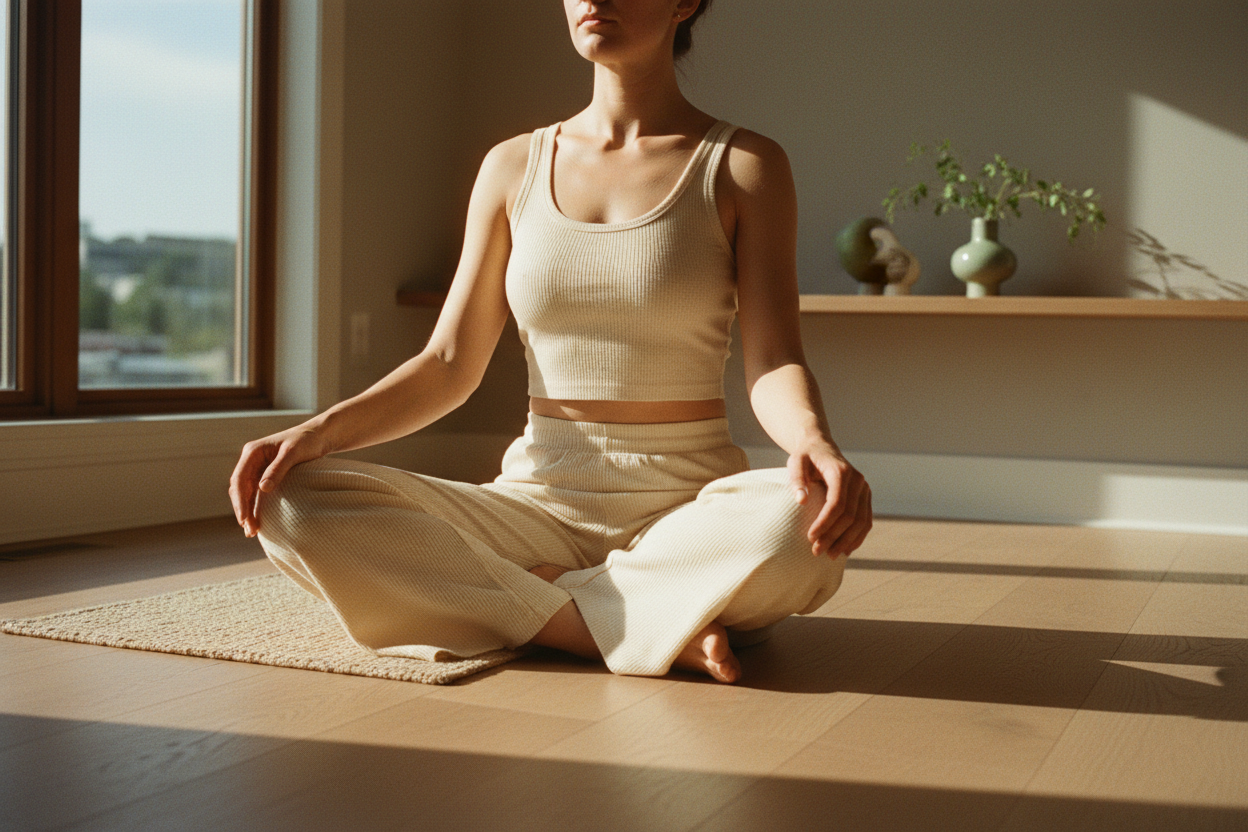
For yoga specifically, a ribbed matching set — something like the Gloravi Ribbed 2-Piece Set — works particularly well because ribbed fabric has natural stretch and recovery, moves quietly with you, and doesn't look like you tried too hard or not enough. It's also the kind of outfit that works from mat to coffee, which is a genuine convenience if your yoga class runs into the rest of your day.
If you're curious about how to build out a full gentle movement wardrobe beyond just yoga class, there's more in our guide to the gentle movement wardrobe — it covers yin, restorative, and home practice as well.
What NOT to worry about
Yoga culture can have its own visual language — certain brands, certain aesthetics, the sense that everyone else is wearing the right thing. Here's what's actually true: nobody in a yoga class is paying attention to what you're wearing. They're focused on their own practice, their own breath, their own balance.
A few things that genuinely don't matter:
Whether your pieces match. Mismatched is fine. Yoga is not a photo shoot.
Whether you have "yoga-specific" clothes. Soft leggings and a fitted tank from anywhere work. The yoga mat doesn't know where your clothes came from.
Whether your clothes look new. Worn-in is often more comfortable than brand new anyway — broken-in fabric moves better and feels softer.
Whether you look the part before you've started. You're going to class to feel something — grounded, stretched, a little more at ease. That starts the moment you walk in, not the moment you put together the right outfit.
Yoga is one of the few spaces where "wear whatever lets you move freely and forget you're wearing anything" is actually the full answer. Comfortable yoga clothes are just clothes that get out of the way so you can be on the mat instead of in your head.
That's the whole thing, really. Wear what's soft, wear what stays put, wear what makes you feel at ease — and go.
If you also practice mat pilates, the same clothing principles apply — though the floor-based movements create a few specific requirements worth knowing. This guide to what to wear to pilates for mat work covers why certain waistbands become uncomfortable once you're lying down, how wide-leg pants fit into mat classes, and what changes between reformer and mat pilates from a clothing standpoint.
If you end your yoga practice and find yourself wanting to hold the quiet a little longer, a candle is one of the simplest ways to do that. Scent can work as a reliable cue — light it after class and your nervous system starts to recognize it as a signal to stay soft. Building your soft glow ritual covers how to use scent anchors throughout the day, including that post-practice window when stillness is already close.