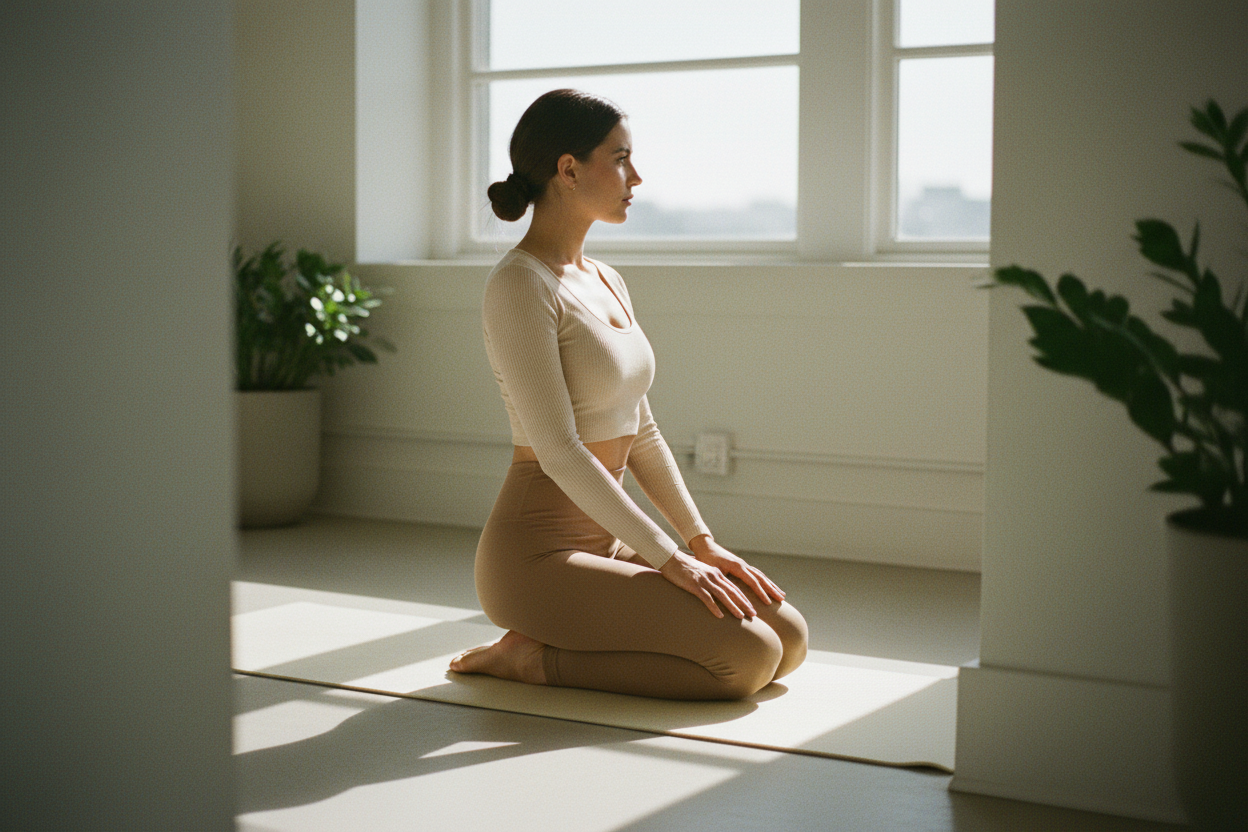
What to Wear to Pilates: Mat Work Outfits That Move
For mat pilates, the short answer is: high-waisted leggings or soft wide-leg pants, a fitted top that stays tucked, and nothing with a zipper or hard waistband pressing into your back. Mat work keeps you on the floor for most of the class — rolling through your spine, holding your legs at 90 degrees, lying flat for long stretches — and what you wear either cooperates with that or fights you through every movement.
This guide focuses specifically on mat pilates clothing, which has slightly different requirements than reformer pilates. On the mat, you're not worried about grip socks or reformer springs. You're thinking about what stays soft against the floor, what doesn't ride up during a leg lift, and what lets you breathe through the full range of movement without restriction.
Why mat pilates has different clothing needs
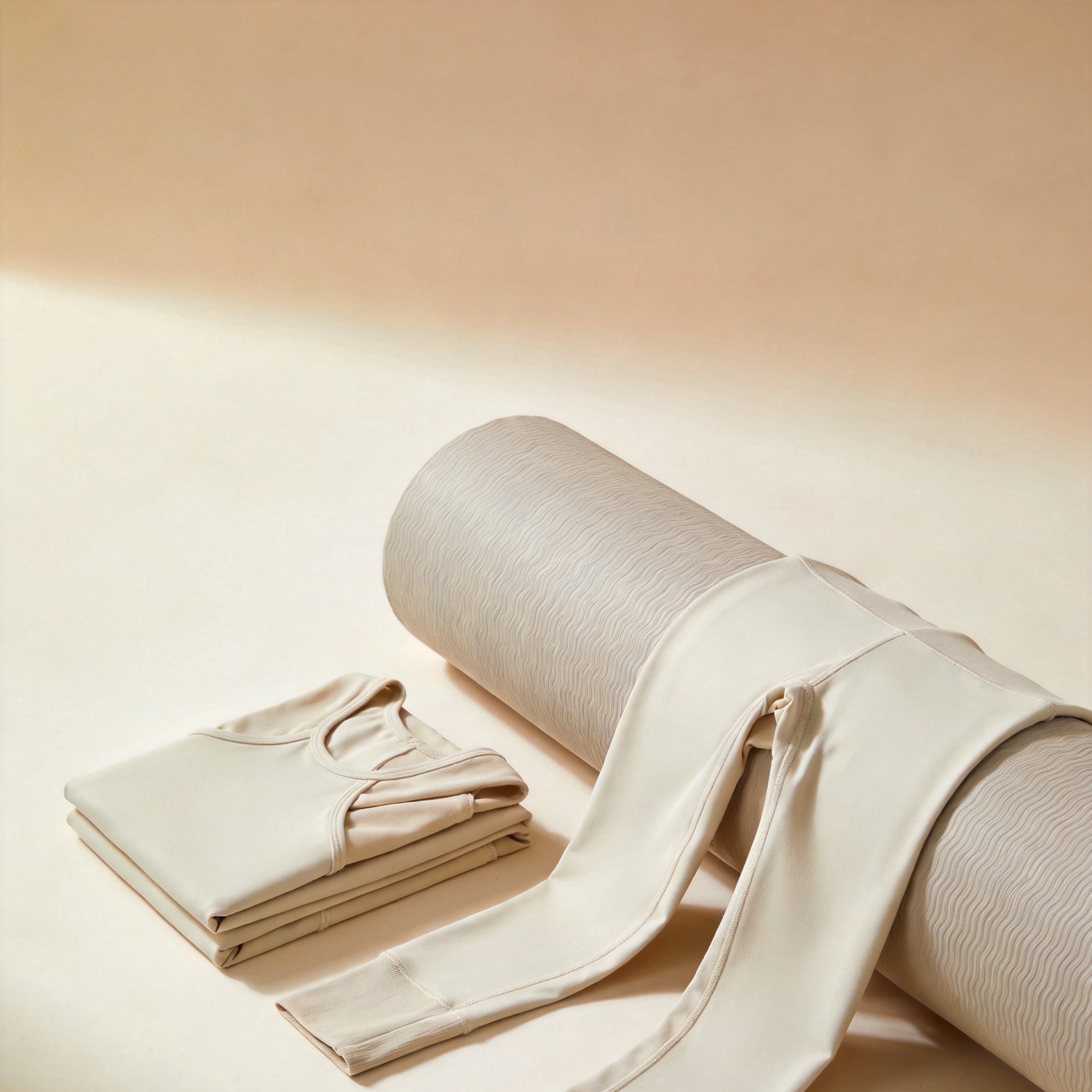
Most pilates clothing guides treat reformer and mat as the same thing. They're not.
Reformer pilates is vertical much of the time — you're standing on a carriage, pushing against resistance, gripping foot bars. You need grip socks. You need form-fitting clothes so they don't catch in the springs. Fitted is essential.
Mat pilates is almost entirely horizontal. You're on your back, on your side, kneeling, folded forward. The clothing concerns shift:
Back comfort matters. Lying down with a thick seam across your lower back is genuinely uncomfortable after ten minutes. Any waistband that digs, any back closure or hardware — you'll feel it. Flat, soft waistbands are worth seeking out, not just for aesthetics but because you spend significant time pressing them into a mat.
Rolling movements require stretch in all directions. Pilates includes roll-up, rolling like a ball, spine stretch — movements where your body curls into a C-curve. Fabric needs to stretch lengthwise and widthwise without pulling or restricting. Four-way stretch fabrics (nylon-spandex blends) handle this significantly better than woven fabrics or low-stretch options.
Tops move differently on the floor. A loose tank that works fine standing will slide toward your face the moment you lie back and extend your arms overhead. This is less about aesthetics and more about not being distracted every 30 seconds.
The good news: once you understand what mat work actually asks of your clothing, the choices become straightforward.
What to wear on the bottom
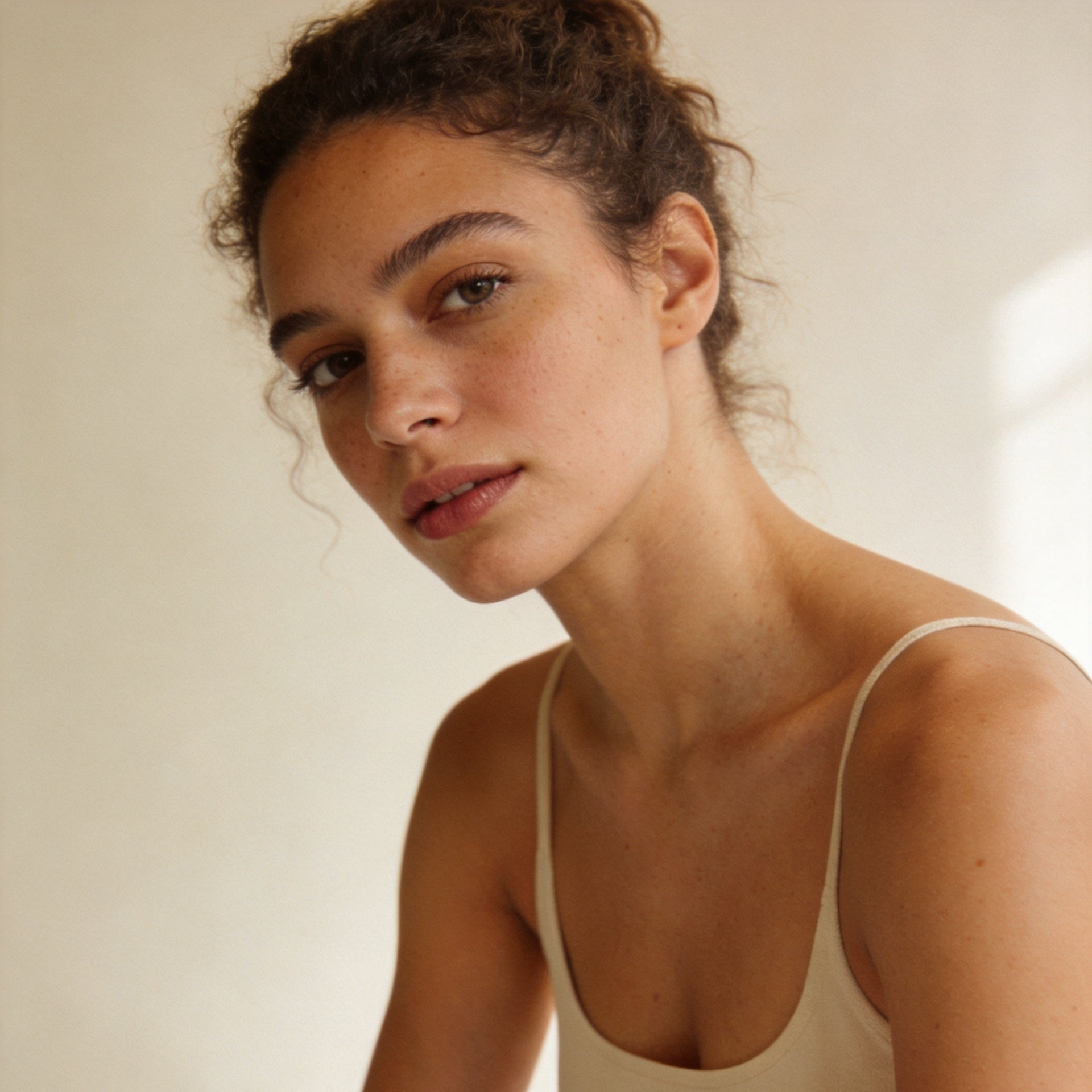
High-waisted leggings are the most reliable choice for mat pilates. The extended waistband gives you a wider flat surface against your back, which means no digging when you're supine. High-rise styles also stay in place better during transitions — when you go from seated to lying down to standing, a mid-rise waistband has more opportunity to shift.
Look for fabric with real stretch. Cheap leggings feel fine standing but pull uncomfortably across the back of the knee during seated forward folds. A good test: crouch down fully in the store, or do a slow forward fold. If the fabric pulls or resists at the back of the knee, it'll do the same thing in class. Soft knit fabric — like the kind in high-waisted stretch knit leggings — tends to move more like a second skin than structured performance fabric, which is exactly what mat work needs.
Wide-leg yoga pants are worth reconsidering for mat pilates. The common advice is that loose pants are wrong for pilates — and that's true for reformer, where extra fabric can be a safety issue. But for mat work, the landscape changes. A lot of mat class is slow and grounded: seated work, supine holds, deliberate transitions. Wide-leg flared pants that sit high at the waist and taper to a clean hem don't bunch or bunch around your ankles the way very loose pants would. They move with you through floor work, and they feel noticeably less restrictive for breathing exercises and long stretches. High-stretch flared yoga pants work well here — the flared cut gives freedom of movement through the leg without adding bulk.
One thing to avoid regardless of style: low-rise or mid-rise waistbands with any kind of hardware, metal detail, or thick seam at the back. You will be lying on it.
Bike shorts work for shorter practices and warmer studios. The coverage question is worth thinking through — in mat pilates, your legs go up, go wide, and roll. If you're comfortable with that in bike shorts, they're a clean option. If not, leggings are simpler.
What to wear on top
The principle for pilates tops is simple: fitted enough to stay put, loose enough to breathe.
Fitted tanks work well. Look for ones long enough that they don't expose your midriff when you extend your arms overhead. A ribbed fitted tank is particularly useful because ribbed fabric has natural give in multiple directions — it doesn't restrict the expansion of your ribs during breathing exercises, which matters more in pilates than in most other movement practices.
Long-sleeve fitted tops suit slower practices and cooler studios. Pilates doesn't generate as much body heat as vinyasa yoga — the breath work is controlled and the movements are deliberate, which means you may actually feel cool during longer passive sections. Having sleeves is often more comfortable than wishing you'd brought them.
Sports bras for mat pilates: medium support is right for most people. You're not doing impact work, but you will be moving through inversions and transitions. Something that feels secure without compressing your chest to the point where deep lateral breathing is difficult — pilates instructors cue ribcage expansion frequently, and a very compressive sports bra works against that.
Avoid tops with drawstrings at the hem, thick back closures, or anything loose enough to flip over your face in a forward fold.
Matching sets for mat pilates: the effortless choice
A matching top-and-bottom set removes the one small friction point most people don't notice until it's gone: standing in front of your closet trying to figure out if these pants work with that top. When it's a set, you grab one thing.
For mat pilates, a long-sleeve crop top paired with wide-leg pants works particularly well as a combination. The crop length means the top won't bunch against your mat when you lie down, and the wide-leg cut moves freely through floor work without the performance-fabric tightness of reformer-focused styles. Something like the long-sleeve crop top and wide-leg yoga set covers the range of mat pilates movements — floor work, standing work, transitions — without looking like you put too much thought into it.
The other practical argument for sets: they transition out of class more naturally. Pilates is often a morning or midday activity. A clean, coordinated set looks put-together on the way to get coffee or run an errand, which regular workout separates often don't.
What to avoid on the mat
A few things that create genuine problems once you're on the floor:
Drawstring waistbands. The knot sits against your lower back in supine positions. Even a small knot becomes notable after twenty minutes.
Loose long pants that aren't fitted at the hem. Very wide hems can bunch between your legs during lying exercises or under your feet during footwork. There's a difference between flared yoga pants (fitted through the hip, flared below the knee) and loose sweatpants. The first works; the second creates friction.
Tops that end at the waist or above the hip when standing. In the studio, you'll be reaching, twisting, and extending. If your top barely covers your torso standing up, it won't cover it in movement. Either go for a longer tank or tuck your top in — but something with a smooth tuck tends to work better than an untucked shirt that fights you back out with every transition.
Anything with hardware. Belt loops, metal clasps, back-closure sports bras with thick hardware — all of this becomes uncomfortable the moment you lie on it, and in mat pilates, you will lie on it repeatedly.
Zippers. A front-zip jacket to wear during warmup is fine if you take it off before class starts. A jacket with a back zip is not.
FAQ
Do you need special clothes for mat pilates?
No. What you need is clothes that stretch in four directions, have a flat waistband that's comfortable against your back, and a top that stays put when you're upside down or lying flat. Standard yoga clothes meet these requirements well. The main thing to avoid is anything with hardware against your back, drawstring knots, or tops loose enough to slide toward your face in a forward fold.
Can you wear wide-leg pants to mat pilates?
Yes, for mat work specifically. Wide-leg pants are often discouraged for reformer pilates because of equipment safety concerns, but on the mat there are no springs to catch fabric. Flared or wide-leg yoga pants that sit high at the waist and have enough stretch to move through rolling and folding movements work well, particularly for longer, slower practices. The key is choosing a style with stretch — not stiff woven fabric — and a waistband that stays flat against your back.
What's the difference between pilates clothes and yoga clothes?
For mat work, they're essentially interchangeable. The functional requirements overlap almost completely: four-way stretch fabric, flat waistband, fitted top that stays in place. The "pilates-specific" clothing category is largely a marketing distinction. Well-made yoga leggings and yoga tops handle mat pilates equally well. The main area where they diverge is reformer pilates, where grip socks and tighter-fitting clothes that can't catch on equipment become practical considerations.
Should pilates clothes be tight?
For mat work, fitted is more accurate than tight. You want clothes close enough to your body that they don't shift, bunch, or pull away from your skin during movements — but not so compressed that they restrict breathing or feel uncomfortable when you're lying still. Compressive fabrics that dig into your waist or prevent your ribcage from expanding fully will work against the breath work that's central to pilates practice. Soft with structure is a better target than hard compression.
Can you wear leggings or do you need yoga pants?
Both work well. Leggings tend to be better for classes with more standing work, transitions, and active sequences, because they stay in place without any adjustment. Wide-leg yoga pants can feel more comfortable for slower, floor-focused practices or home sessions. If you're new to mat pilates and unsure of the pacing, high-waisted leggings are the more reliably comfortable starting point.
What shoes do you wear to mat pilates?
None, typically. Mat pilates is usually practiced barefoot, which gives you natural grip on the mat and lets your feet work freely. If the studio floor is cold or you prefer some coverage, regular socks work for mat classes — grip socks are primarily a reformer consideration, not a mat requirement. Check with your specific studio if you're unsure.
Building out a broader gentle movement wardrobe — for pilates, yin yoga, and home practice — there's more on choosing pieces that work across movement types in the gentle movement wardrobe guide. And if you're also practicing yoga and wondering how the clothing needs compare, what to wear to yoga class covers the yoga-specific version of most of these same questions.
After mat pilates, the transition back into the rest of the day is worth slowing down. A few minutes of quiet — and a candle if you have one nearby — can make the difference between a practice that stays with you and one that evaporates the moment you pick up your phone. If you're building more of those grounding moments into your daily routine, building your soft glow ritual is a good read on how to use scent as a consistent wind-down signal.
Glow softly. Move freely.