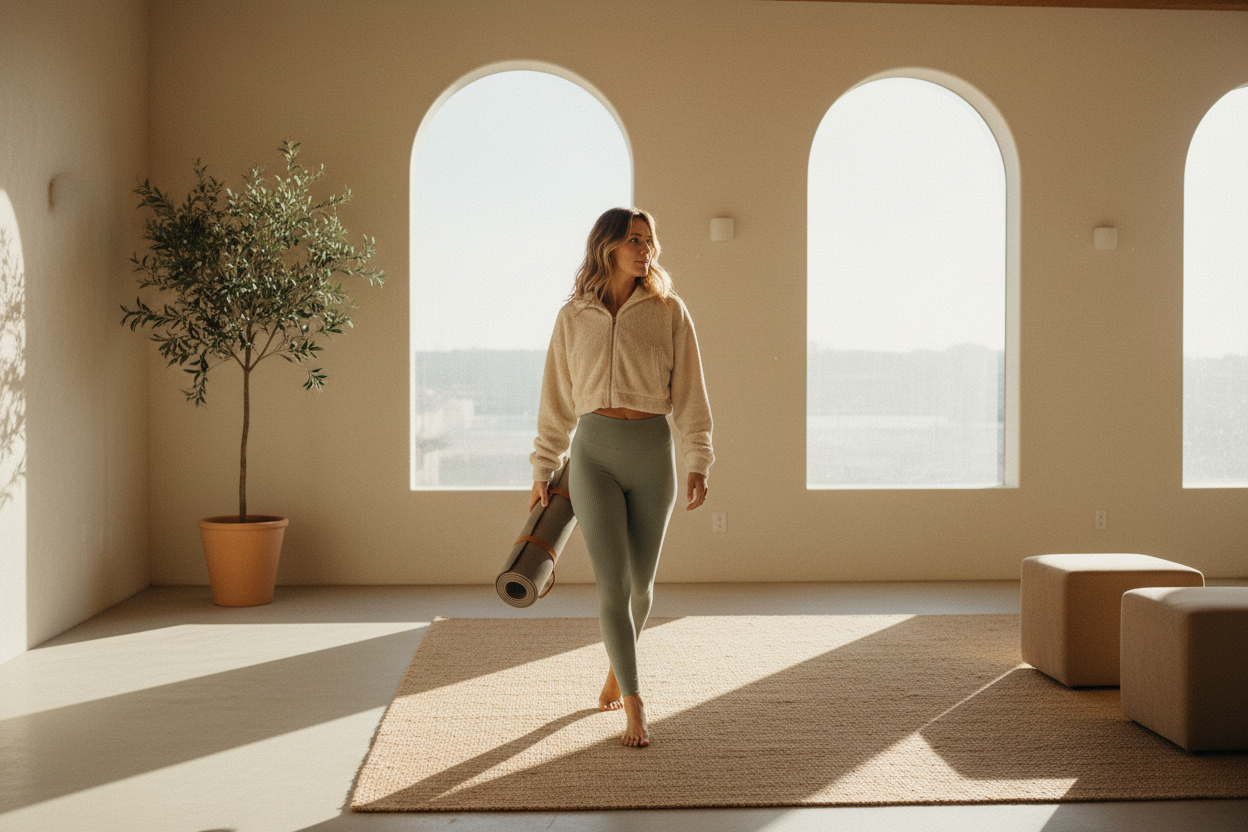
The 2026 Quiet Luxury Activewear Guide: 8 Pieces, 20+ Outfits That Work Everywhere
You own fourteen pairs of leggings and still stand in front of your dresser every morning thinking "I have nothing to wear." Half of them have faded logos across the waistband. A few have that shiny, almost-wet look that screams gym floor. One pair is comfortable but so bright you feel self-conscious wearing them to grab coffee after class. The problem isn't quantity — it's that nothing feels cohesive, nothing feels like you.
Quiet luxury has reshaped fashion since 2022, but the conversation has stayed locked on cashmere sweaters and $400 loafers. Almost no one has applied these principles to workout clothes — even though the core idea (invest in fewer, better, versatile pieces in understated colors) works even better for a movement wardrobe than it does for a corporate one. This guide shows you how to build a minimal activewear wardrobe that looks intentional, works across multiple activities, and actually simplifies your mornings.
What Quiet Luxury Activewear Actually Looks Like in 2026
Quiet luxury in activewear isn't a vague aesthetic — it has specific, observable characteristics that the brands leading this shift all share.
Vuori, the California-based brand that grew during the work-from-home era, built its identity around what they call "effortlessly stylish" pieces in earthy tones with no trendy gimmicks. Their color palette stays grounded in warm neutrals and coastal earth tones season after season. Alo Yoga takes a more polished approach — what Grazia described as looking "luxurious and polished without trying too hard," the kind of activewear you can style with a trench coat and sneakers. The NikeSKIMS collaboration that launched in late 2025 made the direction explicit: matte finishes, clean lines, supportive fits, and zero visible branding beyond a subtle tonal logo. Sportswear analyst Seb Beasant described the 2026 direction as "performance minimalism" — where fabric and precision matter more than loud technical noise.
What these brands have in common isn't a specific color. It's a set of principles: no visible logos or minimal tonal ones, matte fabric surfaces instead of shine, seamless or bonded construction over visible stitching, and nature-inspired colors that layer together without clashing. You don't need to buy from these brands to apply the same thinking to your own wardrobe.
The Quiet Luxury Color Formula: What Actually Works
Alo Yoga and Lululemon both use what color analysts describe as "soft neutrals and mineral-inspired shades" — and they keep these tones consistent across seasons so pieces from different collections still coordinate. That consistency is the insight: when the palette is cohesive, everything pairs with everything.
Here are five tone families that work for virtually every skin tone and layer together without effort:
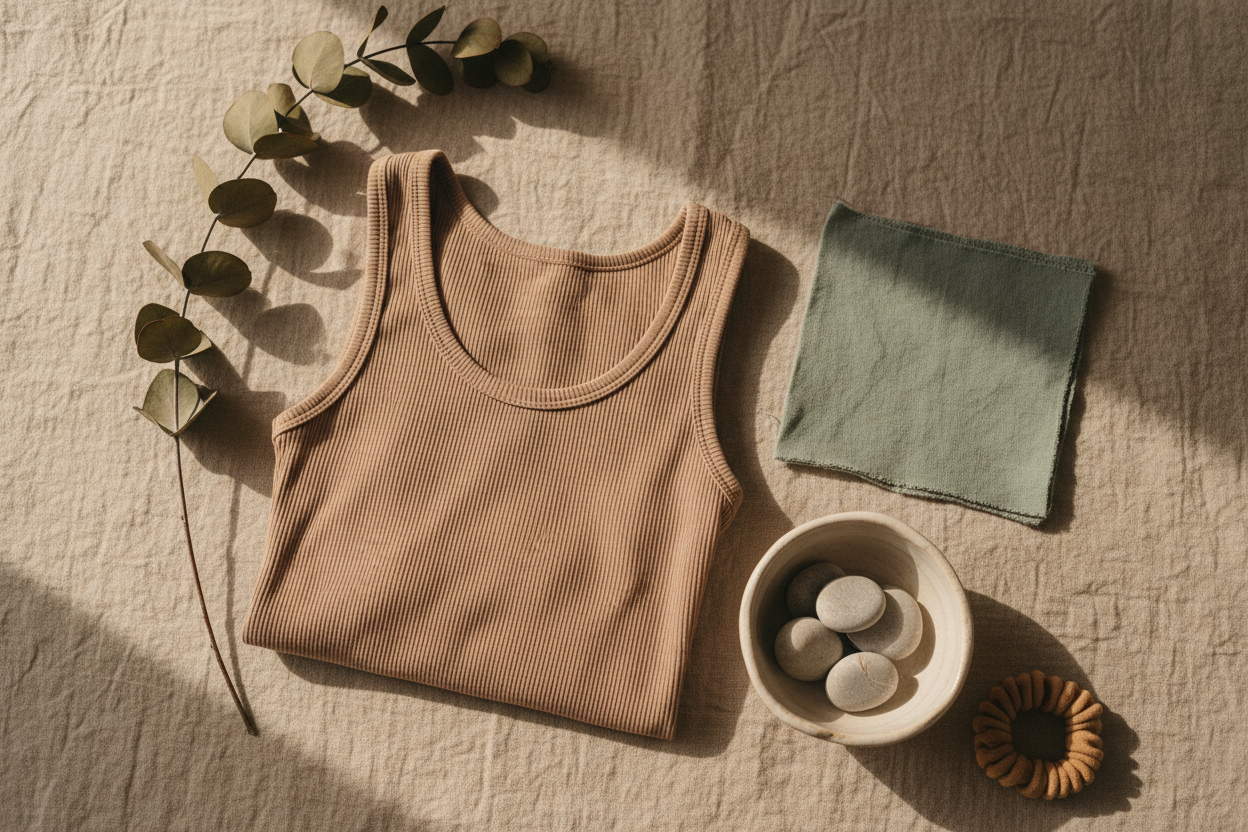
Warm neutrals — taupe, oatmeal, warm sand, soft camel. These read as elevated basics and pair with every other color on this list. A taupe tank under a cream pullover looks polished without trying.
Cool earth tones — sage green, dusty olive, muted eucalyptus. Alo Yoga's recurring seasonal palette consistently features these mineral-inspired greens. Sage leggings with a warm sand top feels deliberate and calm.
Soft clay and terracotta — muted rust, dusty rose, warm clay. These bring warmth without brightness. Especially flattering against medium and deeper skin tones.
Deep quiet tones — charcoal (not jet black), deep espresso, dark navy. Mocha and espresso tones appeared across luxury activewear in 2025–2026, with HELLO! magazine specifically noting "hot chocolate-toned ballerina basics" as a key trend. These feel richer and less stark than pure black.
Crisp ivory and warm white — not stark optical white, but soft off-whites with warm undertones. These work as accent tops or layers, never as standalone leggings unless the fabric is truly squat-proof at 260+ GSM.
The rule: if you can imagine the color existing in nature — stone, clay, fog, moss — it probably belongs in a quiet luxury wardrobe. If it needs a neon sign to describe it, it doesn't.
Gloravi's Ribbed Tank Top comes in eight neutral tones — taupe, mocha, sage, and warm naturals that sit naturally in this palette and pair with each other without effort.
The 8-Piece Capsule Wardrobe
The capsule wardrobe concept has been widely covered — Who What Wear, Tripulse, and multiple activewear brands all converge on the same number: 6–8 pieces is the sweet spot for a functional movement wardrobe. Fewer than six leaves gaps; more than ten starts defeating the purpose.
Wondering how to get more outfits from fewer pieces? Our matching set styling guide shows how to turn one set into a week of different looks.
Here's a specific 8-piece build designed for someone who does yoga, pilates, and light movement 3–4 times per week:
3 leggings — one warm neutral (taupe or sand), one cool earth (sage or olive), one deep tone (charcoal or espresso). All high-waist, all the same rise height so they feel consistent. Look for 230–260 GSM in nylon-spandex blends for the best balance of opacity, softness, and stretch recovery. Seamless or flatlock stitching only — no visible exterior seams. Gloravi's Solid High-Waist Leggings come in neutral tones built for exactly this kind of capsule.
3 tops — one fitted cropped tank for warmer days and yoga, one relaxed-fit layer that works for both studio and street, one lightweight long-sleeve for cooler mornings or air-conditioned studios. Stick to your neutral palette. A ribbed texture in a solid color reads more considered than a smooth jersey in the same shade.
1 light layer — a half-zip or open-front layer in a soft knit or brushed fabric. This is the piece that takes you from studio to coffee. Avoid anything with reflective strips, mesh panels, or athletic branding — the goal is a layer that looks like a nice casual piece that happens to move with you. Gloravi's Zip Up Sports Jacket in a cropped 4-way stretch silhouette fits this role.
1 biker short — 6-inch inseam in your deepest neutral. Works for hot yoga, summer pilates, or as a base layer. A single versatile pair eliminates the need for multiple seasonal pieces.
That's 8 pieces creating over 20 distinct outfit combinations. Every top works with every bottom. The layer works over all of them. Nothing clashes because the color palette was designed to be cohesive from the start.
Fabric Choices That Look and Feel Expensive
The quiet luxury look falls apart if the fabric looks cheap. The 2026 activewear trend that GigWise identified as "soft sculpt" — buttery fabrics with gentle contouring instead of heavy compression — is essentially the quiet luxury fabric philosophy applied to movement wear.
Matte finish over shine. A brushed or peached nylon-spandex blend has a soft, matte surface that reads as premium. Avoid anything with a wet-look sheen — that finish belongs in a different wardrobe entirely. Matte fabrics also photograph better and show less lint.
Substantial weight. GSM (grams per square meter) directly correlates with how expensive a garment looks and feels. Below 200 GSM, leggings tend to look and feel flimsy. The 230–260 GSM range hits the sweet spot — opaque, structured, but still breathable enough for a 75-minute flow class.
Nylon-forward blends for leggings. Alo Yoga's "Airbrush" fabric uses a nylon base for four-way stretch and sculpting compression. Vuori's blends prioritize an "exceptionally soft, lightweight feel." The common thread: nylon as the primary fiber for skin-contact pieces. A typical premium blend runs 78–84% nylon, 16–22% spandex. For a detailed comparison of how nylon, polyester, TENCEL, and bamboo perform differently, our fabric guide covers each fiber in depth.
No pilling. Nothing destroys the quiet luxury look faster than fabric pills between the thighs. Nylon is naturally more pill-resistant than polyester due to its higher abrasion tolerance. If you're buying polyester pieces, look for tightly-knit constructions and higher denier counts.
How to Build Your Quiet Luxury Wardrobe Without Replacing Everything
You don't need to throw out your entire workout drawer. A phased approach is more practical:
Week 1–2: Audit what you already own. Pull out every piece of activewear. Separate into three piles: (1) pieces that already fit quiet luxury criteria — muted color, no logos, good fabric; (2) functional but doesn't match the aesthetic — keep for yard work or sleeping; (3) worn out, pilled, or unworn — donate or recycle. Most people find they already own 2–3 pieces that work.
On days when even choosing an outfit feels like too much, a few pre-coordinated pieces make all the difference. Our guide to dressing for how you want to feel covers how to set yourself up for the harder mornings.
Month 1: Fill the biggest gap. If you have no neutral leggings, start there — they're the foundation. If your tops are all logo-heavy, start with a versatile tank and relaxed layer. One purchase that fills your most obvious gap immediately makes existing pieces more usable.
Month 2–3: Add the layer and biker short. These extend your capsule across seasons and activity types. A good light layer especially changes the game — it's what people see when you're not in the studio.
Ongoing: Replace as things wear out. Over six months, your wardrobe naturally shifts without any dramatic overhaul.
The cost math works out too. Eight quality pieces at $40–65 each runs $320–520 total — less than most people spend on impulse activewear purchases in a year, except now every item earns its place.
Quiet Luxury Beyond the Studio
The real test of a well-built activewear capsule is whether it works outside the studio. This is where the quiet luxury approach pays off most — when your movement clothes don't look like movement clothes.
Wondering which pieces can actually leave the house? Our guide to loungewear that looks put together breaks down the fabric, fit, and color details that make the difference.
Yoga to errands: Sage leggings and a ribbed tank are already on. Throw on the zip-up jacket, swap your mat bag for a tote. No one looks at you and thinks "gym clothes."
Work-from-home days: Biker short with a long-sleeve layer on top. Decent on a video call. Comfortable enough for a mid-afternoon stretch. You never changed clothes.
Weekend morning: Taupe leggings, relaxed-fit tee, sneakers. Comfortable, put-together, and you could be heading to brunch or to class — the outfit works for both.
This is what makes the quiet luxury approach practical, not just aesthetic. When every piece coordinates, you wear them more, get more value per piece, and spend less mental energy on the daily "what should I wear" decision.
For movement-specific outfit ideas, our gentle movement wardrobe guide breaks it down by practice type.
At Gloravi, we design with exactly this philosophy — pieces in warm, muted tones that feel as good in the studio as they do at the farmers market. Soft fabrics, no visible branding, colors that mix effortlessly. Browse the full collection to see what we mean.
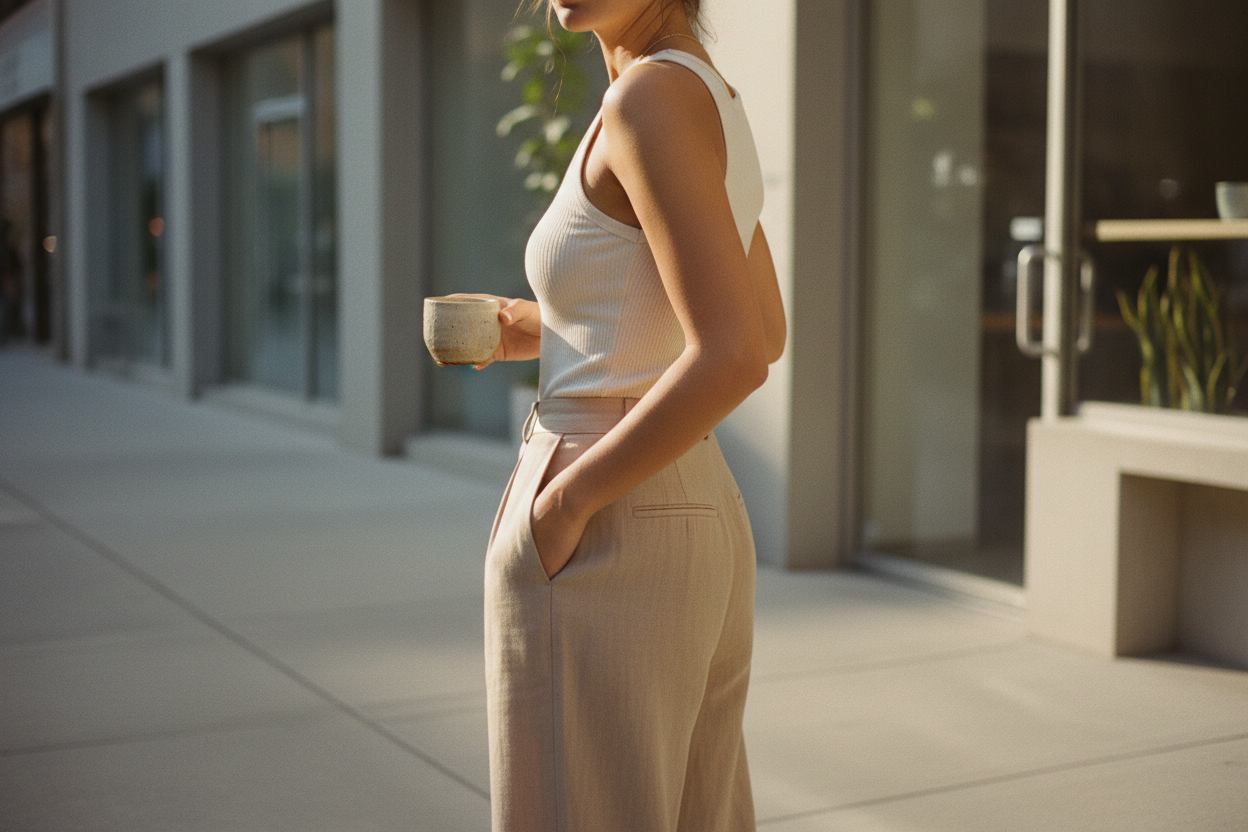
How Quiet Luxury Activewear Is Evolving in 2026
Quiet luxury in activewear has always been about what you feel, not what you signal. But in 2026, that sensibility is becoming more precise — and the conversation around it has shifted from broad aesthetic labels to something more specific: how individual pieces actually behave across a full day.
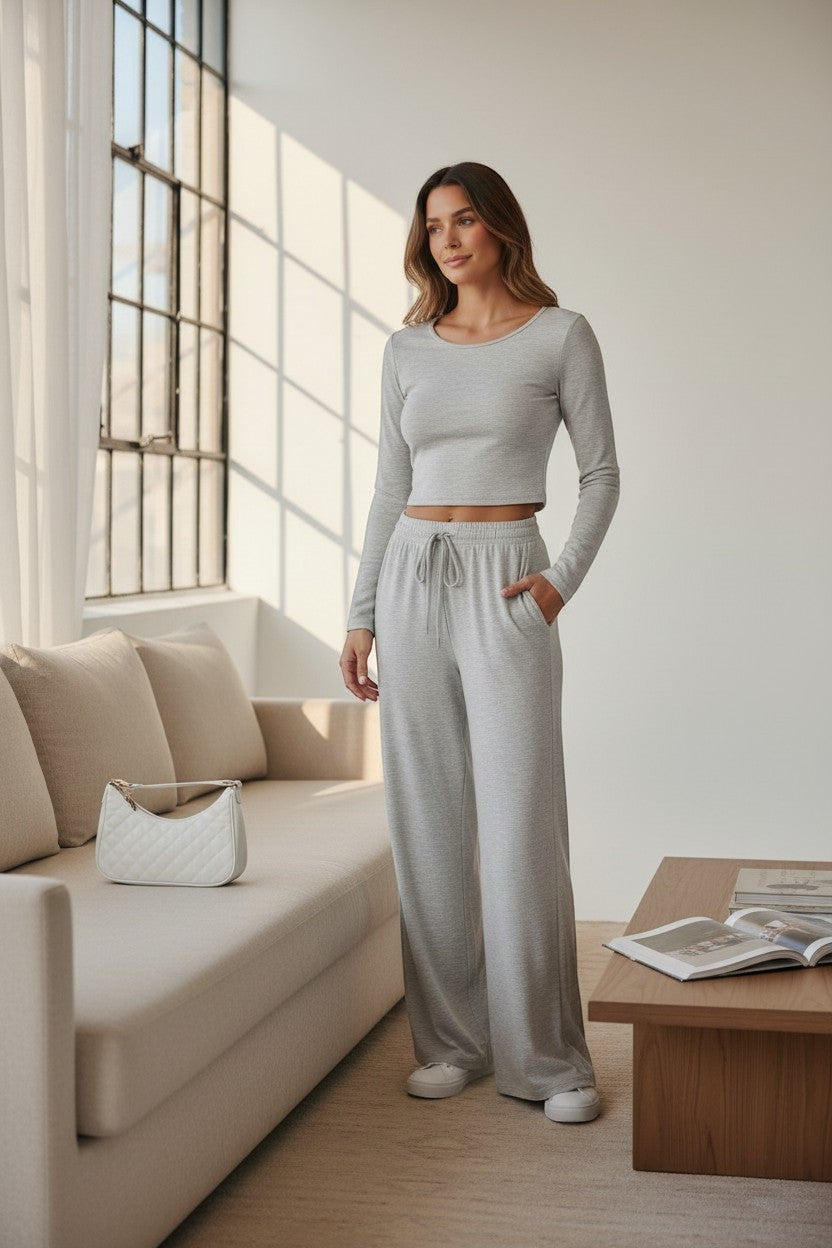
Clean silhouettes, consistently. The cuts gaining traction aren't technical — they're unfussy. Wide-leg fits with a clean, uninterrupted inseam. Tanks with a straight hem that reads like a wardrobe piece rather than gym gear. Boxy hoodies without drawstrings or performance panels. The design logic is the same across all of them: fewer elements that signal "activewear," more shapes that simply work wherever you happen to be. The cleaner the silhouette, the less it needs context to make sense.
Soft sculpt over compression. The language has shifted — and so has the feeling. "Soft sculpt" has replaced "compression" in how the better brands describe fit, and the difference is real. Compression implies being held together. Soft sculpt means the fabric follows your body without gripping it. The fabrics doing this well are buttery soft brushed nylon-spandex blends: substantial enough to feel present, light enough to disappear after twenty minutes. Matte surface, not shine. Gentle shape, not hold. The benchmark is whether you stop thinking about what you're wearing entirely.
Logoless as the standard. No visible branding isn't a premium option in 2026 — it's the expected starting point. What replaces logos is quieter craft: tonal stitching along waistbands, textured ribbing on tanks, seam placement that looks deliberate without drawing attention. The quality still shows. It just doesn't announce itself.
Everyday luxury as the real measure. The underlying shift is this: pieces are now expected to hold up for a full day, not just a studio session. Everyday luxury means a clean silhouette in a buttery soft fabric and a warm neutral can take you from morning yoga to an afternoon errand to a coffee shop — without a change of clothes, and without anyone looking twice. For the pieces built around this idea, that's not aspirational. It's the standard they're designed to meet.
What hasn't changed is the core of it. Quiet luxury activewear isn't about the brand name or the price point. It's about putting something on and forgetting you're wearing it — in the best possible way. In 2026, that feeling is just becoming easier to find.
If you're looking for the non-activewear side of this wardrobe — loungewear that works at home, on errands, and for travel without changing — the intentional loungewear guide covers fabric principles, silhouette criteria, and outfit formulas for daily life.