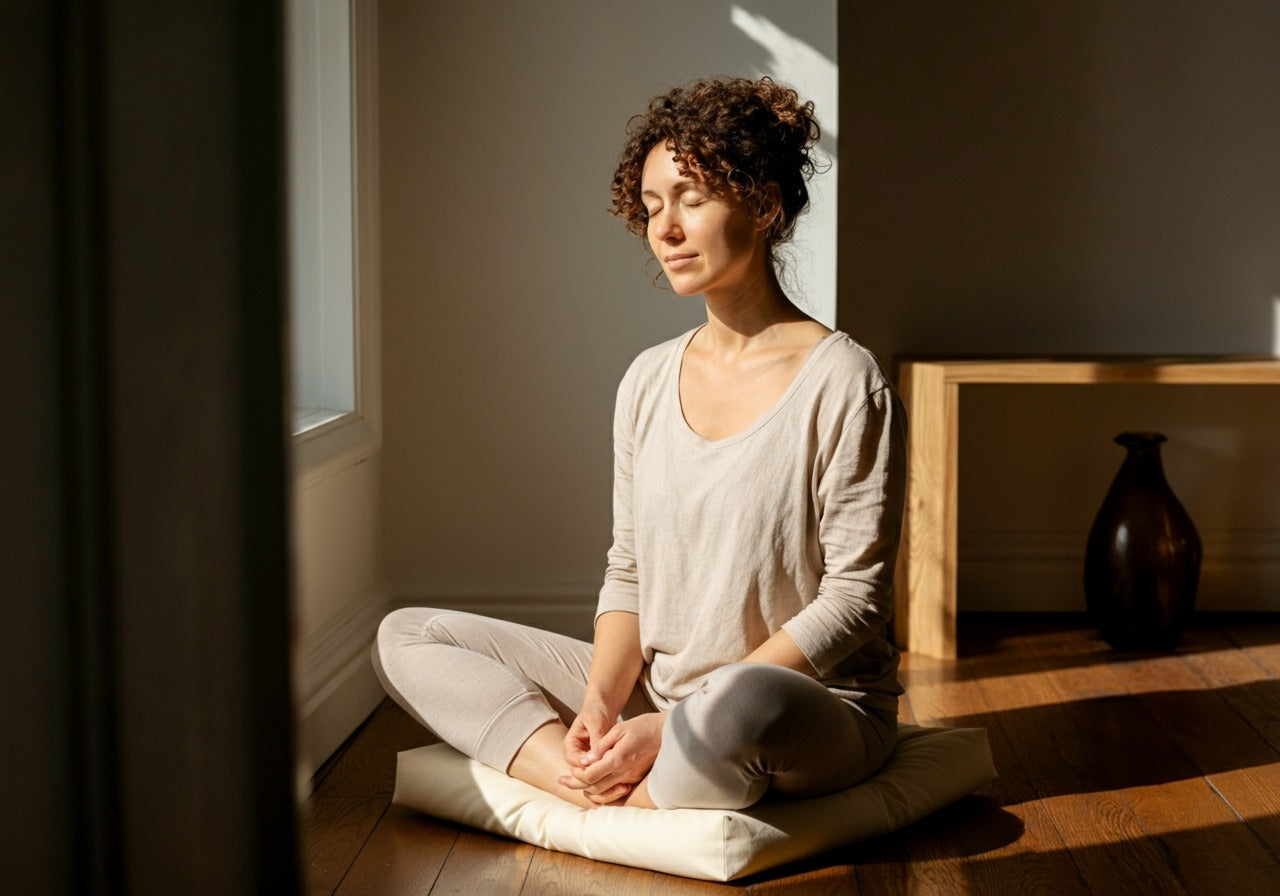
Meditation Corner in a Small Apartment: A Simple Setup Guide
The smallest apartments have a corner. Even a 3-foot square is enough to create a spot your brain associates with slowing down.
You can create a meditation corner in a small apartment with nothing more than a cushion on the floor, a cleared patch of wall, and a consistent location. The size of the space matters far less than the consistency of using it. Environmental psychology research shows that the brain responds to location cues — and a dedicated spot, however small, reduces the mental friction that stops most meditation habits before they form. Three square feet is a real number. That's about the size of a bath mat.
Most guides on this topic are essentially Pinterest boards: beautiful rooms with expensive floor cushions and trailing plants. That's not what this is. This is the practical version — the one that works in a 600-square-foot apartment where the "meditation corner" is sharing floor space with a side table and a charging cable.
Why a Dedicated Spot Matters (Even If It's Tiny)
James Clear, in Atomic Habits, describes how habits are anchored to contextual cues. The brain learns to associate a specific location with a specific behavior, and over time, entering that space becomes the cue itself. You don't have to decide to meditate — you sit in the spot, and the behavior follows more naturally.
This is sometimes called "environment design," and it's well-supported in behavioral research. Habits form through the cycle of cue → routine → reward. When the cue is your physical location, it becomes one of the most consistent triggers available because you're always in your own home.
For meditation specifically, this matters because the hardest part of a daily practice isn't the meditation itself — it's starting. A dedicated corner removes one layer of that friction. You don't scan the room and wonder where to sit. You go to the corner.
There's also a counterintuitive finding worth mentioning: a smaller, more defined space can support a practice better than a large, open room with no clear boundaries. Perceived enclosure creates a sense of containment that actually aids focus. A cozy nook registers as "safe" and "separate" to the nervous system in a way a vast living room does not. Small is not a limitation here. It can be a feature.
The Minimum You Actually Need
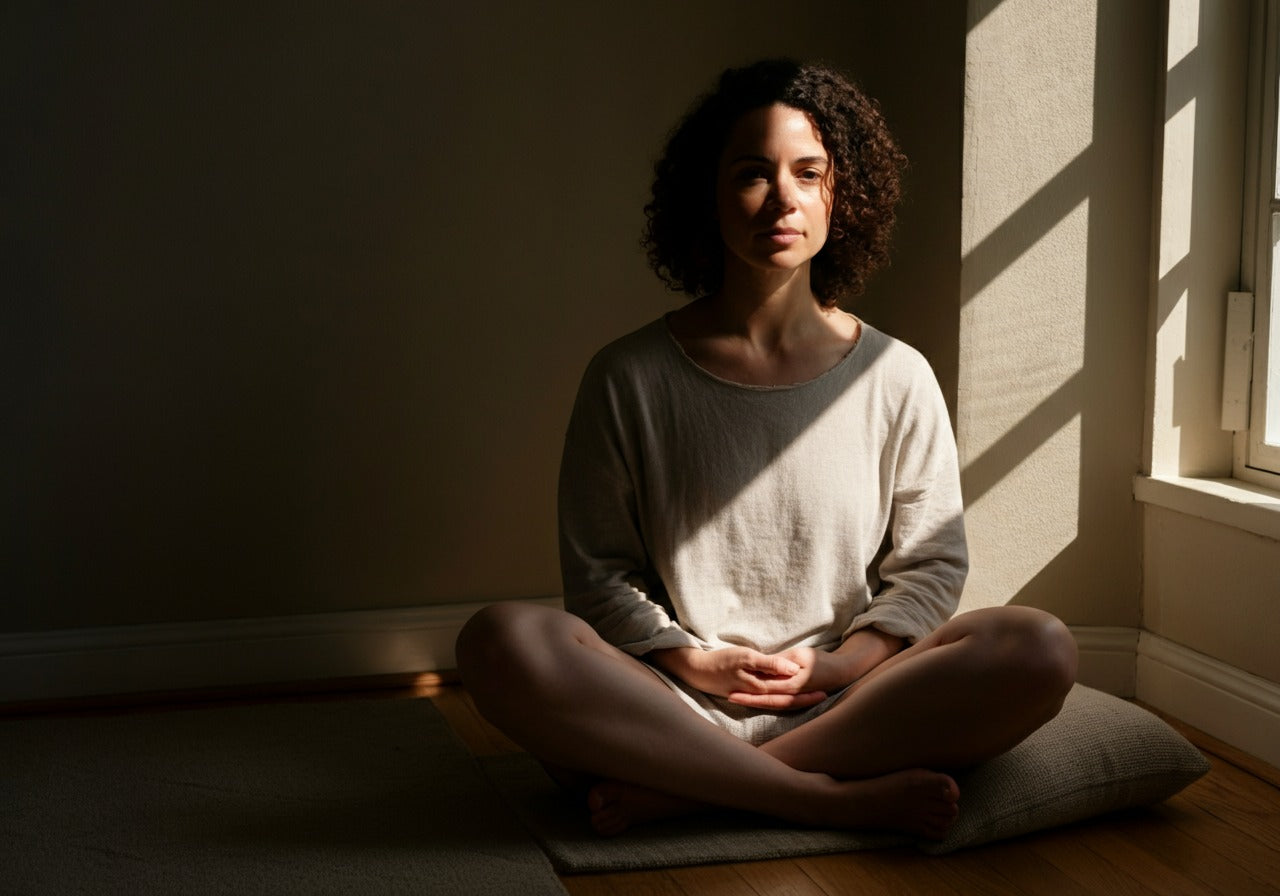
Before you think about what to add, it helps to know the honest floor — what you actually need versus what looks good in photos.
The non-negotiables:
- A seat — a cushion, a folded blanket, a chair, the floor with a yoga mat. Whatever lets you sit comfortably upright for 10–20 minutes.
- A fixed location — the same spot, used consistently, signals the brain over time.
- A reason to stop before you sit down — a single object (a candle, a small plant, a stone) that marks the space as different from the rest of the room.
What you don't need:
- A singing bowl, mala beads, or any specific spiritual objects
- Matching decor
- A room with a door
- Natural light (though it helps)
- More than 3–4 square feet of floor space
The minimum functional setup: a seat and something that marks the space. That's it.
Five Small-Apartment Meditation Corner Ideas (Ranked by Space Required)
1. The Floor Cushion Corner (3 sq ft)
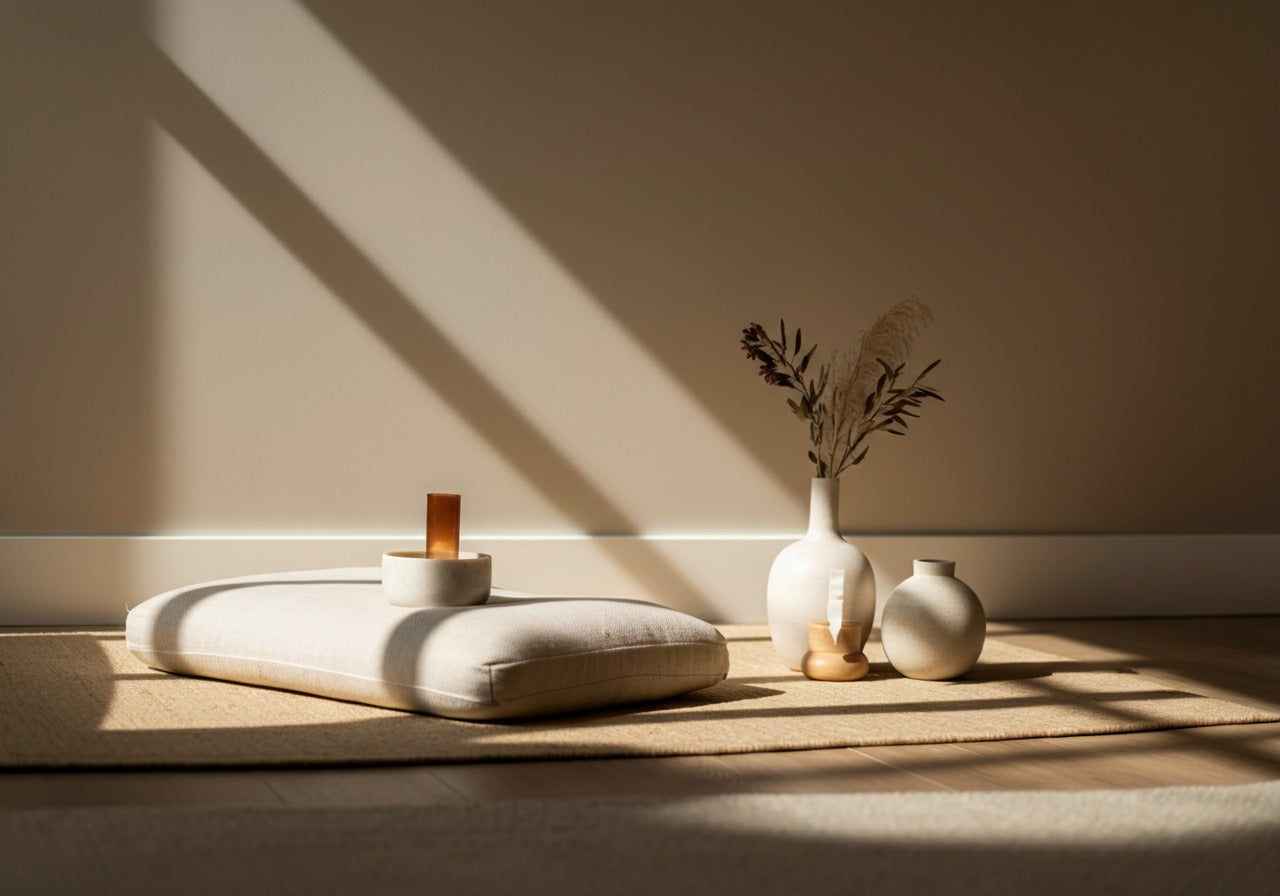
A zafu or a folded firm blanket in a fixed corner of the bedroom or living room. Against a wall is ideal — it creates a natural back reference and makes the space feel bounded. Add one small object on the floor in front of you (a candle, a smooth stone, a small plant) to anchor your gaze. This setup requires no furniture and takes zero square footage from your daily living. When you're not using it, the cushion can rest against the wall.
For cushion selection, the differences between options matter more than most people realize — the zafu vs. zabuton guide breaks down the practical trade-offs.
2. The Window Nook (4–6 sq ft)
If you have a low window or a bay window, the sill or the floor in front of it becomes a natural meditation seat. Morning light grounds the practice. A thin folding mat, a cushion, and you're done. The window acts as both a visual focal point and a light source, which removes the need for any additional ambiance objects.
3. The Floating Shelf Corner (3 sq ft floor + vertical wall space)
A single floating shelf installed at eye level (when seated) holds everything that makes the space feel intentional: a candle, a plant cutting in a small jar, one or two objects. The floor below holds only your cushion. This is the setup that photographs well, but it's also genuinely functional — the shelf keeps your objects off the floor and makes the corner feel cohesive without claiming more floor space.
4. The Folding Chair Setup (6 sq ft)
Floor sitting isn't comfortable for everyone, and that's fine. A simple folding chair — the kind that stores flat against a wall — positioned in a consistent spot works just as well. When folded, it reclaims the floor space. When open, it marks your corner. This works especially well in studio apartments where the "corner" is actually part of the living room.
5. The Roll-Up Setup (0 permanent sq ft)
If your apartment genuinely doesn't have a corner to spare, the practice doesn't have to be fixed. A dedicated basket or tote holds your mat, cushion, and one or two objects. You set it up in the same spot each time — beside the bed, in front of the sofa — and pack it away after. The location becomes the cue, even if the setup isn't permanent. This is less ideal for habit formation than a fixed corner, but it works, and it's far better than not meditating at all because your apartment is small.
What to Put in Your Corner (and What to Leave Out)
Worth including:
- A seat — cushion, mat, or chair. Prioritize what lets you sit upright without strain.
- One light source — a candle or a small lamp. Overhead lighting breaks the mood; soft, directed light settles it.
- One plant — even a small succulent signals "living, slow space." It's not decoration — it's a focal point.
- One scent anchor — a candle, a small diffuser, or incense used only in this spot. Scent is one of the fastest sensory cues for state change.
What to leave out:
- Anything that has another job in your apartment (your phone, books you're actively reading, a laptop)
- Too many objects — more than five things on a shelf competes with simplicity
- Bright colors or pattern-heavy textiles in the corner itself
What to wear: Comfort is the point, and what you put on signals whether your body is ready to settle. Fabric that doesn't shift or pull when you lower yourself into a seated position matters more than aesthetics here — Gloravi's long sleeve crop top and wide leg pants yoga set ($96) moves well in seated positions and transitions cleanly from morning practice to the rest of the day.
For a more thorough breakdown of what actually works in a meditation context, what to wear while meditating covers the specifics.
Setup Type Comparison
| Setup | Floor space | Best for | Permanent? |
|---|---|---|---|
| Floor cushion corner | 3 sq ft | Daily seated meditation | Yes |
| Window nook | 4–6 sq ft | Morning practice with light | Yes |
| Floating shelf corner | 3 sq ft floor | Aesthetics + function | Yes |
| Folding chair | 6 sq ft (folds flat) | Anyone who doesn't floor-sit | Semi |
| Roll-up basket | 0 permanent | Studio/shared spaces | No |
FAQ
How much space do I actually need for a meditation corner?
Three to four square feet is enough. That's approximately the size of a large yoga mat folded in half, or a bath mat. The key isn't the square footage — it's the consistency of using the same spot. Your brain learns to associate the location with slowing down, and that association builds over time.
Can I meditate in a shared apartment with no private space?
Yes. Timing matters more than privacy. Early morning before roommates are up, or a consistent 10-minute window in your bedroom with the door closed, works. The setup can be minimal — a cushion in the corner of your room is enough to mark it as your space. If you're working with genuinely limited space at home, how to build a meditation corner covers more options including multi-use setups.
Do I need specific meditation furniture or cushions?
No. A folded blanket, a firm pillow, or a folding chair all work. The purpose of a meditation cushion is to tilt the pelvis slightly forward so you can sit upright without straining your lower back. Anything that accomplishes that is the right tool. If you want to invest in a dedicated cushion, the differences between a zafu and a zabuton are worth understanding — the full comparison is here.
How do I keep a small meditation corner from feeling cluttered?
Limit objects to five or fewer. Everything in the corner should serve either a functional purpose (your seat, your light source) or a single focal role (one meaningful object, one plant). Clutter in a meditation space contradicts the reason you're there — simplicity is the point, not a design preference.
Does my apartment environment affect my meditation practice?
It does, in a measurable way. Environmental psychology research shows that perceived separation from chaos matters more than actual square footage. A well-defined corner — even in a small apartment — registers as a distinct context, and your nervous system responds accordingly. Some research suggests that the physical environment where you practice shapes your stress response over time, meaning the space itself can begin to settle you before you've closed your eyes.
How do I build the habit of actually using the corner?
Start with two minutes, not twenty. The goal in the first two weeks isn't depth of practice — it's showing up to the corner consistently. Stack the habit on something you already do: right after your morning coffee, or immediately before you change out of your pajamas. A mindful morning routine can help anchor it in a sequence that already exists in your day.
Your clothes affect this more than you'd think — the environment you're in and the way you've dressed both shape your mental state before you sit down. How clothes affect mood covers the research behind that, and cozy outfits at home has practical options for building a home wardrobe that supports slower living.
Candlelight is one of the simplest anchors for a meditation space — soft, warm, and immediate. Candles and Meditation: A Sensory Ritual Guide covers which scents deepen a practice and how to use them without overwhelming the space.