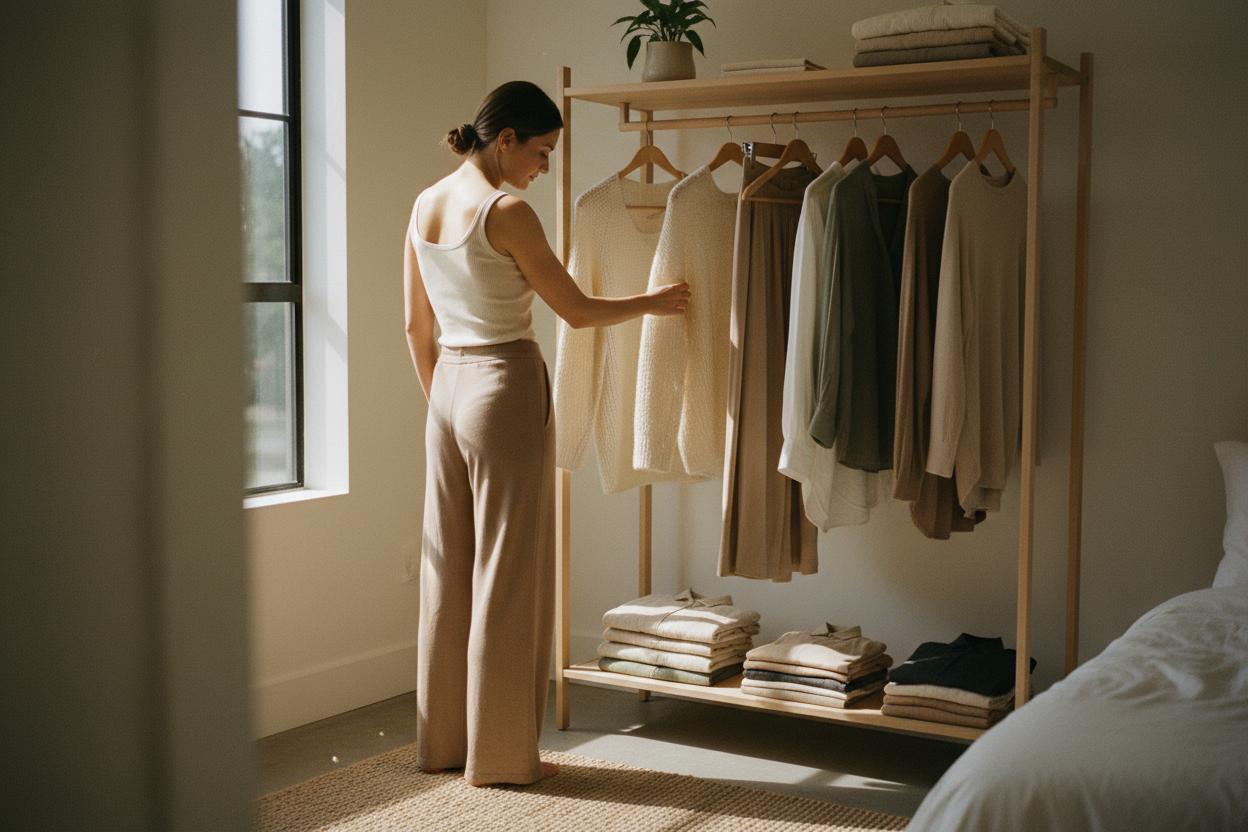
Real-Life Slow Living: How One Woman Built a Versatile Wardrobe with 15 Pieces
Share
When Maya decided to simplify her life, she started with her closet. She was staring at a rail packed with clothes she never touched, feeling vaguely guilty about all of it. What she wanted was a wardrobe that actually matched her days — slow mornings at her desk, afternoon errands, weekend walks, and the occasional coffee catch-up that needed to look a little intentional. After a season of trial and error, she landed on about 15 pieces. That's it. And honestly? Getting dressed has never felt easier.
Why Fewer Pieces Actually Work
There's something that happens when you stop stuffing your closet and start being honest about what you reach for. The mental fog lifts. The getting-dressed math gets simpler. Maya describes it as "the relief of having nothing to decide." She's not a minimalist by nature — she just got tired of the noise.
The shift wasn't about following rules. It was about noticing which pieces she kept reaching for and letting go of everything she was keeping "just in case." A capsule wardrobe, done right, isn't about having less — it's about having exactly enough. If you're curious about the broader framework behind this, the comfort-first wardrobe approach is a good place to start.
The 15 Pieces That Make Up Her Wardrobe
Maya didn't follow a template. She built her list by asking one question about each piece: do I reach for this without thinking? Here's what made the cut — described not by what they're made of, but by how they actually feel and move.
- A soft ribbed tank in cream — layers under everything, cool enough alone on warm days. She wears a soft ribbed tank like this one in three colors.
- A relaxed cropped tee in white — slightly boxy, slightly cropped, goes with every bottom she owns.
- A soft sweatshirt for layering — not structured, not shapeless, just the kind of thing you pull on without looking. She has a soft sweatshirt that lives on her desk chair.
- A cozy long-sleeve in charcoal — brushed on the inside, moves easily, works for desk days or a walk.
- A cropped layering jacket — not a serious coat, just enough structure to feel pulled-together outside. She swears by a cropped zip jacket that goes from sofa to street without looking like it tried.
- A matching lounge set — her single most-worn item. A soft matching top and wide-leg pants that read effortless. Hers is a matching lounge set she's worn to the coffee shop more times than she can count.
- Soft stretch leggings in black — the kind that move with you all day without shifting or pulling.
- Wide-leg lounge pants in olive — drapey, easy, feels like wearing nothing. She reaches for these on slow mornings and doesn't take them off until evening.
- A ribbed matching set — a little more put-together than the lounge set, but still easy. Good for video calls, errands, or meeting a friend.
- A soft slip dress in navy — she layers it over tanks or under her jacket; it does a lot of quiet work in her wardrobe.
- A wrap-style casual dress in a soft print — the one piece that always looks intentional without requiring effort.
- White low-profile sneakers — clean, versatile, go with everything.
- Ankle boots in warm brown — for when she wants to feel slightly more dressed.
- A canvas tote and a simple crossbody — two bags, two different moods, no more switching around.
That's the list. Not precious, not performative — just pieces that feel good and actually get worn.
How She Actually Gets Dressed
The best part of having fewer things is that combining them stops feeling like a puzzle. Here's how Maya's pieces show up in a real week:
- Working from home: The wide-leg lounge pants with the ribbed tank and a soft sweatshirt thrown on top. She doesn't get changed until she actually needs to go somewhere, and sometimes not even then.
- Quick errands: The matching lounge set with her cropped jacket and white sneakers. Looks intentional, took two minutes.
- Coffee with a friend: The ribbed matching set or the wrap dress with ankle boots. She feels like herself — relaxed but together.
- A slow walk or a yoga class: The stretch leggings with the relaxed tee or the soft sweatshirt. Nothing to think about.
She uses a simple scarf or a single piece of jewelry to shift the feeling of an outfit rather than changing everything. Getting dressed takes under five minutes and she never opens her closet feeling defeated.
What She Actually Learned
Maya says the biggest thing wasn't discovering some perfect formula — it was getting honest. She stopped keeping things because they were expensive, or because she might want them someday, or because they looked good on a hanger. She started keeping things because they felt good on her body, today, in her actual life.
A few things that helped her get there: doing a single clear-eyed audit (take everything out, only put back what you'd genuinely reach for), not worrying about fiber content or brand pedigree, and focusing instead on how a piece moves and whether it's actually comfortable. If you want to go deeper on what to look for in fabric feel without getting lost in marketing claims, the honest fabric guide is a good read — it cuts through a lot of the noise.
The slow living part of a slow living wardrobe isn't really about the wardrobe. It's about removing friction. When your clothes just work, you stop thinking about them — and that space goes somewhere better. More on building that kind of everyday ease in the cozy capsule wardrobe guide and if you're navigating this in your 30s specifically, this one is pretty real.
Frequently Asked Questions
How do I start a capsule wardrobe for slow living?
Start by pulling everything out of your closet and being honest about what you actually reach for versus what you keep out of guilt or wishful thinking. Sort into keep, donate, or repair. Then think about your real days — not a fantasy version of your life — and choose pieces that meet you there. Aim for somewhere between 15 and 30 items that work together and that you genuinely like wearing. The goal is less friction in the morning, not a perfectly curated Pinterest board.
Can a capsule wardrobe really fit my real life?
Yes — if you design it around your actual activities and not a version of yourself you're hoping to become. Maya works from home, moves a lot during the day, and needs to look presentable without planning ahead. Her wardrobe is built for that. Yours will look different. The principle is the same: know how you actually live, and dress for that.
What should I look for in fabric when building a soft wardrobe?
Feel and movement, mostly. Does it soften after washing? Does it pull or shift when you move? Does it feel scratchy by the end of the day? Forget the fiber hierarchy — "natural" doesn't always mean comfortable and stretch knits that move with your body can feel just as good (often better) for everyday wear. For a clear-eyed breakdown, the honest fabric guide covers what to actually look for in a fabric without the marketing spin.
How many pieces do I need?
There's no magic number. Fifteen worked for Maya because it matched her life. Some people land at twenty, some at twenty-five. Start conservative — you can always add — and only bring something in when there's a real gap, not a vague feeling of wanting more options.
How do I keep a capsule wardrobe from getting stale?
Do a light check each season. If something no longer feels right — too worn, wrong for where you are now — donate it and let a more useful piece take its place. The wardrobe should evolve with you, not become a monument to who you were two years ago. One thoughtful addition beats five impulse buys every time.
Is this only for minimalists?
Not at all. Maya considers herself a person who likes things, not a purist. A capsule wardrobe isn't about self-deprivation — it's about owning what you actually love and wear. It can be colorful, expressive, and very much yours. The point is that every piece earns its place.