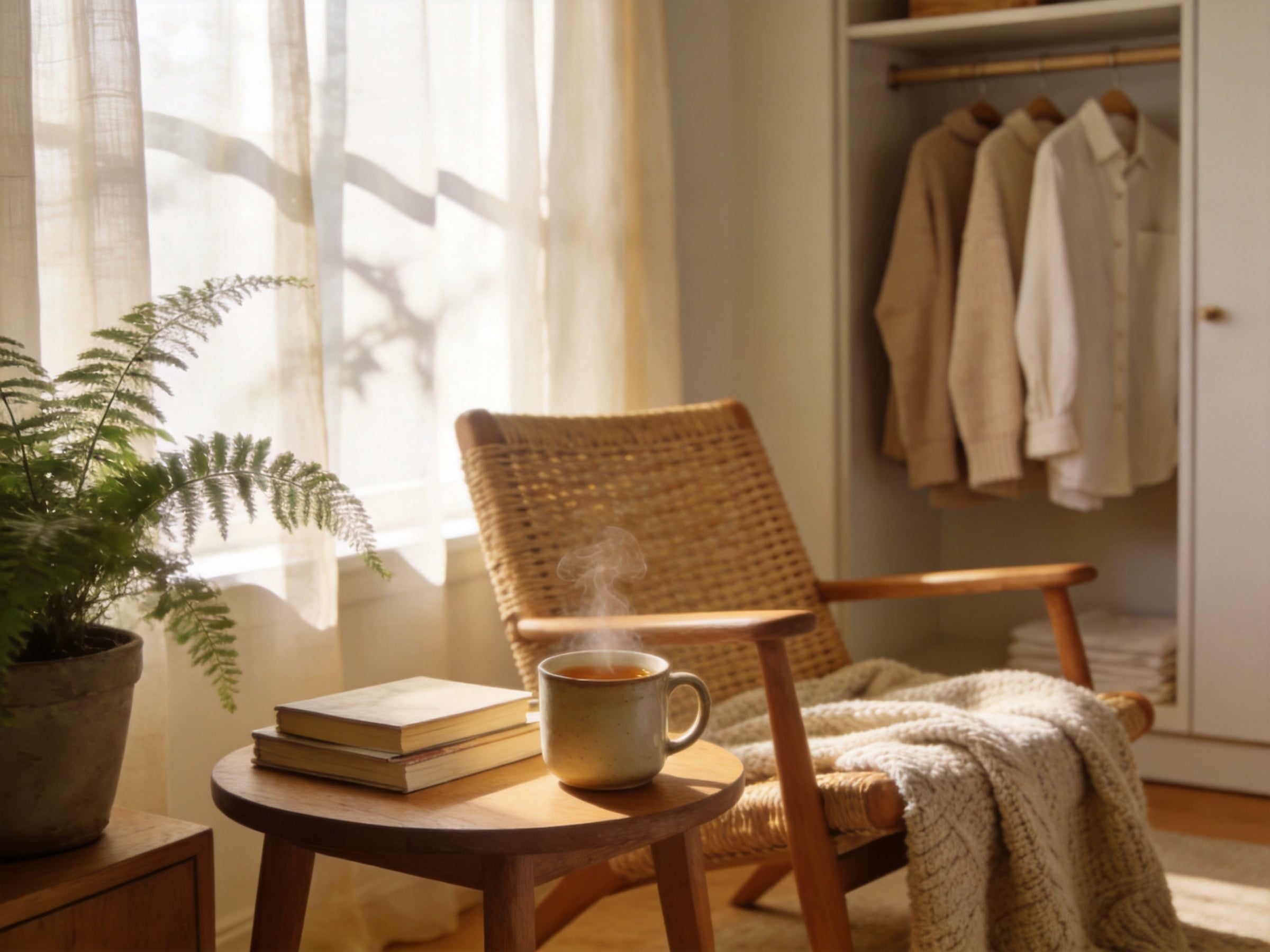
The Art of Slow Living: How to Create a Cozy Home and Wardrobe That Nurtures Your Soul
Share
You pour your coffee, settle into your favorite chair, and look around. Instead of calm, there's this low hum of visual noise — your home is full of things, your closet is overflowing, and nothing quite fits the moment. That feeling has a name, and there's a way out of it. Creating a slow living home and wardrobe isn't a design project or a shopping trip. It's a shift in how you decide what belongs in your space — and how that space makes you feel.
What Slow Living Actually Means for Your Home and Wardrobe
Slow living is a mindset that values presence and intentionality over accumulation and speed. For your home, it means curating spaces that feel warm and restful — rooms where things have a purpose or a quiet charm. For your wardrobe, it means choosing pieces that move with you through your actual day, not an idealized one.
The two reinforce each other more than most people realize. When your closet feels like it holds things you genuinely reach for, getting dressed becomes lighter. When your living room isn't fighting for your attention, you actually rest in it. That feedback loop — calm space, calm dressing — is the whole idea. If you want a framework for building this kind of ease into daily life, the comfort-first wardrobe approach is worth a slow read.
Creating a Home That Holds You
A slow living home is built through the senses first. Soft lighting matters more than perfect furniture. Layering a floor lamp, a candle on the nightstand, and a dimmer overhead lets you shift the room's mood as the day moves — bright and open in the morning, warm and low by evening. If you're looking to make evenings feel more intentional, the evening wind-down routine guide has some genuinely useful ideas.
Color and texture do quiet work. Beige, warm taupe, soft sage — these shades calm without demanding attention. Add a textured throw, a ceramic mug you love, a stack of books that actually reflects you. The goal isn't a styled photograph; it's a room that you want to be in. A lit candle in the corner — something like the coconut apricot soy candle — can make a space feel lived-in and unhurried in a way that no wall art ever quite manages.
Declutter by subtraction, not by following a system. Take one surface. Ask whether each thing earns its place. Keep going until the room breathes.
Building a Wardrobe That Supports Ease
A slow wardrobe isn't defined by the materials on a hang tag — it's defined by how clothes feel and move when you actually wear them. Soft stretch knits, ribbed fabrics that hold their shape, burnout textures that feel worn-in from the first day — these are the pieces that get reached for again and again. If you want to understand what to actually look for in a fabric beyond marketing language, the honest fabric guide cuts through the noise clearly.
Versatility is the other thing that matters. A pair of drapey wide-leg pants that drapes well and moves easily can carry you from a quiet morning at home through an afternoon coffee run — no outfit change required. That kind of piece earns its closet space.
For more on building around pieces like these, the quiet luxury loungewear guide goes deep on silhouettes and layering without overcomplicating it.
Five Moves Worth Making
- Audit one drawer, not your whole life. Start small. One corner of your closet, one shelf in the living room. Ask what you actually use. Let the rest go without ceremony.
- Invest in pieces that do more than one thing. A soft ribbed tank in a neutral color works under a sweatshirt, alone at home, or tucked into wide-leg pants for coffee. That kind of range is the point.
- Try a one-in, one-out rhythm. When something new comes in, something else leaves. It keeps the closet from quietly refilling itself.
- Add one small daily ritual. Make the bed. Fold the clothes. These aren't chores — they're small ways of telling yourself that your space matters.
- Shop less often, choose more carefully. Slow living isn't anti-shopping; it's anti-regret. Take your time. For more on how to dress at home with actual intention, cozy at-home outfits has good ideas grounded in everyday reality.
The Pieces That Show Up Every Day
Some combinations just work. A ribbed crop top with wide-leg pants and a soft layer on top — that's most of a good slow-living wardrobe in three pieces. A matching lounge set removes the decision entirely: the matching lounge set moves easily from sofa to coffee shop without announcing itself either way.
Outfit formulas help when you don't want to think:
- Ribbed tank + wide-leg pants + a light layer — works for working from home, errands, meeting a friend.
- Soft sweatshirt + stretch leggings — morning walk, slow Sunday, nothing planned.
- Burnout sweatshirt + drapey pants — relaxed but put-together, no effort visible.
The goal isn't a capsule wardrobe you curated for Instagram. It's a closet where everything fits the life you're actually living.
Frequently Asked Questions
What is slow living and how do I start?
Slow living is a way of choosing what gets your attention — in your home, your schedule, your closet. To start, pick one small area: a drawer, a shelf, a corner of a room. Clear what doesn't serve you. Then add one small ritual — morning tea without a screen, an evening walk, a few minutes of stillness before bed. The habit builds on itself.
How can I make my home feel calmer?
Lighting first. Swap harsh overhead lights for warmer, lower sources — lamps, candles, a dimmer. Then pick a quiet color palette: beige, cream, soft sage. Clear one surface completely and see how the room changes. A single lit candle does more for a room's mood than most people expect — try the coconut apricot soy candle somewhere you sit in the evening.
What should I look for in wardrobe fabrics?
Focus on how fabric feels and moves, not what it's called. Soft stretch knits, ribbed textures, burnout fabrics — these hold their shape, feel easy against skin, and don't require special care. Forget the hierarchy of "natural is best." What matters is how a piece feels on day one and still feels on day three hundred. Read more in the honest fabric guide.
How do I build a capsule wardrobe for slow living?
Start with 20 to 30 pieces that you genuinely reach for. Basics first: a ribbed tank, stretch leggings, wide-leg pants, a soft sweatshirt. Stick to neutrals that work across seasons — black, cream, olive, warm gray. Then add a few things with a little more character. Every piece should work in at least three combinations. If it doesn't, it's filling space, not earning it.
Can slow living actually save money?
Usually, yes. Buying fewer things with more care means less replacing, less regret-buying, less seasonal shopping out of boredom. A smaller, more intentional wardrobe and home tend to cost less over time — not because you're being frugal, but because you're being honest about what you actually use.
How do I keep this going long-term?
Check in seasonally. Go through your closet and your home and ask what's still earning its place. Before buying something new, ask whether you already have something similar and whether you'll actually use it. Small, consistent checks work better than big seasonal overhauls. The lifestyle stays sustainable when it doesn't require heroic effort.
Related reading
- The comfort-first wardrobe framework
- Building a cozy capsule wardrobe
- An evening wind-down routine worth keeping