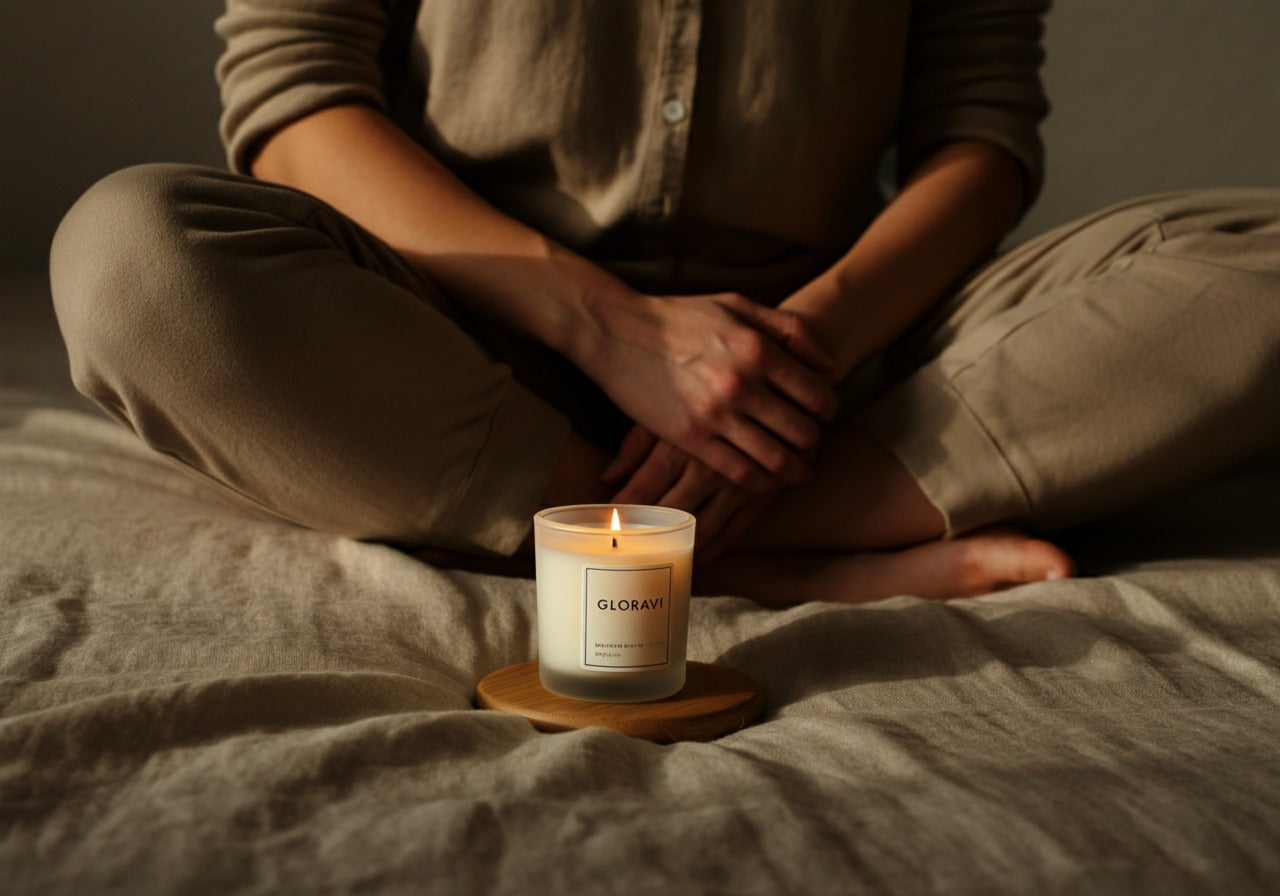
The Sleep Candle Guide: Scents for Deep, Restful Sleep
The Sleep Candle Guide: Scents for Deep, Restful Sleep
Most people are asleep before they're actually ready to sleep. They're in bed, exhausted, with cortisol still elevated, brain still processing the day. The gap between "I should be sleeping" and "I am actually ready to sleep" can be 30 minutes to two hours — and most people close that gap by waiting, scrolling, or giving up and taking something.
A sleep candle, used well, doesn't close that gap on its own. But it does something specific that screens, supplements, and talking about your day don't do: it gives your nervous system a consistent, repeatable signal that the transition into rest has begun. Used enough times, that signal becomes part of the mechanism.
This is what a good pre-sleep candle ritual actually is — not aromatherapy as a cure, but a consistent signal your nervous system learns to recognize.
Why Scent Works Differently for Sleep Preparation
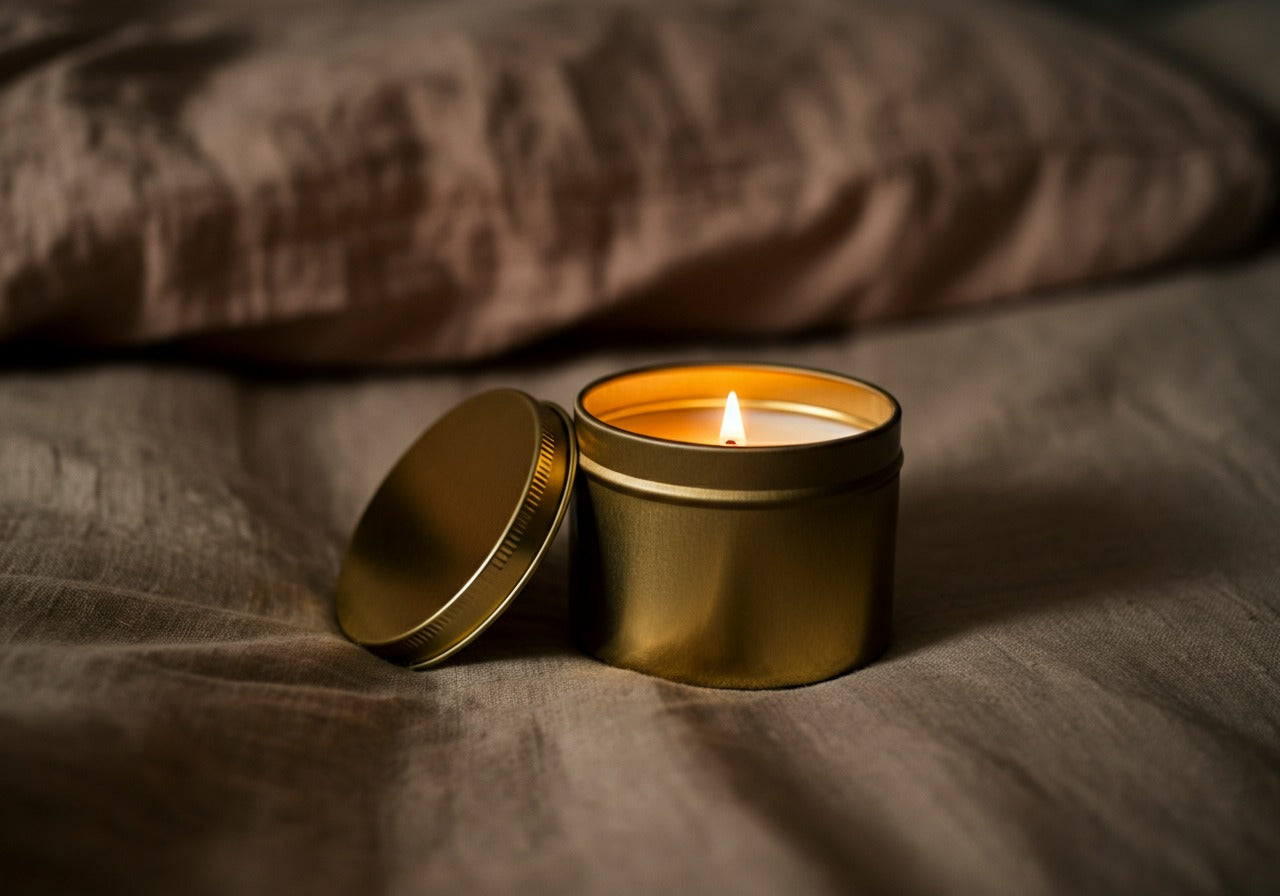
The olfactory system connects directly to the hypothalamus — the brain region responsible for regulating circadian rhythms, temperature, and hormones including cortisol and melatonin. No other sense has this direct a pathway.
If you want to see that route in slow motion, how fragrance reaches your brain maps each step of the way.
Research from the Sleep Foundation and multiple chronobiology studies has found that consistent pre-sleep sensory rituals — the same sequence of inputs in the same order each night — help prime the circadian system. Light levels matter (dim them one to two hours before bed). Temperature matters (cooler rooms support melatonin release). Scent, used consistently, becomes another input in that system.
A 2015 study in Complementary Therapies in Medicine found that participants who used lavender-based aromatherapy for four weeks reported improved sleep quality and reduced nighttime waking compared to a control group. The mechanism wasn't just relaxation; it was pattern recognition. The scent became a reliable signal.
The implication: which scent matters less than the consistency of using it. That said, certain profiles work better than others for this particular nervous system transition.
What Makes a Good Sleep Candle
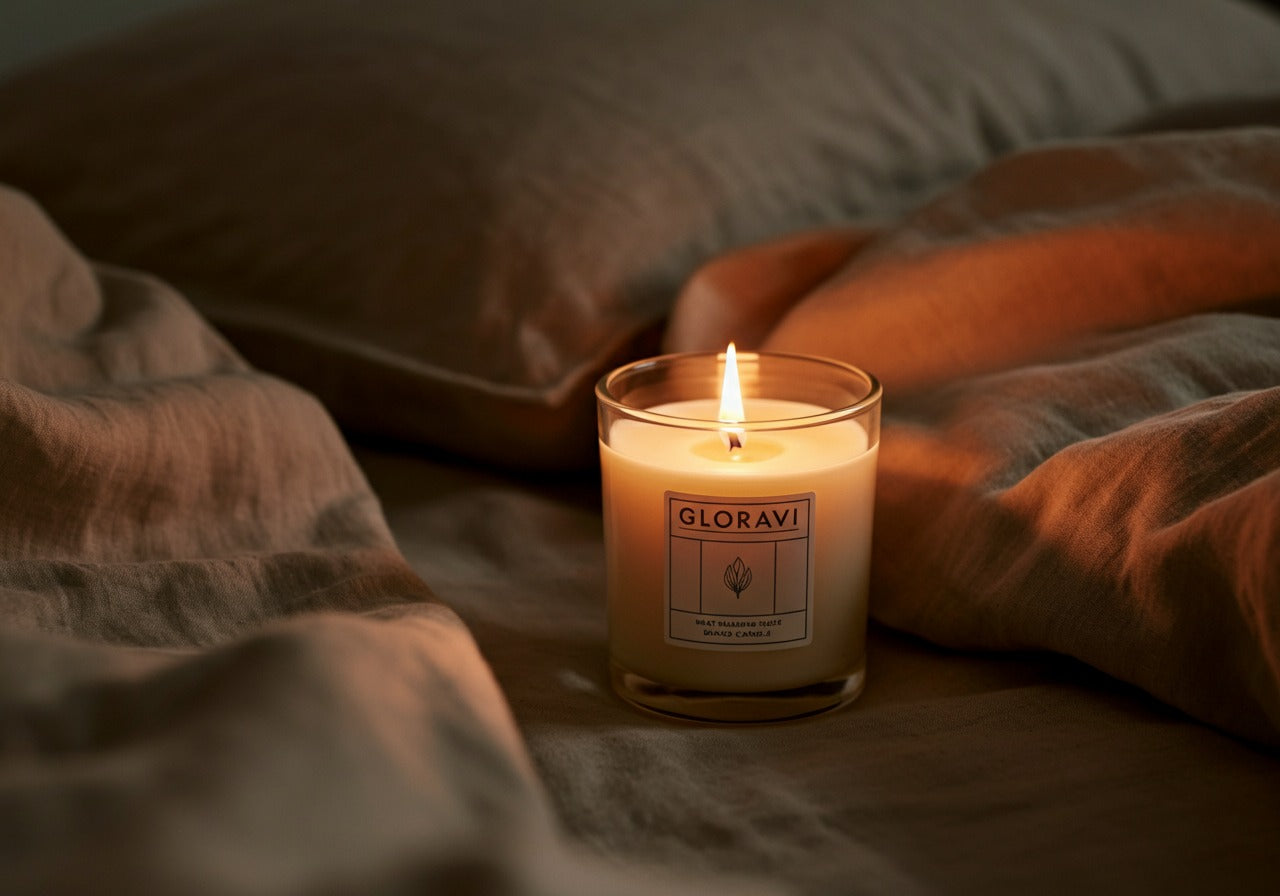
Soft, not sharp. Pre-sleep scents should have low to medium projection — you want to be aware of it, not surrounded by it. Intense or complex fragrances require more olfactory processing, which is counterproductive.
Warm, not stimulating. Citrus, bright florals, and green notes are alertness scents. Avoid them in the evening.
Familiar, ideally. If you've used a particular scent for sleep over a period of weeks, your brain starts to associate it with rest before you consciously decide to sleep. This is the core value of consistency.
Clean-burning. Sleep environments are closed, often small, and you're going to breathe the air for eight hours. Paraffin candles can release low levels of soot and synthetic compounds. Soy and coconut-based waxes burn cleaner. It's a small difference in one burn session; it compounds over time.
Scent Profiles That Support Rest
Lavender and its relatives: The most studied. Linalool, the primary compound in lavender, shows consistent evidence of GABA-related calming activity. Clary sage, lavender, bergamot, and Roman chamomile all share similar compounds and similar effects.
Vanilla and soft musks: These register in the olfactory system as safe-and-familiar — evolutionarily, sweet warmth signals abundance, proximity, and no threats. For the nervous system, this translates to lower vigilance, which is exactly what sleep preparation requires.
Sandalwood and light woods: Slow, grounding. Sandalwood in particular has been used cross-culturally for centuries in meditative and rest-focused contexts. The mechanism isn't mysterious — dense, quiet scents simply don't demand attention the way brighter ones do.
What to avoid before bed: Peppermint, eucalyptus, citrus, and coffee-forward scents. These are proven alertness triggers. Even if you like them, save them for morning.
The Evening Ritual Set: Built for This
The Evening Ritual Candle Gift Set was designed specifically for the pre-sleep and evening transition window. It includes the candle, a wick trimmer, and matches — which sounds like a small detail but makes a real difference to the ritual.
Trimming the wick before lighting takes about ten seconds. It prevents the candle from burning too hot, which causes soot and uneven melting. It also adds a deliberate action to the beginning of the ritual: you're not just lighting something, you're preparing it. That preparation is its own signal — I am doing something intentional now, not just falling into bed.
The ritual works best in the 60-90 minutes before you intend to sleep:
- Trim the wick
- Light the candle
- Dim overhead lights (or turn them off entirely)
- Do whatever your evening routine involves — reading, stretching, slow movement, nothing
- Extinguish the candle about 20 minutes before bed
The 20-minute gap at the end matters. You want the scent association without falling asleep near an open flame. Snuffing the candle (rather than blowing it out) keeps the scent lingering longer without introducing smoke.
For a more complete evening protocol, the evening wind-down routine covers the full sequence — the candle fits into Phase 1, when you're shifting the sensory environment.
Building the Habit: The First Two Weeks
The association between scent and sleep doesn't exist yet — you have to build it. This means using the same candle in the same way, at approximately the same time, for at least two weeks before expecting the signal to land automatically.
In the first few days, you probably won't notice much. You're still building the pattern. Around day seven to ten, you may find that lighting the candle triggers a slight, almost pre-emptive relaxation response. By the end of two weeks, the association is fairly reliable for most people.
This is the same mechanism behind morning intention rituals — the value comes from repetition, not novelty. A new candle every week is aromatherapy as shopping. The same candle, the same time, consistently, is a sleep tool.
Why Candlelight Itself Matters
The scent is only part of what's happening when you light a candle before bed. The light does its own work.
Candlelight sits at roughly 1800-2000K on the color temperature scale — warm, amber-toned, visually quiet. Overhead LEDs and screens land at 5000-6500K, which is in the blue-spectrum range. The difference matters because blue-spectrum light directly suppresses melatonin production. Research from Harvard Medical School found that exposure to blue light in the two hours before sleep significantly delays the melatonin release that signals the body to prepare for rest.
Candlelight doesn't just avoid triggering this suppression — its warm tone is close to the color of sunset light, which is what the circadian system evolved to associate with end-of-day. This isn't a small effect. Studies on pre-sleep light environment consistently find that switching from overhead lights to warm, dim sources in the 90 minutes before bed accelerates sleep onset even without any other changes.
This is why the ritual of lighting a candle, dimming the overheads, and putting down the screen is doing more than it looks like. You're replacing alertness-sustaining blue spectrum with rest-signaling warm spectrum. The scent adds another layer. The combination is more effective than either alone.
For Better Sleep Beyond the Candle
The candle works best inside a broader wind-down environment:
- Room temperature: 65-68°F (18-20°C) is optimal for melatonin release
- Light: Warm-tone, dim light for the last 90 minutes; no blue-spectrum light
- Sound: Either quiet or consistent low-frequency sound (rain, fan, white noise) — not intermittent noise, which triggers repeated orientation responses
- Clothing: Lightweight, loose, temperature-neutral. Wicking fabrics help if you run warm at night
Together, these inputs tell your nervous system the same thing the candle is telling it: the active part of the day is over.
FAQ
How long should I burn a candle before bed?
45-90 minutes is the sweet spot. Long enough for the scent to become present in the room; not so long that you're burning through the candle quickly or losing track of time. Always extinguish it before you fall asleep.
Can I use the candle in my bedroom?
Yes, with one guideline: never sleep with it burning. Use it in the bedroom during your pre-sleep wind-down, extinguish it before you actually close your eyes. Never leave a burning candle unattended.
What's the difference between a sleep candle and just burning any candle?
Mostly: consistency and scent profile. Any candle used reliably before bed can become a sleep signal over time. The scent profile matters for how quickly and effectively the initial calming response kicks in. A citrus candle will work eventually — but a soft, warm-scented candle works faster because it doesn't trigger alertness associations first.
Can I use it every night without burning through it too quickly?
A 9oz candle burns at roughly one hour per ounce under good conditions (trimmed wick, full melt pools each burn). That's about 45-65 hours of burn time. Burning 60-90 minutes per night, a single candle lasts roughly 5-6 weeks. The Evening Ritual Gift Set includes the wick trimmer that makes the most of that burn time.
Does the type of wax affect how well it works for sleep?
The scent throw matters more than the wax type, but wax affects how cleanly the scent releases. Coconut-apricot and soy waxes burn at lower temperatures than paraffin, releasing fragrance more gradually and without the low-level combustion byproducts that paraffin candles produce. In a closed room over eight hours of sleep, this is worth considering.
I've tried lavender before and don't love it. What else works?
Vanilla and amber blends are well-documented for relaxation response, and they tend to be more universally pleasant than lavender. Sandalwood-based scents are another reliable option. The broader category is "warm, soft, low-stimulation" — anything in that direction is working with your nervous system's rest-preparation state rather than against it.
If you are choosing a sleep candle for someone else rather than yourself, how to choose a candle gift covers reading the recipient's state and why a ritual set lands better than a single candle.
Sleep gets especially fragile during menopause, when shifting hormones leave the nervous system wired at night. Our guide to menopause and your nervous system offers a gentle evening ritual for exactly those nights.
Many people find the candle works best after a warm bath; here's the science behind the bath and candle ritual and how the temperature shift sets you up for sleep.
The best sleep candle is one you actually use every night. Start there.