Morning Clarity: How to Use Scent as a Focus Signal — Gloravi
There's a gap between waking up and actually starting. Most people know it. You're technically awake, maybe caffeinated, sitting at your desk — but the work hasn't begun. Something hasn't clicked.
That gap isn't laziness. For the first 20-30 minutes after waking, the brain's default mode network is still dominant — the network responsible for mind-wandering, self-referential thought, and the background mental noise that makes sitting down to work feel like walking through resistance. Transitioning out of it isn't about willpower. It's about giving the brain a signal that the shift has begun.
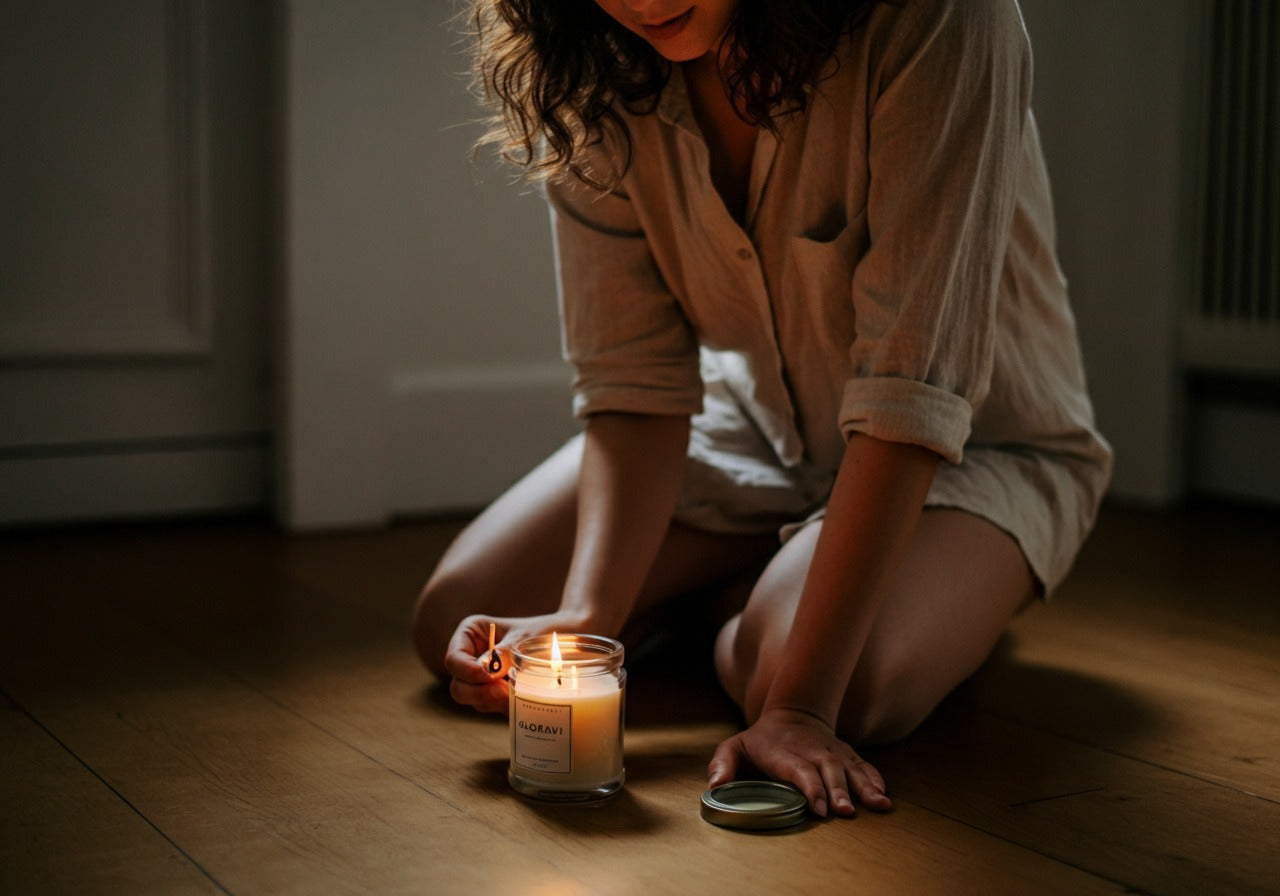
A morning scent ritual — specifically, a candle you light before you sit down to work — can become that signal. Used consistently, it stops being ambient and becomes a cue.
Why Morning Scent Works Differently
The olfactory system connects directly to the hypothalamus, which regulates circadian rhythms and the daily cortisol curve. Cortisol peaks in the first 30-60 minutes after waking — this is the cortisol awakening response, and it's actually a feature, not a stress reaction. It's the brain mobilizing energy for the day.
The problem is that the transition from "awake but scattered" to "focused and ready" doesn't happen automatically. The brain needs additional input: a change in environment, a physical cue, a consistent signal that says "this is the part of the day where we concentrate."
Scent is particularly effective here because of how quickly it reaches the limbic system — faster than any other sense. A consistent morning scent, used in the same way at the same time, becomes part of the circadian priming. Over weeks, the scent alone starts triggering the shift before you consciously decide to focus.
The Problem with Starting Cold
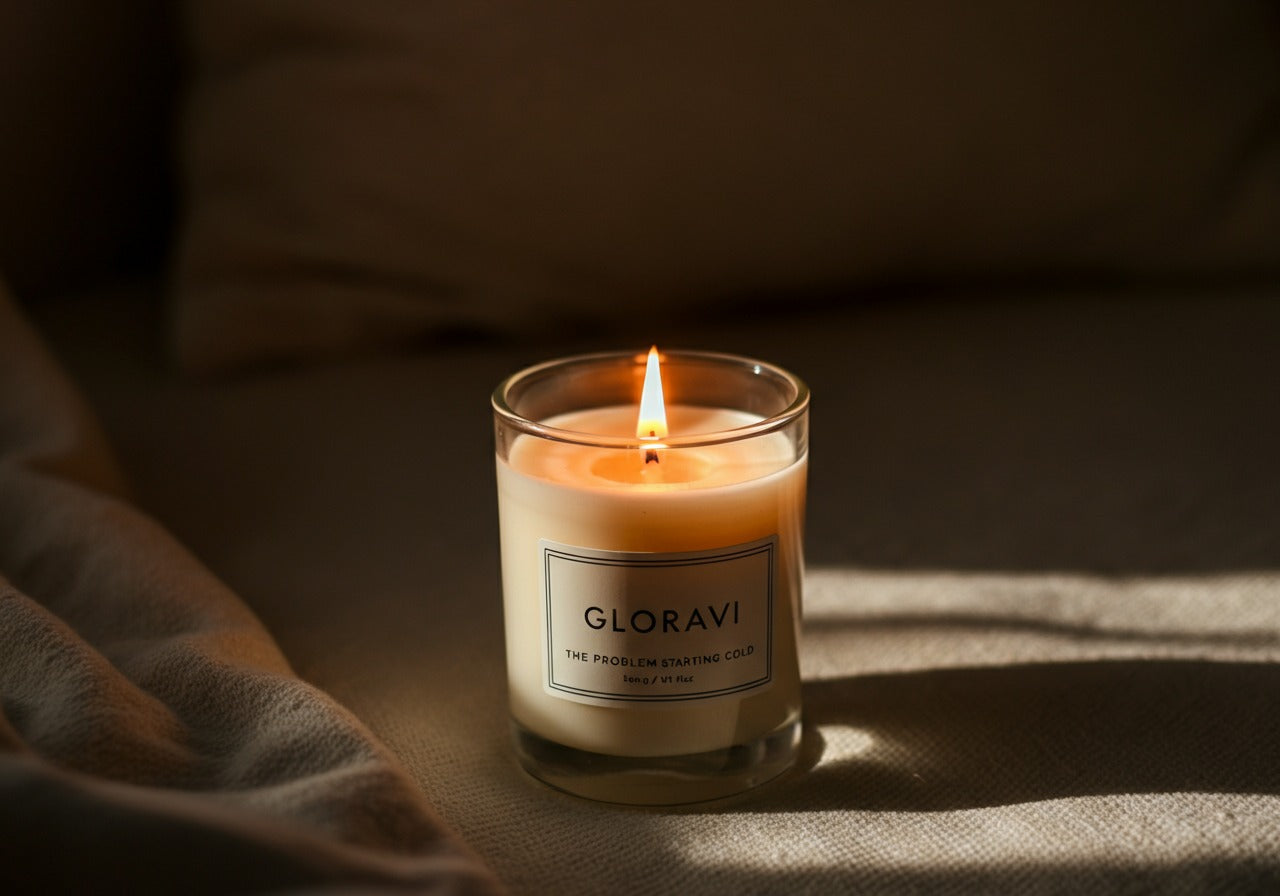
Most knowledge workers start work by opening a laptop. There's no signal, no transition, no marker that separates "I just rolled out of bed" from "I'm doing focused creative work."
The brain doesn't naturally compartmentalize like this. Without a transition signal, the default mode network doesn't fully disengage. Background mental noise persists — unfinished thoughts, residual distractions, the low-level friction of not having properly begun.
A morning ritual addresses this directly. The sequence of actions sends a message: switching modes now. The more consistent the ritual, the more reliable the switch.
Scent anchors this better than most other inputs because it bypasses conscious processing. You don't have to think about it. Light the candle, let the scent register, and the transition has already started.
What Clarity Scents Do
Fresh, clean scents work for morning focus not because they stimulate the way caffeine does — they don't — but because they create an uncluttered olfactory environment. Citrus, light evergreen, clean water notes, fresh woods: these profiles don't add to the sensory load. They clear space.
This is different from what most "focus" candle marketing promises. Claims about peppermint improving concentration or rosemary enhancing memory have real but context-specific research behind them — the effects are modest and depend heavily on concentration and individual response. What's more reliably true: a scent you associate with focused work, used consistently, becomes a faster trigger for that state over time.
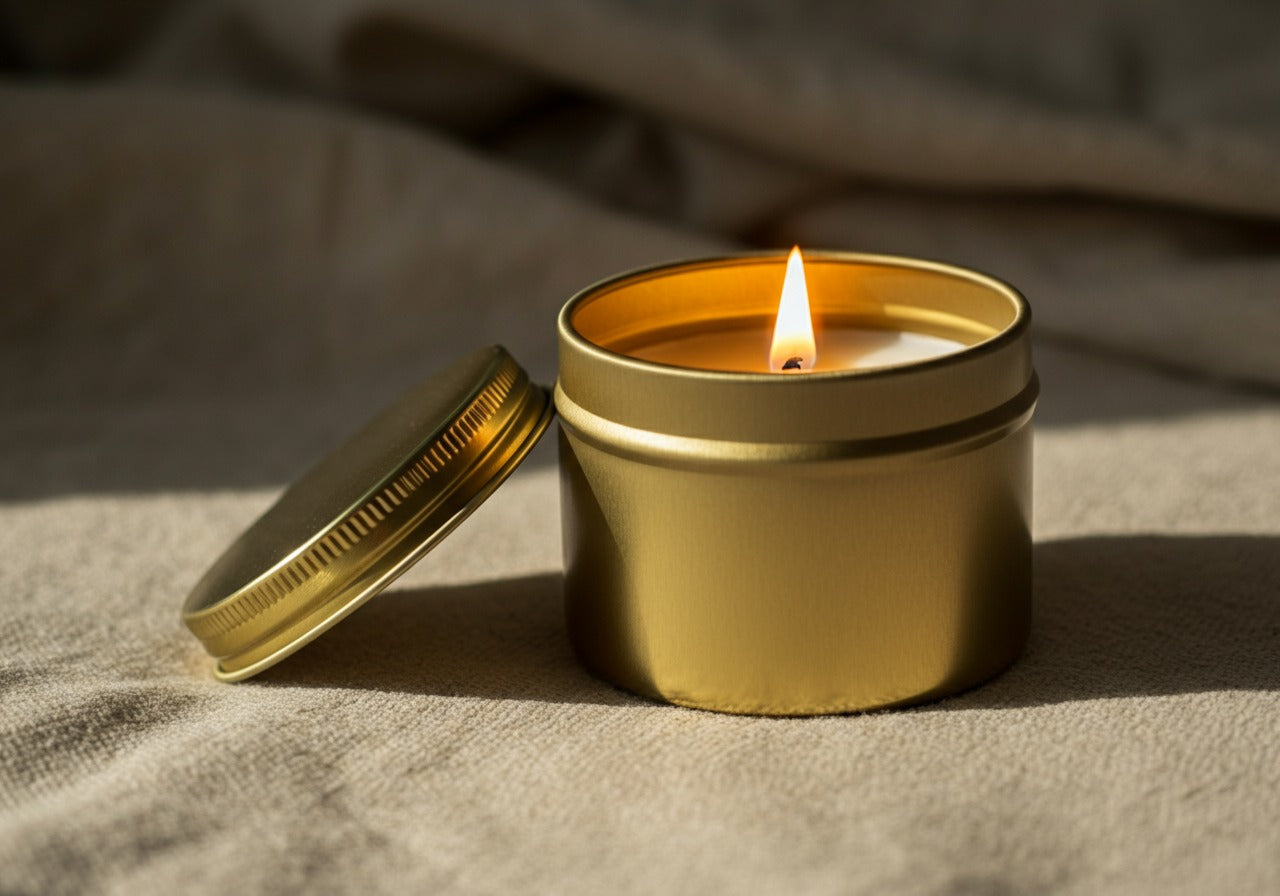
The Clarity candle comes in a matte black tin — compact, closed between uses, sized for a desk. Scent profiles include fresh evergreen, spa notes, and warm coffee, all in the clean-not-stimulating range. The tin also travels well if your work shifts between locations and you want the ritual to come with you.
How to Build the Morning Ritual
The ritual doesn't need to be long. Five minutes is enough to establish the cue.
A simple sequence: trim the wick (ten seconds), light the candle before you open your laptop or check your phone, sit with it for two to three minutes without any task, then begin.
The pause at step three is the important part. It's not meditation and it's not journaling. It's a deliberate gap that lets the scent register and the transition happen. You're marking the beginning, not filling the time.
Consistency matters more than duration. A three-minute ritual every morning for two weeks will have more neurological effect than a 20-minute ritual done occasionally. The brain learns to associate the scent with focused work when it encounters the same cue in the same context reliably.
Morning vs. Evening: Why the Same Candle Doesn't Work Both Ways
A common mistake is buying one candle and using it all day. This is fine for atmosphere. It doesn't work well for signaling.
The same scent used for both morning focus sessions and late-evening wind-down eventually loses its specificity. The brain learns "this is the candle I sometimes light" rather than "this scent means it's time to concentrate."
For best results, keep the morning clarity candle for morning use only. When the day shifts — late afternoon, evening — switch to something different. The Warmth candle or the Evening Ritual Gift Set cover the rest of the day.
The broader framework for matching different candles to different times and emotional states is in the emotion guide.
FAQ
Does the scent need to be "energizing" to help with morning focus?
Not necessarily. Strong citrus or peppermint can increase alertness short-term, but they also add to the sensory load. For sustained focused work — writing, coding, deep creative tasks — a clean, neutral scent works better than a stimulating one. Clarity, not caffeine.
What time should I light it?
Before you sit down, not after. The ritual is most effective when it precedes the task. If you light it after you're already at your desk struggling to focus, it's playing catch-up. Light it, let the scent reach the room, then begin.
Can I use the Clarity candle for afternoon sessions too?
Yes, with one caveat: if you're also using it in the morning, the signal gets diluted over time. If afternoon focus is a regular need, consider a slightly different setup — different position, different object — so the brain learns to distinguish the cues.
How long does the tin candle last?
A properly cared-for 4oz soy candle burns at about 5-7 hours per ounce, giving 20-28 hours total. At 20-30 minutes per morning session, a 4oz Clarity tin lasts 4-8 weeks. The candle care guide covers wick trimming and first-burn rules — both affect how long it lasts.
Is there a right place to put it while working?
Away from your direct sightline — behind or beside the laptop, not in front of it. You want the scent without the visual distraction of watching the flame. A desk corner or surface at keyboard height works well.
Light it before you need it. The signal works best when it leads the state, not chases it.